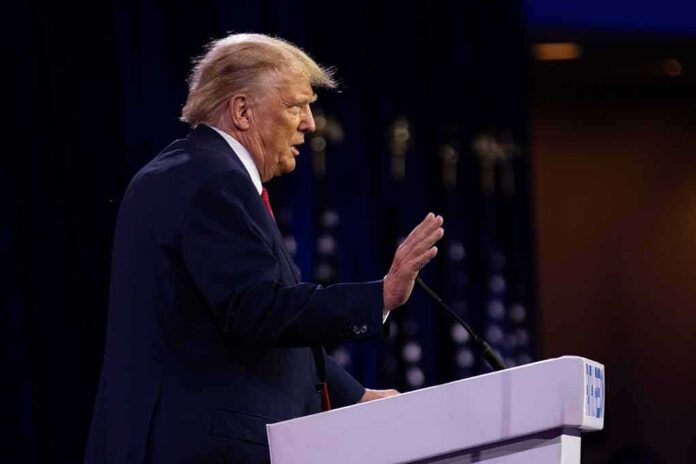
President Trump offered $1 million to Americans whose tips lead to voter-fraud convictions, putting cash behind election integrity days before the midterms.
Story Highlights
- Trump pledged $1 million for tips that result in arrest and conviction for voter fraud.
- The offer applies to past elections and the 2026 midterms, broadening scope.
- The White House has not detailed funding, rules, or administration of payouts.
- News outlets say proven fraud exists but is not widespread, citing case trackers.
What Trump Announced And When He Said It
On October 26, President Trump said he will pay $1 million to anyone who reports voter fraud that leads to an arrest and conviction. He posted the offer on Truth Social and repeated it on camera the same day. He said it covers “past Elections” and the “upcoming 2026 Midterm Election,” showing he wants tips on old and new cases alike. Reporters at several outlets recorded the pledge and quoted his on-camera words about a “bonus or reward” tied to convictions.
Trump framed the move as a way to help expose crimes and protect confidence in elections. He tied payment to the toughest proof point: a criminal conviction after an arrest. That standard aims to avoid paying for rumors or weak claims. The timing, eight days before voting, made it a headline driver as campaigns entered the final stretch. Media coverage quickly asked how the reward would work and who would run it.
How The Reward Would Work, And What We Still Do Not Know
Trump did not identify the funding source, the office in charge, or the claim process. He did not say how people should submit tips, how ties between tips and convictions would be judged, or what happens if several people report the same case. A White House spokesperson did not add details and referred reporters back to Trump’s post. That leaves open questions on rules and administration before any payout could occur.
The offer links payment to both an arrest and a conviction, which places the bar after police work, charging, trial, and a verdict. That protects taxpayers or donors from paying for unproven claims, but it can also take months or years to resolve. Reporters noted no confirmed case, payout, or rulebook yet exists for this reward. The program’s reach across federal and state lines also raises questions about which prosecutors and courts would count.
What We Know About Documented Voter Fraud
News reports point to real cases of voter fraud, even if they are not common. Documented crimes include people sending ballots for deceased relatives or lying on mail-ballot forms. One national tracker by a conservative policy group lists more than 1,600 incidents over about four decades. Outlets that cite these numbers also say there is no evidence of large-scale fraud that changes major outcomes. Both facts can be true at once.
Supporters of the reward argue that tips from citizens can expose crimes that officials might miss. The arrest-and-conviction rule focuses attention on strong cases with evidence, not internet claims. Critics say the offer lacks a clear plan and could draw a flood of weak or duplicate tips. Until rules are posted, it remains unclear how the government will sort high-quality leads from noise or handle disputes over who earned the reward.
What It Means For Voters And Election Officials Right Now
Voters who witness possible fraud should document details and contact law enforcement. Clear facts, dates, names, and records matter most if a case goes to court. Election workers must follow state law on chain of custody, signature checks, and ballot processing. Strong local procedures make real tips easier to prove and false claims easier to dismiss. The promised reward could increase reporting pressure on offices already running final pre-election checks.
Hmmm REMEMBER PEOPLE… PRESIDENT TRUMP IS OFFERING A HUGE $ REWARD(1 MILLION DOLLARS) FOR ANYONE REPORTING VOTER FRAUD THAT ENDS WITH A CONVICTION! https://t.co/hyg7o54zYD
— 😎LisaMarie😎 (@LisaSteelersGal) October 27, 2026
President Trump has made election integrity a core theme, and this offer underscores that message. The idea is simple: pay big money for proof that holds up in court. The execution will decide the impact. If the White House publishes rules, names an office to manage tips, and tracks cases to verdicts, the plan could help catch crimes and deter new ones. If details lag, confusion could grow and critics will keep pressing the open questions.
Sources:
thegatewaypundit.com, upi.com, nytimes.com, france24.com
© headlineupdates.com 2026. All rights reserved.