When a single bullet becomes a public argument, trust in the entire justice system starts to wobble.
Quick Take
- Charlie Kirk was shot at Utah Valley University on Sept. 10, 2025, in a mid-day attack that investigators say came from a rooftop about 142 yards away.
- Authorities recovered a bolt-action rifle and arrested 22-year-old Tyler James Robinson, but online coverage quickly fixated on whether the bullet “matched” the gun.
- “Mismatch” claims can mean several different things in forensics, and the public often confuses them: caliber, rifling marks, casings, and chain-of-custody are separate issues.
- The real problem isn’t debate; it’s sloppy certainty, where viral narratives outrun documents, testimony, and laboratory language.
The Day of the Shooting and the Facts People Skip Past
Charlie Kirk, 31, was fatally shot on Sept. 10, 2025, at Utah Valley University in Orem, Utah. Reporting described a single bullet striking his neck at about 12:23 p.m., fired from the roof of the Losee Center at a distance of roughly 142 yards. Police arrested Tyler James Robinson, 22, and charged him with aggravated murder. Investigators also recovered a high-powered bolt-action rifle, identified as a Mauser .30-06, found wrapped in a towel in a wooded area.
Those baseline facts should have anchored the public conversation. Instead, the internet did what it does: it hunted for an angle sharper than grief. Within days, attention splintered into competing “ballistics” storylines, including claims that the bullet used to kill Kirk did not match the suspect’s gun. That claim might eventually prove true or false in court, but the bigger civic issue is how quickly people treat a technical phrase like “match” as if it were a simple yes-or-no.
What “The Bullet Didn’t Match” Can Mean in Real Forensics
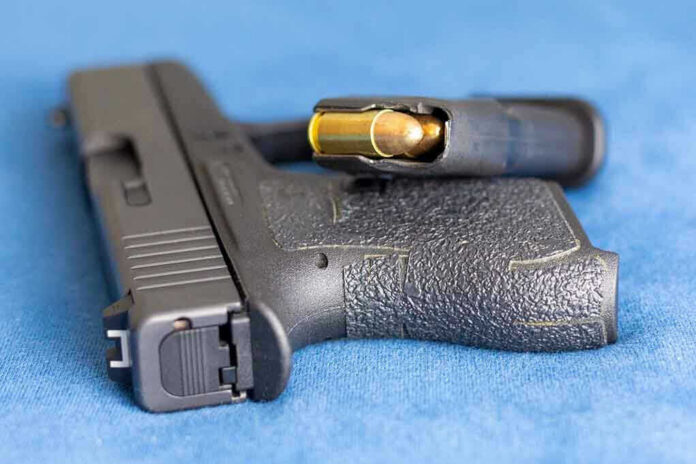
Ballistics talk sounds straightforward until you break it into its moving parts. “Doesn’t match” might mean the bullet’s caliber differs from the barrel’s caliber. It might mean the bullet’s rifling impressions don’t align with a given firearm’s unique toolmarks. It might also mean the bullet is too damaged to compare, or that only class characteristics could be observed. Another common confusion: a rifle can be alleged as the murder weapon even if investigators never recover a usable casing, because a bolt-action rifle doesn’t automatically produce the same casing trail people expect from semi-automatic weapons.
That nuance matters because cable segments, podcasts, and short-form videos often compress it into a courtroom-sounding slogan. A defense filing might challenge the strength of a comparison, the lab’s language, or the chain-of-custody. That is not the same as an affirmative finding that “this gun could not have fired this bullet.” Conservative common sense should demand the distinction. The state must prove its case beyond a reasonable doubt; the defense only needs to expose doubt. Those roles produce very different claims, and headlines tend to blur them.
The Quiet Center of the Case: Evidence Handling and Chain-of-Custody
The public gets hypnotized by microscopic striations, but prosecutions often rise or fall on more boring questions: Who collected the bullet? How was it packaged? Who logged it? Where did it travel? Was it sealed? When a rifle is found later—especially in an outdoor area—investigators must explain how they connected it to the shooting scene and the suspect. If the government can’t document those steps cleanly, jurors can distrust even competent lab work.
That’s where the “there’s a problem” framing becomes both fair and dangerous. Fair, because the American system should invite scrutiny of police procedures; conservatives have long argued that government power needs strict boundaries and accountability. Dangerous, because online commentary often replaces scrutiny with certainty, turning “questions about documentation” into “they’re hiding the real weapon.” If the evidence is strong, it will survive careful questioning. If it’s weak, it should fail in open court, not in a meme tribunal.
Why Viral “Bombshell” Coverage Keeps Winning Over Boring Reality
Ballistics is catnip for modern attention spans because it promises a clean twist: one lab result flips the whole story. But real cases rarely hinge on a single “gotcha.” Investigators can use witness accounts, digital trails, location data, and physical evidence beyond the bullet-to-barrel comparison. At the same time, prosecutors sometimes overreach with language that sounds more definitive than the underlying science, giving critics an opening. The healthiest posture is skeptical patience: insist on documents, testimony, and cross-examination, not vibes.
Readers over 40 have seen this movie before: a hot claim races ahead, then the correction arrives after the country has already picked teams. The responsible move is to keep two thoughts in your head at once. First, the state has an obligation to present reliable forensic work and clear chain-of-custody. Second, the public has an obligation to avoid convicting or acquitting anyone based on a thumbnail clip. The truth here lives in filings, lab wording, and sworn statements.
The conservative, common-sense takeaway is simple: demand competence from law enforcement and discipline from ourselves. If an outlet claims a mismatch, it should show the filing, quote the exact lab language, and explain what was actually compared. If another outlet says the rifle was recovered and “believed to be the weapon used,” it should explain the basis for that belief, not treat it as self-proving. The system works best when citizens insist on rigor, not when we outsource judgment to the loudest narrator.
Sources:
https://www.cbsnews.com/news/charlie-kirk-shooter-search-investigation-suspect-what-we-know/
https://abcnews.com/US/charlie-kirk-shot-event-utah-university-jd-vance/story?id=125451514
https://en.wikipedia.org/wiki/Assassination_of_Charlie_Kirk
https://www.axios.com/2025/09/10/charlie-kirk-shot-utah-valley-university