A young banking executive was killed in a broad-daylight Times Square stabbing that police say was random and unprovoked.
Story Snapshot
- Police identified the victim as Bank of America vice president Erin Piacenti, 32.
- Officers shot the suspect after orders and Taser attempts failed, police said.
- The suspect, named by police as 49-year-old Pamela Cisneros, also stabbed a 68-year-old man.
- NYPD leaders linked the suspect to a prior mental-health history in briefings.
What Police Say Happened in Times Square
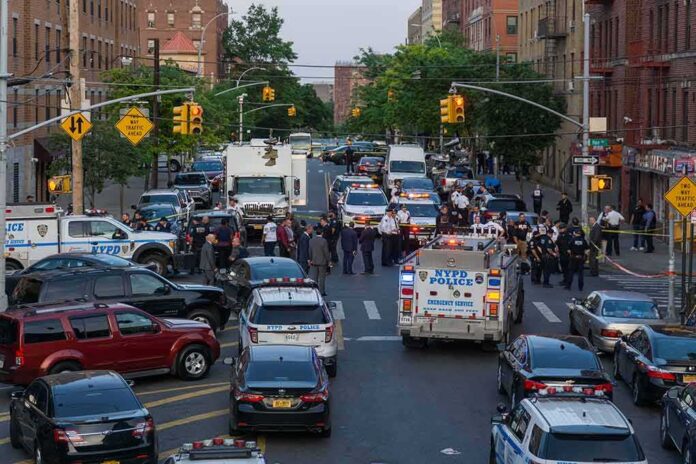
New York City police said a woman stabbed two people near West 41st and West 42nd Street by Seventh Avenue around 4:30 p.m. Monday. The attack killed 32-year-old Erin Piacenti and injured a 68-year-old man, who was taken to a hospital. Police described the attack as random and unprovoked. Officers reached the scene within minutes and confronted the suspect holding knives. The busy Times Square setting added urgency, with crowds and traffic close by, police said.
Police identified the suspect as 49-year-old Pamela Cisneros of Queens. Officers said they ordered her to drop the knives. They deployed Tasers before firing when she advanced, according to official accounts. The shots struck the suspect, who later died. Police leadership emphasized that officers attempted to de-escalate before using deadly force, citing commands and less-lethal tools used on scene during the confrontation.
Victim Identified and Employer Response
Published reports named the woman who died as Erin Piacenti, a vice president at Bank of America. The company said it was shocked and saddened by the loss of its colleague. That employer statement supported the public identification of Piacenti as the victim. Coverage also reported the second victim was a 68-year-old man who survived and was treated at a hospital after the attack near the Times Square pedestrian flow.
Consistent reports placed the incident in the late afternoon, when foot traffic is heavy and families, commuters, and tourists mix. That timing likely helped speed the police response because officers already patrol the area. Reporters noted that initial briefings stressed the lack of any known link between the attacker and the victims. Officials also stated that terrorism was not suspected in the case, which kept the focus on local public safety and response.
How Officers Are Trained to Judge Knife Threats
Court rulings and training guides say the key test for police use of force is whether an officer faces an immediate threat of death or serious injury. A person with a knife who refuses commands and moves closer can meet that test, especially at close range. The United States Supreme Court has upheld qualified immunity for officers in certain knife confrontations under this standard, which centers on reasonableness in the moment, not hindsight.
A Bank of America vice president was one of the two victims killed in a stabbing at Times Square on Monday afternoon. https://t.co/EM45U26nik
— FORTUNE (@FortuneMagazine) September 1, 2026
Legal and training summaries also stress that distance matters with knives, and that less-lethal tools are preferred when safe. Courts have approved Taser use in knife cases as a step to avoid gunfire when conditions allow. In this case, police stated they gave commands and used Tasers before shooting. That sequence fits common policy guidance that urges officers to try lower levels of force when possible while staying ready to stop an advancing deadly threat.
Why This Struck a Nerve Across the Spectrum
People across the political spectrum worry that public spaces no longer feel safe. A fatal street attack in the heart of Times Square fuels that fear. Conservatives point to mental-health crises, drug issues, and repeat offenders on city streets. Liberals point to gaps in treatment, housing, and support for people in crisis. Both sides see a system that reacts late and struggles to prevent obvious danger, and that leaves regular people to bear the cost.
Police leaders said the suspect had a documented mental-health history. That fits a pattern where front-line officers become the last stop when care systems break down. Advocates warn that news coverage can stigmatize people with mental illness. Responsible reporting should separate a person’s medical history from proof of motive. In this case, officials have not offered a motive beyond calling the stabbing random and unprovoked, and the legal process will turn on the known actions and timeline.
What Comes Next
Expect formal reviews of the officer-involved shooting, including ballistics, body-worn camera footage, and Taser data. Those steps are standard after deadly force. Prosecutors and the medical examiner will finalize the record on the victims and on the suspect. Bank of America and Piacenti’s family will plan memorials. City officials will likely face renewed calls to tighten street safety and expand access to timely mental-health care before crises spill into public harm.
Times Square is built on the idea that anyone can walk, shop, and work without fear. A random deadly attack in that setting shakes trust that the system can protect everyday life. Clear records, steady policing, and earlier care for people in crisis are not partisan ideas. They are basic promises a government owes its people, and they are the steps that can help New York recover from a loss like this.
Sources:
thegatewaypundit.com, abc7ny.com, fortune.com, usnews.com, foxnews.com, uk.news.yahoo.com, case-law.vlex.com
© headlineupdates.com 2026. All rights reserved.