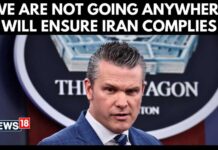
Vice President JD Vance is boarding Air Force Two with a blunt warning for Tehran: the Trump administration won’t tolerate a bad-faith “game” at the negotiating table.
Quick Take
- JD Vance departed Washington on April 10 for Islamabad to lead U.S. truce talks with Iran after a six-week war that began Feb. 28.
- Vance said the U.S. is open to talks if Iran negotiates seriously, but signaled consequences if Tehran tries to stall or deceive.
- Pakistan is hosting the weekend negotiations, a notable venue given decades of limited direct U.S.-Iran engagement.
- Energy markets and global shipping remain sensitive because the conflict has involved pressure around the Strait of Hormuz.
Vance’s departure frames the talks as leverage-first diplomacy
JD Vance left Washington on Friday for Islamabad, Pakistan, where he is slated to lead negotiations intended to end the U.S.-Israel war with Iran that began Feb. 28. Speaking as he departed, Vance emphasized that President Trump’s team is willing to talk if Iran approaches the discussions in good faith. He also warned that the U.S. would not be “receptive” if Iran tries to “play” Washington.
That messaging matters because it signals two realities at once: the administration believes diplomacy is still useful, and it intends to negotiate from a position of coercive pressure rather than trust. Supporters of an America First foreign policy typically prefer clear objectives, enforceable terms, and a defined end state over open-ended commitments. Vance’s public posture, anchored to Trump’s “guidelines,” reflects that preference while the ceasefire remains fragile.
Why Islamabad, and why Vance, are both unusual choices
Pakistan’s role as host is a reminder of how difficult direct U.S.-Iran contacts have been since the 1979 Islamic Revolution severed ties. The research indicates earlier efforts included indirect rounds before the war, and analysts have described the Islamabad talks as more direct than prior note-passing diplomacy. If that characterization holds, a vice president personally leading the effort raises the cost of failure for both sides—and signals Washington considers the moment significant.
The war’s pressure points: nukes, proxies, and the Strait of Hormuz
The conflict’s stated drivers include U.S. and Israeli concerns about Iran’s nuclear activity, ballistic capabilities, and proxy networks. The research also ties the war to economic and energy disruption after Iran closed the Strait of Hormuz, a critical chokepoint for global commerce. With a two-week ceasefire having been announced around late March, the weekend talks are positioned as the next test of whether de-escalation is real or merely a pause before renewed strikes.
Former Vice President Mike Pence publicly urged the administration to avoid an “Obama-style” agreement and to demand verifiable concessions, including limits on Iran’s nuclear program and an end to destabilizing regional activity. That argument reflects a broader conservative concern: deals without verification can reward hostile regimes while leaving Americans and allies exposed. At the same time, the research suggests Vance has stressed preventing escalation and limiting harm, an approach that could resonate with voters wary of endless war.
What success would look like—and what remains unclear
In practical terms, the near-term measure of success is whether the ceasefire holds and whether concrete confidence-building steps occur—especially around maritime security and the flow of energy shipments. The research indicates Trump previously used hard deadlines and threats against Iranian infrastructure to compel movement, and Vance is now tasked with translating that leverage into terms both sides can accept. The administration has not publicly detailed the negotiating text, enforcement mechanisms, or sequencing.
NEW: Vice President JD Vance speaks as he departs for pivotal negotiations with Iran:
“We're certainly willing to extend the open hand. If they're going to try to play us, then they're going to find that the negotiating team is not that receptive.” pic.twitter.com/xT77rtr9DR
— Fox News (@FoxNews) April 10, 2026
Important details remain uncertain based on the provided material: Iran’s negotiating team is not identified, the precise format and agenda are not fully confirmed, and reports differ on whether Jared Kushner is formally part of the delegation in every account. Those gaps matter because durable agreements depend on who can actually commit the Iranian regime—and on whether verification and enforcement are built in from the start. For Americans exhausted by government dysfunction, the key test is simple: does Washington secure measurable outcomes, not just headlines.
Sources:
JD Vance Warns Iran Not To “Play” US As He Leaves For Truce Talks
Mike Pence warns JD Vance to avoid ‘Obama-style’ Iran deal as nuclear talks set to begin in Pakistan