
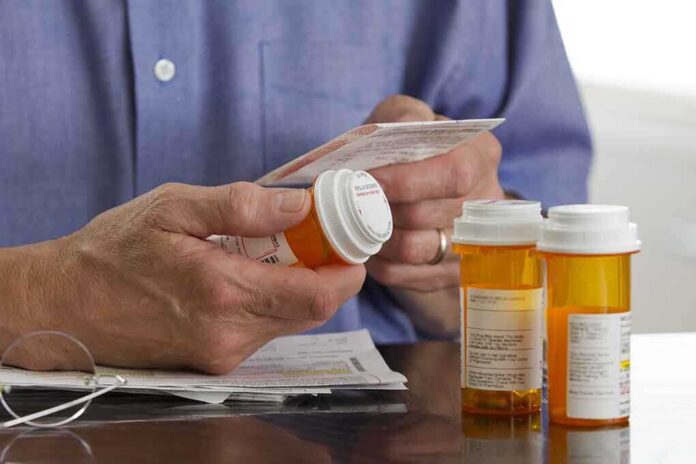
Imagine slashing your drug costs overnight by grabbing prescriptions off the shelf like aspirin—Trump’s bold stroke could redefine American healthcare access forever.
Story Snapshot
- Trump unveiled “The Great Healthcare Plan” on January 16, 2026, targeting sky-high drug prices with over-the-counter (OTC) expansion.
- Four pillars focus on lowering drug costs, cutting insurance premiums, enforcing transparency, and accountability for stakeholders.
- OTC shift empowers consumers, bypasses insurance middlemen, and echoes successful FDA switches like Prilosec.
- Plan promises $36 billion taxpayer savings while disrupting pharmacy benefit managers’ kickbacks.
- Congress must act fast, amid ACA premium doublings post-subsidy expiration.
Trump’s Announcement Details
President Donald Trump announced “The Great Healthcare Plan” on January 16, 2026, via a one-page White House fact sheet. The plan outlines four pillars: lower drug prices, reduce insurance premiums, maximize price transparency, and hold healthcare stakeholders accountable. Trump calls on Congress to enact it immediately. This framework builds on his first-term efforts like price transparency rules and Most Favored Nation drug pricing deals with 16 pharmaceutical companies.
Over-the-Counter Drug Expansion Core
The plan makes more prescription drugs available over-the-counter, cutting reliance on insurance and pharmacy benefit managers. Consumers gain direct access, potentially slashing costs for common medications. Past FDA switches, such as omeprazole and loratadine, prove safety when usage patterns emerge. This targets America’s high drug prices by fostering market competition without prescriptions.
A Good Idea in Trump’s “Great Healthcare Plan”: Put More Drugs Over the Counter https://t.co/VY0RDCnDKm via @CatoInstitute
— Jeffrey A. Singer (@dr4liberty) January 15, 2026
Pharmaceutical firms signed voluntary MFN deals, now codified in the plan. Pharmacy benefit managers face elimination of kickbacks, streamlining the supply chain. Common sense dictates this empowers patients over bureaucrats, aligning with conservative values of individual choice.
Broader Plan Components and Savings
Trump proposes funding cost-sharing reductions, saving taxpayers at least $36 billion per Congressional Budget Office estimates. This cuts average ACA premiums over 10%. Insurers must post “Plain English” rate comparisons online. Enhanced subsidies expired December 31, 2025, doubling 2026 premiums for 20 million enrollees.
The plan shifts from insurance-heavy models to consumer-directed care, including Health Savings Account infusions. Experts at Cornell Health Policy Center note 70% skepticism on HSA swaps worsening affordability, given limits to high-deductible plans. Yet facts show HSAs promote personal responsibility, a bedrock conservative principle.
Stakeholder Impacts and Challenges
Pharma companies balance pricing deals with OTC volume gains. Insurers and PBMs lose from transparency and kickback bans. Physicians worry about lost oversight for interactions in vulnerable patients. Consumers benefit from access but need self-education on safe use.
Critics question MFN enforcement and R&D impacts, but voluntary deals succeeded before. Price transparency rules from Trump’s first term faced spotty compliance, yet persistence yields results. This plan addresses real crises like workforce shortages and consolidations driving costs.
Long-Term Healthcare Shifts
OTC expansion accelerates industry trends, restructuring distribution from insurance gatekeepers. It sets a consumer-first precedent, potentially influencing global markets. While specifics on targeted drugs await, the vision counters chronic disease burdens without expanding government. American values favor markets over mandates—facts back this path to affordability.
Sources:
https://www.healthcaredive.com/news/trump-great-healthcare-plan-affordability-aca/809759/