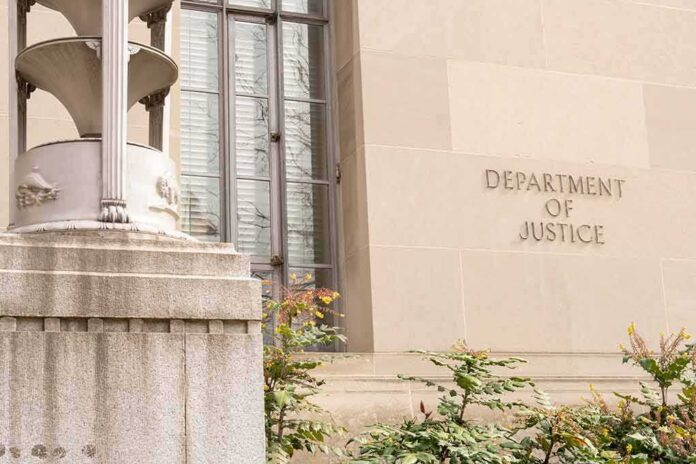
Federal prosecutors in Miami sent a grand jury subpoena to former Federal Bureau of Investigation (FBI) Director James Comey, showing the Justice Department is still pressing its probe of officials who once targeted President Trump.
Story Snapshot
- Prosecutors in Miami subpoenaed James Comey in an ongoing Department of Justice inquiry.
- Reports say the probe examines whether past officials misused power in investigations involving President Trump.
- The action follows earlier watchdog findings that Comey mishandled FBI memos, though no charge arose from that report.
- Comey has long defended the Russia investigation while admitting procedural errors occurred.
What Happened: A Fresh Subpoena To James Comey
Reuters reported that federal prosecutors in Miami issued a grand jury subpoena to former FBI Director James Comey. The report cited media accounts tying the move to a Department of Justice inquiry into past officials who investigated and prosecuted President Trump. CBS News also reported that the subpoena is part of an investigation focused on Obama-era intelligence officials. The Los Angeles Times said the inquiry seeks to determine whether a coordinated effort targeted Trump over several years. Bloomberg described it as part of a wider “conspiracy” probe.
USA Today said the subpoena is linked to a review of whether any laws were broken during the government’s handling of Russian election interference and related matters. Fox News reported that investigators are examining Comey’s role tied to the 2017 Intelligence Community Assessment about Russian actions, according to a source. None of these outlets published the subpoena itself. The Justice Department has not publicly laid out a charging theory. A subpoena is a demand for information, not a finding of guilt.
Why It Matters: Power, Trust, And The Rules
The case strikes a nerve because it reaches into the highest ranks of law enforcement. Many Americans believe powerful insiders bend rules while regular people face harsh outcomes. The Justice Department’s inspector general found in 2019 that Comey kept copies of FBI memos at home and violated FBI policies and his employment agreement, though prosecutors did not charge him for that conduct. That history fuels questions about double standards, process fairness, and whether rules change for elites compared with everyone else.
At the same time, public records also show Comey has defended the core Russia investigation as necessary and “done by the book,” while admitting “real sloppiness” in surveillance steps and saying he was “overconfident” in Justice Department and FBI procedures. These mixed facts explain why both sides see confirmation of their fears. Critics see proof that officials cut corners then escaped blame. Defenders see a politicized hunt that re-litigates past probes without showing new, public evidence of crimes.
The Legal Frame: Grand Juries And High-Profile Targets
Grand jury subpoenas are common tools to collect documents and testimony. They do not prove a case. They do show prosecutors want leverage and speed. In politically charged matters, the stakes rise. When the subject is a former FBI director who oversaw sensitive probes touching a sitting president, each new paper filing lands like a thunderclap. That pressure can push witnesses to cooperate. It can also harden claims that the process is more about payback than proof, especially without a public affidavit laying out facts.
Prior oversight and court battles show how process disputes can eclipse substance. A federal judge in 2025 ordered the Justice Department to turn over certain grand jury materials in Comey-related litigation after flagging possible misconduct concerns tied to a prosecutor, a rare move that underscored tensions around this saga. Such rulings do not settle the core facts but highlight how lapses, even if procedural, can erode trust across the spectrum.
The Politics: Shared Frustration With Washington
Conservatives see the subpoena as a long-awaited step to test claims of bias inside federal law enforcement. Liberals see an administration using the law to intimidate critics and rewrite history. Both groups share a deeper worry: that the system serves insiders first. When the Justice Department keeps its cards close, public faith can dip further, because people cannot see the evidence that guides choices. That vacuum lets partisan claims grow while facts remain sealed behind grand jury rules.
𝐅𝐄𝐃𝐒 𝐒𝐔𝐁𝐏𝐎𝐄𝐍𝐀 𝐂𝐎𝐌𝐄𝐘'𝐒 𝐒𝐄𝐂𝐑𝐄𝐓 𝐋𝐄𝐀𝐊 𝐂𝐎𝐍𝐃𝐔𝐈𝐓—𝐀 𝟐𝟎𝟏𝟕 𝐌𝐄𝐌𝐎 𝐏𝐑𝐎𝐁𝐄 𝐂𝐎𝐌𝐄𝐒 𝐁𝐀𝐂𝐊 𝐅𝐑𝐎𝐌 𝐓𝐇𝐄 𝐃𝐄𝐀𝐃
A federal grand jury has subpoenaed 𝐃𝐚𝐧𝐢𝐞𝐥 𝐑𝐢𝐜𝐡𝐦𝐚𝐧, the Columbia law professor and longtime friend of former FBI… pic.twitter.com/xghgNM7YU6
— M.A. Rothman (@MichaelARothman) August 31, 2026
What would reduce speculation is simple: clear, on-the-record filings that show specific statutes, dates, and acts under review. Until then, the verified fact is narrow but important: prosecutors in Miami have subpoenaed James Comey as part of an active federal inquiry. That signals a sustained push to question how the government used its powers during the last decade. Whether this restores trust or deepens cynicism will depend on the strength of evidence that eventually sees daylight.
Sources:
mediaite.com, reuters.com, cbsnews.com, latimes.com, usatoday.com, bloomberg.com, youtube.com, foxnews.com, en.wikipedia.org, pbs.org
© headlineupdates.com 2026. All rights reserved.