Thirty-four ships didn’t “get lost” at sea—they got the message and turned around.
Story Snapshot
- U.S. officials say Navy pressure has forced 33–34 vessels linked to Iranian oil traffic to divert or return to port.
- Deterrence appears to be the main weapon: warnings, tracking, and the credible presence of U.S. warships.
- The enforcement footprint extends beyond the Middle East, with reported interdictions reaching into the Indo-Pacific.
- Competing reporting suggests some tankers still slip through using “dark fleet” methods, raising questions about what “control” really means.
“Turn Around or Else” Becomes a Real Policy at Sea
Defense Secretary Pete Hegseth’s claim that 34 vessels “heeded America’s warning” lands like a warning flare over global shipping: the U.S. isn’t just sanctioning Iranian oil on paper, it’s contesting it on the water. Reports describe ships diverting mid-voyage and empty tankers reversing after approaching U.S. naval forces. That’s not theoretical power. It’s real-time coercion measured in altered routes, delayed deliveries, and captains choosing caution over profit.
That shift matters because the maritime oil trade runs on predictability. When a superpower signals it can identify you, shadow you, and stop you, the cost of doing business changes overnight. Crews worry about boarding. Owners worry about seizures. Insurers worry about headlines. The immediate outcome isn’t only captured cargo; it’s the chilling effect—ship after ship deciding the risk isn’t worth the freight rate.
The Strait of Hormuz Is a Chokepoint, and Everyone Knows It
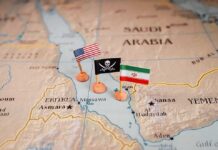
The Strait of Hormuz isn’t just another narrow passage; it’s the kind of geography that turns policy into leverage. U.S. officials have framed the situation in maximal terms—“total control” and “nothing in, nothing out.” Whether that’s literal or rhetorical, the strategic idea is straightforward: Iran’s most valuable export depends on maritime access, and maritime access depends on security. A Navy that can loiter, track, and interdict can squeeze revenue without firing a shot.
Iran’s response, by its own reported posture, mirrors the same logic in reverse: declare rules, demand permission, threaten retaliation. That’s the dangerous symmetry. When two sides claim authority over the same water, miscalculation becomes more likely. The U.S. message aims to deter and drain Iranian oil income; Iran’s message aims to preserve deterrence of its own and signal it won’t accept humiliation. That’s how incidents start—by both sides insisting the other blink first.
Why the Numbers Don’t Match: 28, 33, 34—and the Problem of Counting
Readers should treat the vessel counts as a moving target, not a courtroom tally. Different updates cite 28, 33, or 34 vessels turned back, and the gap can come from timing, definitions, or messaging goals. One source may count only tankers, another may include cargo vessels. One count may include a ship that diverted and later resumed course. The bigger point remains: multiple ships changed behavior under U.S. pressure, and that alone signals enforcement with teeth.
The more interesting question isn’t “what is the perfect number,” but “what did it take to get that number.” A blockade-style campaign requires patrol presence, intelligence, and political permission to escalate. Reports also describe rules of engagement that contemplate lethal force if Iranian forces attempt to lay mines. That type of deterrent posture speaks in a language shipping companies understand: the U.S. isn’t bluffing, and the downside risk can become catastrophic fast.
Dark Fleet Tactics: The Cat-and-Mouse Game Behind the Headlines
Sanctions evasion doesn’t usually look like a Hollywood chase; it looks like paperwork tricks, ownership shells, and ships that “go dark” by disabling transponders. Reporting around Iran-linked shipments highlights that pattern—ship-to-ship transfers, confusing routes, and obscure registries. When officials claim dominance while other reporting says tankers still bypassed enforcement, both can be true in parts. Enforcement can disrupt many voyages and still miss others, especially across a global ocean.
From a common-sense, conservative perspective, this is the core test of “maximum pressure” policy: can the U.S. impose costs consistently without sliding into an open-ended conflict? Deterrence works when it is credible and repeatable. If too many ships slip through, the market adapts and the pressure leaks. If enforcement becomes overly aggressive, the risk of escalation grows. The winning strategy usually sits in the disciplined middle: predictable enforcement, clear red lines, and consequences that don’t depend on daily improvisation.
What This Means for Americans: Prices, Power, and the Credibility of Force
Energy markets react to uncertainty more than to speeches. Even rumors of disrupted flows can move prices, and insurance premiums in a tense theater eventually show up in shipping costs everywhere. The U.S. is also making a broader statement to allies and rivals: sanctions are not just financial tools; they can be backed by naval power. That message fits a traditional American view of strength—peace through deterrence—so long as leaders keep objectives clear and avoid mission creep.
NEW: 34 vessels have heeded America’s warning and turned back amid the U.S. Navy’s “unrelenting pressure” in the Strait of Hormuz.
Secretary Hegseth warns Iran to “choose wisely” and calls on America’s allies to step up in the region. | @MattFinnFNC pic.twitter.com/YsKiXhcbo6
— Fox News (@FoxNews) April 24, 2026
The open loop that should keep every reader watching is simple: does this become a durable squeeze that drains Iranian revenue, or does it become a cycle of evasions, seizures, and retaliation threats that inches toward a spark? The early evidence shows ships turning away when confronted and new assets joining the operation. The next evidence will be harder: sustained results, consistent rules, and whether the “dark fleet” adapts faster than the Navy can counter.