New York’s newest mayor just discovered that in this city, the clock on a crisis starts ticking the second a cop fires a shot, not the morning after.
Story Snapshot
- Two fatal NYPD shootings in one night turned Zohran Mamdani’s first 100 days into a public-safety stress test.
- The mayor waited until the next morning to speak, while Commissioner Jessica Tisch immediately praised the officers as heroic.
- The delay reopened every doubt about a mayor who once sided with “defund” activists but now commands the NYPD.
- The clash between progressive ideals and on-the-ground policing will shape New York’s next era of public safety.
How Two Bullet-Point Incidents Became a Full-Blown Political Exam
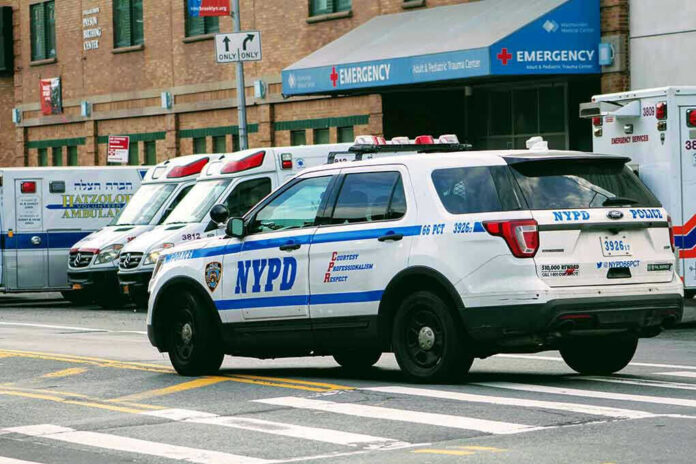
Two men died within hours at the hands of NYPD officers: one inside NewYork‑Presbyterian Brooklyn Methodist Hospital after allegedly barricading himself with a sharp object and threatening staff and patients, another in the West Village after reportedly pointing what looked like a handgun that turned out to be an air pistol. On paper, they read like standard use‑of‑force cases. In reality, they instantly became a referendum on whether Mayor Zohran Mamdani is serious about public safety.
Commissioner Jessica Tisch did what big‑city police leaders do when the rank‑and‑file are under fire: she moved fast and loud. Her statement framed the officers’ actions as “nothing short of heroic,” emphasizing that they acted to save their own lives and those of civilians, with a promise of an “exhaustive investigation and review.” That posture sent a clear signal to cops and criminals alike: City Hall’s top cop would not blink when officers pull the trigger.
Why Mamdani’s Silence Landed Louder Than His Words
Mamdani, by contrast, went quiet. Briefed Thursday night, he chose not to speak publicly until the next morning, folding his response into a previously scheduled event. He later said he delayed comment to ensure information was “accurate and intentional.” To a lawyer or a bureaucrat, that sounds prudent. To a city that has lived through Eric Garner, Win Rozario, and years of anti‑police agitation, it sounds hesitant at best and evasive at worst.
The politics behind that hesitation are obvious. Before he ran City Hall, Mamdani built his brand as a Queens assembly member aligned with the Democratic Socialists of America, criticizing NYPD budgets and embracing “defund” rhetoric. That history bought him credibility with activists but created suspicion among cops and outer‑borough voters who live with crime, not just arguments about it. When this crisis hit, both camps watched the clock to see where his instincts really lie.
The Uneasy Marriage of Reformist Rhetoric and Hard-Edged Policing
Mamdani chose to keep Jessica Tisch, a commissioner many of his own supporters view as ideologically opposite on crime and punishment.[2][3] Their joint events celebrating “historic” lows in shootings and shooting victims were staged to project a functional partnership, with both touting 2025 as the safest year on record by that metric. Those numbers reassured moderates, but they did not erase the underlying tension between a reformist mayor and a commissioner steeped in aggressive enforcement.
That tension surfaced the moment bullets flew in a hospital and the West Village. Tisch rushed to validate her officers’ split‑second decisions. Mamdani tried to occupy a narrow strip of rhetorical real estate: he called the events “devastating,” acknowledged that officers faced “incredibly difficult and dangerous circumstances,” promised “thorough and swift” investigations, and pointed to his proposed Department of Community Safety to handle mental‑health crises.That straddle may satisfy no one for long.
What These Shootings Reveal About Mental Health, Force, and Common Sense
The hospital case touches the rawest nerve in modern policing: mental‑health crises. Mamdani argues that shifting such calls to a new Department of Community Safety will improve outcomes and free officers to focus on crime. Advocates like the idea of clinicians instead of cops. Critics, grounding their concerns in common sense, ask who protects those clinicians when a disturbed person wields a weapon in a confined space. The Brooklyn Methodist incident is exactly the scenario they point to.
The West Village shooting raises the equally hard question of perception versus reality. Officers saw what appeared to be a gun and responded with deadly force; only later did the “weapon” prove to be a realistic air pistol. American conservatives often emphasize the primacy of the officer’s perspective in that instant: you do not ask a cop to gamble his life on a split‑second guess about whether a gun is real. That argument gains strength every time a fake weapon looks indistinguishable from the real thing on a dark street.
Why This Early Test Will Haunt the Rest of Mamdani’s Term
Every big‑city mayor eventually faces a fatal police shooting that becomes a marker. De Blasio had Eric Garner; Adams had Win Rozario. Those cases never truly left the stage, shaping press conferences, protests, and perceptions for years. These two NYPD shootings arrived within Mamdani’s first 100 days, in a hospital and one of Manhattan’s most visible neighborhoods, virtually guaranteeing they will shadow his promised overhaul of crisis response and his relationship with the NYPD.
The investigations by the NYPD Force Investigation Division will run their course. The real question is whether Mamdani learns the lesson seasoned executives absorb quickly: in a city that expects both order and accountability, you cannot outsource urgency to your police commissioner and then show up the next morning asking for nuance. New Yorkers will forgive ideological evolution; they have far less patience for a mayor who looks like he is still deciding which side he is on.
Sources:
amNY – Mamdani’s first 100 days: Mayor faces first public safety test after two NYPD shootings
Politico – NYPD fatally shoots man in Brooklyn hospital, testing Mamdani
La Voce di New York – Mamdani recognizes dangerous scenes cops faced in Thursday night shootings