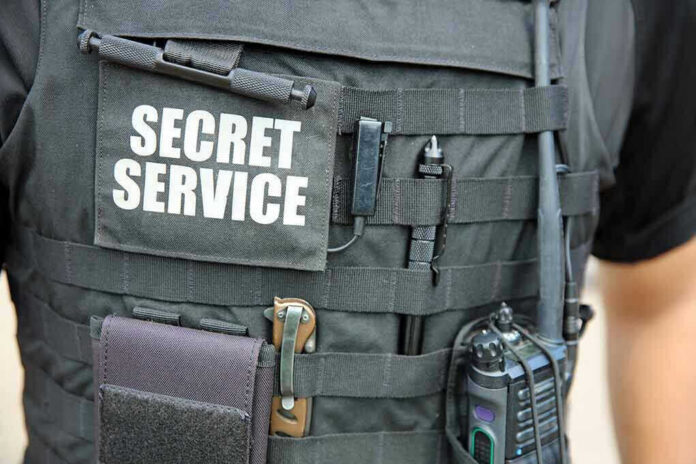
A Secret Service badge means nothing if the people wearing it forget they’re always on the clock.
Story Snapshot
- A developing report claims adult content creator Brittney Jones posted explicit OnlyFans videos involving a Secret Service agent.
- No official confirmation, agent identity, dates, or agency statements appear in the available research, leaving major gaps.
- The allegation matters less for salacious reasons than for what it suggests about judgment, coercion risk, and blackmail exposure.
- If verified, the incident would spotlight a culture problem: personal decisions that can compromise security work.
The Claim That Sparked the Fire, and the Facts Missing From It
The available reporting describes a simple, explosive allegation: Brittney Jones, an OnlyFans creator, posted graphic videos that depict sex acts involving a Secret Service agent. The story is presented as a developing exclusive, which is another way of saying the public is seeing the smoke before anyone can confirm the source of the heat. No dates, location, protective assignment, or disciplinary action appear in the provided materials.
"Lives a Double Life" – Sex Content Creator Posted Graphic Videos of Sex Acts with Secret Service Agent on OnlyFans… Developing | The Gateway Pundit | by Cristina Laila https://t.co/GJFuScopU1
— Gayle (@MesaWall) April 19, 2026
Those missing pieces change everything. Without a timeline, no reader can tell whether this allegedly occurred during an active protective detail, in a period of leave, or years ago. Without an identified agent, there’s no way to assess access level, clearance type, or whether the agent had proximity to presidents, candidates, or foreign leaders. A scandal can be real and still be misframed; it can also be exaggerated or wrong. Conservative common sense demands the same rule for every institution: verify first, punish second.
Why This Isn’t Just “Private Life”: Security Work Turns Personal Choices Into Operational Risk
Sex sells online because it converts attention into money, and money into leverage. That’s the uncomfortable part for national security agencies: leverage doesn’t require criminal behavior, only embarrassing behavior that a third party can capture, monetize, or threaten to reveal. If a federal protective agent appears in commercially distributed explicit content, the risk isn’t prudishness. The risk is compromised judgment and a new pressure point that adversaries understand better than most Americans want to admit.
Security services build careers around control—control of access, information, schedules, routes, and response. OnlyFans flips control the other direction. The platform’s entire model assumes the creator can distribute content widely, preserve it, and earn from it. If the allegation is accurate, the agent effectively joined a distribution chain they couldn’t manage: recordings, subscribers, screen captures, paywalls, and reposts. A married agent, a financially stressed agent, or an agent facing disciplinary issues would become even easier to manipulate.
The Double-Life Pattern: The Internet Doesn’t Keep Secrets, It Keeps Receipts
The phrase “double life” lands because it describes a modern trap. People used to split work and home by geography and time. Now they split it by login. Government service, especially elite protective work, doesn’t tolerate sloppy compartmentalization. The same phone that handles family texts can hold photos, chats, and platform notifications. The same face that stands behind a principal at a rope line can show up in a clip someone bought for $9.99. The internet turns weak moments into permanent assets.
Adults can choose adult relationships. The American conservative critique isn’t that someone made a personal choice; it’s that a public servant in a sensitive role carries an obligation to avoid foreseeable compromise. The Secret Service doesn’t exist to perform ordinary jobs. It exists to prevent catastrophe. The public doesn’t demand perfection, but it has every right to demand seriousness—especially when the job involves weapons, secure perimeters, and split-second decisions around national leaders.
What Accountability Would Look Like If the Report Proves True
If the report is verified, the first question isn’t the prurient one. It’s procedural: did the conduct violate agency policy, ethics rules, or security clearance standards? The next question follows fast: did anyone else know? A real scandal inside a protective agency rarely stays confined to one person; it reveals weak supervision, a lax culture, or a leadership team that didn’t enforce standards until the headlines arrived. The public deserves transparent answers without compromising legitimate operational details.
The correct response would be boring by design: immediate internal review, preservation of evidence, and administrative action consistent with policy. The country benefits when agencies self-police quickly because it prevents political weaponization later. Conservatives should want that outcome: institutions that behave like institutions, not like social clubs. The credibility of federal law enforcement already takes hits from public distrust and partisan narratives; leadership can’t afford another episode that looks like indulgence masquerading as professionalism.
Why Readers Should Be Cautious Right Now, Even If Their Instinct Says “Of Course”
The research behind this story is thin: one primary outlet report and no cited confirmations from the Secret Service, the individuals involved, or independent sources. That matters because viral allegations often travel faster than the facts, especially when they confirm a public suspicion that “everything is falling apart.” Sometimes the suspicion is justified; sometimes it’s bait. Mature judgment means demanding corroboration, especially when an accusation could damage reputations and careers permanently.
Still, even the possibility should trigger a sober conversation about standards. The Secret Service, like any elite unit, relies on public trust and internal discipline. When agents appear careless—whether through leaked texts, reckless nightlife, or alleged monetized sex content—the agency pays twice: once in morale and once in credibility. If America wants competent protection for presidents and candidates, America must insist on conduct that can’t be bought, captured, or held hostage.
The next development will tell the story’s real shape: an official denial, confirmation of an investigation, or the slow fade that comes when a claim can’t be supported. Until that happens, the smartest takeaway is this: modern scandal isn’t just about sin, it’s about exposure. A protective service can survive embarrassment; it cannot survive agents who underestimate leverage. That’s the line that separates tabloid shock from national security reality.