
A fast tourniquet and a quick ferry to shore turned a Florida shark bite into a survival story, not a tragedy.
Story Snapshot
- Dave Daniel, 43, was bitten on the leg near Boca Grande Key and rescued by nearby boaters.
- U.S. Coast Guard met the good Samaritans and helped transfer Daniel for medical care.
- Daniel credits bystanders and off-duty nurses for stopping heavy bleeding and saving his life.
- Experts say fast bleeding control is the key factor in shark-bite survival, not the shark species.
What Happened Near Boca Grande Key
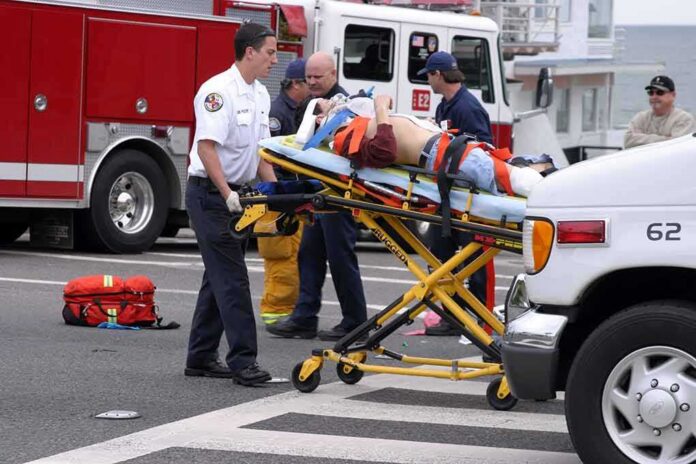
U.S. Coast Guard officials said the attack happened around 5 p.m. Sunday near Boca Grande Key, west of Key West, when Dave Daniel was in the water near a recreational boat and suffered a bite to his lower leg. A civilian vessel took him aboard and moved to meet responders. The Coast Guard met the boat and helped coordinate the transfer to advanced care. Daniel, age 43, was later airlifted to a Miami hospital for treatment and recovery.
Daniel described a sudden bite, heavy bleeding, and a rush by nearby boaters to help. Off-duty nurses on scene used basic first aid to slow the bleeding before rescue crews arrived, which Daniel believes kept him alive. Local coverage and hospital updates said he underwent treatment and began to recover in the days after the attack. His account highlights how fast action on the water can bridge the gap until professional help arrives.
How Rapid First Aid Made the Difference
A nurse who helped at the scene said the group focused on bleeding control first, using the limited supplies they had to keep the wound packed and the blood loss down until help arrived. Trauma guidance and case reviews show that quick pressure and tourniquet use on limbs can be lifesaving after severe bites. That priority matches what responders teach for major bleeding: stop the bleed first, then move the patient to higher care as fast as possible.
Daniel’s rescue followed that playbook. Bystanders got him out of the water, applied firm pressure, and moved toward responders. The Coast Guard contact point shortened travel time to shore and advanced care. This chain—immediate pressure, quick transport, hospital surgery—fits what experts say improves survival. While dramatic, it also shows how simple tools and calm steps can control bleeding long enough to reach a trauma team.
Risk, Rarity, and Smarter Safety on Florida Waters
Florida sees more shark bites than any other state most years, largely because so many people are in the water, but the chances of a bite remain low and deaths are rare. In 2025, Florida recorded 11 unprovoked shark bites and no fatalities, according to the International Shark Attack File summary. Those numbers help frame events like Daniel’s: headline-grabbing, but not common, and usually survivable when bleeding is controlled quickly.
A person bitten by a shark in the Florida Keys is recovering, and the nurse who helped at the scene gave an account of the rescue.
— Christie (@Christi73316857) August 27, 2026
Public safety groups stress a few basics: stay near companions and a boat when possible, avoid murky water, do not swim near active bait or schools of fish, and carry a compact tourniquet or pressure bandage on boats. When a bite occurs, focus on firm pressure or a tourniquet on limb wounds and get moving toward responders. Daniel’s case shows regular people can make that difference with a simple kit and steady hands until rescue crews take over.
Sources:
nypost.com, nbcmiami.com, wsvn.com, people.com, floridamuseum.ufl.edu, pubmed.ncbi.nlm.nih.gov
© headlineupdates.com 2026. All rights reserved.