The Pentagon says the U.S. just eliminated an Iranian IRGC figure tied to the alleged 2024 assassination plot against Donald Trump—during a fast-moving war that is now rewriting deterrence in the Middle East.
Quick Take
- Defense Secretary Pete Hegseth announced the U.S. killed an unnamed IRGC unit leader tied to an alleged 2024 plot targeting Trump.
- The strike occurred Tuesday amid the fourth day of a U.S.-Israel war with Iran that began after a joint operation killed Supreme Leader Ayatollah Ali Khamenei.
- U.S. officials say Iran’s missile and drone attacks have dropped sharply as U.S. forces press air superiority and plan to expand inland.
- Key uncertainties remain: the IRGC official has not been publicly identified, and Iran has denied accusations about assassination plotting.
Pentagon briefing ties strike to alleged Trump plot
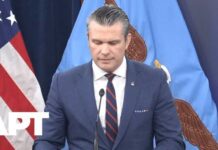
Pete Hegseth said Wednesday that U.S. forces killed an unnamed Iranian official who led a unit inside Iran’s Revolutionary Guard Corps linked to an alleged 2024 assassination plot against then-President-elect Donald Trump. The Pentagon described the death as a “secondary target” during the current conflict, but Hegseth framed it as accountability tied to the earlier threat. Public details remain limited, including the identity of the official and operational specifics.
Reuters-style reporting carried by multiple outlets described the strike as occurring Tuesday, with the announcement delivered during an operational update. Trump has also referenced the 2024 threat in recent remarks, portraying the conflict as connected to the prior attempt on his life. For Americans who watched years of foreign adversaries test U.S. resolve while Washington argued about “norms,” the administration’s messaging is straightforward: threats against a U.S. president carry consequences.
How the 2024 threat developed—and what’s known
Reporting on the 2024 episode indicates U.S. intelligence detected a heightened Iranian threat during the campaign season, leading to increased Secret Service protection for Trump. In November 2024, the Justice Department charged an Iranian man accused of being tasked with surveilling and killing Trump, with allegations tying the effort to IRGC direction and revenge for the 2020 U.S. strike that killed Quds Force commander Qassem Soleimani. Iran has denied accusations about such plotting.
Military Times noted a key caveat from earlier court cases: prosecutors previously described Iranian-linked murder-for-hire schemes, but public filings did not present direct evidence that Tehran’s top leadership ordered them. That matters because it shapes how confident the public can be about the chain of command behind the alleged plot. The Pentagon’s current statement goes further by linking a specific IRGC unit leader to the attempt, but it still withholds a name, limiting independent verification.
A widening U.S.-Israel war raises the stakes beyond one target
The announcement landed in the middle of an expanding U.S.-Israel fight with Iran that multiple reports describe as only days old. According to the timeline in coverage, a joint operation killed Iran’s Supreme Leader Ayatollah Ali Khamenei on Saturday, intensifying the conflict and accelerating U.S. strikes. Hegseth has emphasized that the campaign is not “mission accomplished,” signaling continued military action rather than a one-off retaliatory raid.
Gen. Dan Caine, the Joint Chiefs chairman, cited metrics suggesting U.S. operations have reduced Iran’s ability to launch attacks, including steep drops in missile and drone strikes. Coverage also described U.S. forces establishing air superiority over southern Iran with plans to move inland, along with Iranian retaliation against U.S. positions across the region, including bases in Bahrain, Kuwait, Qatar, and the UAE. Those details underscore that this is an active war environment, not an isolated counterterror strike.
Military actions and casualties shape the domestic debate
Additional reporting described major naval action during the same window, including an account that a U.S. submarine sank an Iranian warship named “Soleimani” in the Indian Ocean. Military Times also reported U.S. casualties in the region, including six service members killed in a drone strike in Kuwait, naming Sgt. 1st Class Nicole Amor among the dead. Those losses are a reminder that deterrence is not a press release—it is paid for by real Americans in uniform.
Hegseth has said munitions availability is not a limiting factor and described the strikes as a continuing “reality check” for Iran’s capabilities. Politically, the administration’s public posture contrasts with years of debate over whether projecting strength “provokes” adversaries. The available facts show Iran’s alleged targeting of a U.S. leader and its regional attacks coinciding with U.S. escalation; what cannot yet be confirmed publicly is the full scope of Tehran’s direct command involvement.
What remains unanswered and what to watch next
The largest gap is identification and evidence. The Pentagon has not released the name of the IRGC unit leader, and the public has not seen supporting intelligence tying that individual to the 2024 plot beyond official statements. Another uncertainty is attribution: one report referenced an Israeli claim that Israel carried out the killing, a detail not uniformly confirmed across other outlets. Until more documentation is released, the public is largely relying on government briefings and wartime reporting.
Operationally, Americans should watch whether the administration provides more details about the target’s role, whether the Justice Department updates related cases, and whether Iran’s degraded missile and drone tempo holds. Strategically, the key question is whether visible consequences for assassination plots and regional attacks restore deterrence without pulling U.S. forces into open-ended nation-building. The reporting to date emphasizes air superiority and targeted strikes—an approach that aligns with limited-government skepticism of endless foreign entanglements while still defending U.S. leadership.
Sources:
US kills Iranian leader of Trump assassination plot, Pentagon says
Iran assassination plot: Trump leader killed
Trump, Hegseth and U.S. killing of Iranian assassination plotter
Mastermind of Iran plot to assassinate Trump is dead, Hegseth claims
US says it killed leader of unit that tried to assassinate Trump; Israeli report: Israel killed him