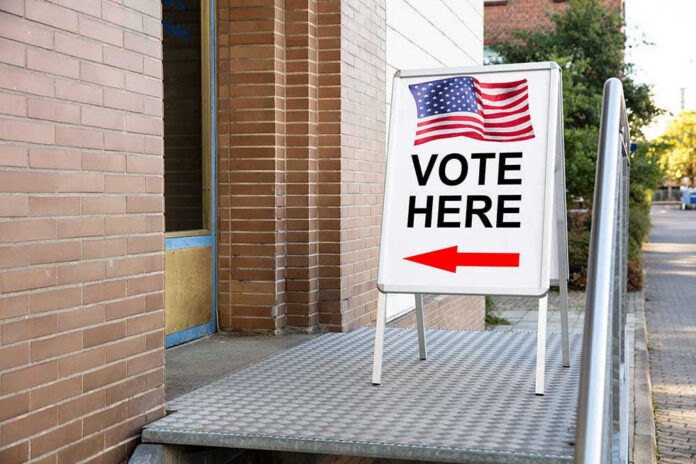
The push against voter identification requirements threatens the fundamental integrity of American elections, disguising itself as a civil rights crusade while opening the door to fraud and undermining confidence in our electoral system.
Story Snapshot
- Leftist activists frame voter ID laws as suppression while ignoring legitimate concerns about election security and constitutional voting protections
- Courts have struck down some state ID requirements citing racial discrimination, yet opponents refuse to acknowledge fraud prevention as a valid governmental interest
- The 2013 Shelby County Supreme Court decision enabled states to implement commonsense voter ID measures after decades of federal overreach
- Free identification programs exist in states with ID requirements, undermining claims that these laws create insurmountable barriers to voting
The Real Agenda Behind Anti-ID Activism
The slogan “No ID Should Equal No Vote” emerged from leftist opposition to voter identification laws that spread across America after 2010. Activists portray these requirements as modern equivalents to Jim Crow-era poll taxes and literacy tests, claiming they disproportionately affect minorities, low-income citizens, and elderly voters. This narrative conveniently ignores that every state with strict photo ID laws provides free identification to eligible voters. The campaign positions election security measures as civil rights violations rather than acknowledging the legitimate governmental interest in preventing fraud and maintaining public confidence in elections.
Historical Context Weaponized for Political Gain
The Voting Rights Act of 1965 eliminated genuine barriers like poll taxes, literacy tests, and grandfather clauses that explicitly targeted Black Americans after the Civil War. The 24th Amendment ended federal poll taxes in 1964, and the VRA mandated federal preclearance for jurisdictions with histories of racial discrimination. However, comparing modern voter ID requirements to these overtly discriminatory practices represents a false equivalency designed to exploit America’s painful racial history for partisan advantage. Unlike Jim Crow laws that explicitly prevented citizens from voting based on race, voter ID requirements apply equally to all citizens regardless of background.
No ID Should Equal No Vote https://t.co/ywKWtpxSlY
— NA404ERROR (@Too_Much_Rum) February 16, 2026
Shelby Decision Restored State Authority Over Elections
The Supreme Court’s 2013 Shelby County v. Holder decision invalidated the Voting Rights Act’s outdated coverage formula, which subjected certain states to federal preclearance based on decades-old discrimination patterns. This ruling properly recognized that states have legitimate authority to manage their own elections under the Constitution. Following Shelby, 25 states implemented various voting requirements, with 18 adopting strict photo identification measures. Leftist organizations like the Brennan Center decried these as “harsh restrictions,” yet failed to provide evidence of widespread voter disenfranchisement or demonstrate how requiring identification to vote differs from requiring it for countless other activities like driving, banking, or purchasing alcohol.
Courts Overstep in Striking Down Commonsense Measures
Federal courts blocked voter ID laws in Texas and North Carolina, with one judge claiming North Carolina’s law targeted African Americans “with almost surgical precision.” This inflammatory rhetoric ignores the bipartisan support for election integrity measures and dismisses legitimate security concerns as inherently racist. The courts’ willingness to second-guess state legislatures on election administration represents judicial activism at its worst. Meanwhile, the League of Women Voters and similar groups argue photo ID requirements burden legitimate voters without justification, despite the absence of evidence that these laws significantly suppress turnout among eligible citizens who genuinely wish to vote.
Free ID Programs Undermine Suppression Claims
States like Wisconsin and South Carolina mandate free identification for voting purposes, directly contradicting claims that ID requirements function as modern poll taxes. While activists complain about DMV access issues and fee waiver procedures, these administrative challenges affect all citizens equally and can be addressed through improved state services rather than abandoning security measures entirely. The real issue becomes clear when examining who benefits politically from lax identification standards. The Democratic Party and allied organizations file lawsuits and oppose virtually every election security measure, suggesting their true concern lies not with protecting vulnerable voters but with maximizing opportunities for ballot harvesting and eliminating safeguards that might detect irregularities in Democrat-heavy urban areas.
Election Integrity Protects Constitutional Rights
Every fraudulent vote cast dilutes the voting power of legitimate citizens, undermining the constitutional principle of one person, one vote. The refusal to implement basic verification measures that Americans overwhelmingly support reflects contempt for election integrity and the rule of law. As President Trump returns to office in 2026, restoring confidence in our electoral system through commonsense identification requirements represents a crucial step toward preserving our constitutional republic. The left’s hyperbolic comparisons to Jim Crow insult the memory of those who suffered under genuine oppression while advancing an agenda that prioritizes partisan advantage over secure elections and the protection of every American citizen’s constitutional right to have their legal vote counted fairly.
Sources:
Voting Rights Act – National Archives
History of Voter Suppression – NLIHC
Voter Identification Laws in the United States – Wikipedia
New Voting Restrictions in America – Brennan Center
Historical Context of Photo ID Laws – NYPL
What’s So Bad About Voter ID Laws? – League of Women Voters