
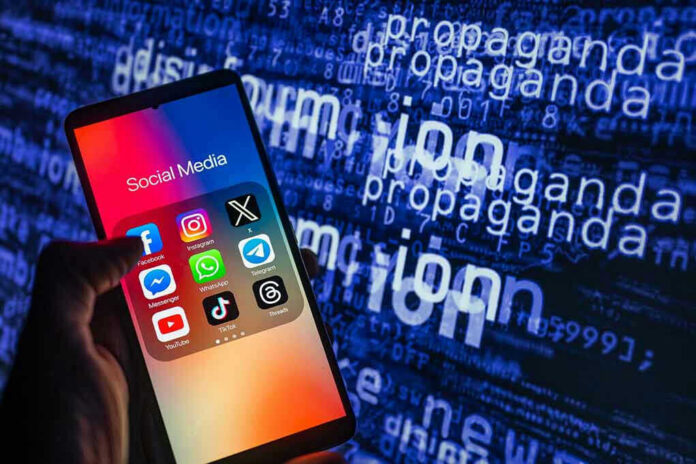
Russia just showed how fast a government can turn everyday messaging and video into a state-controlled choke point.
Quick Take
- Russia fully blocked WhatsApp and YouTube on February 11, 2026, using national DNS controls after months of phased restrictions.
- Russia began throttling Telegram on February 9-10, degrading media and voice functions, with regulators citing legal compliance issues.
- The Kremlin is promoting a state-backed “super-app,” Max, as a replacement—tightening “digital sovereignty” ahead of 2026 State Duma elections.
- Analysts say the technical playbook (throttling, DNS tampering) is more scalable than older blunt bans and could become a model for other regimes.
Russia’s February Crackdown: From “Slowdowns” To Full DNS Blocks
Russia’s internet regulator, Roskomnadzor, escalated restrictions into a full block on WhatsApp and YouTube on February 11, 2026, by removing related domains from Russia’s national DNS system. That step followed a months-long ramp-up that began in August 2025 with voice and video calling restrictions and expanded into broader throttling and access failures. By early 2026, WhatsApp connectivity was already collapsing for many users before the DNS cut completed the shutdown.
https://www.zerohedge.com/geopolitical/whatsapp-youtube-blocked-russia-telegram-throttled-state-super-app-falters
Telegram, long treated as harder to uproot, was hit next. Users reported degraded media loading and voice messaging beginning February 9, and Roskomnadzor confirmed a “slowdown” on February 10. Russian authorities framed the move as enforcement tied to fraud prevention and data protection compliance. Telegram founder Pavel Durov publicly criticized the pressure campaign, arguing it aligns with a push toward a government-favored alternative rather than an ordinary consumer protection action.
A Phased Censorship Model Built For Scale, Not A One-Off Ban
The timeline shows a deliberate strategy: limit features first, then restrict registrations, then throttle traffic, then finalize with DNS-level blocks. This matters because it avoids the political and technical blowback of an all-at-once shutdown, and it gives the state room to calibrate pressure while blaming “technical issues” or legal disputes. Experts tracking Russia’s controls describe this as a qualitative shift from earlier attempts—like the failed 2018 Telegram ban that was abandoned after two years.
Russia’s broader push for “digital sovereignty” predates this latest move and accelerated after the 2022 invasion of Ukraine, when major Western platforms were blocked or restricted. The groundwork also includes 2019-era legal and technical authorities allowing the state to require ISP-installed equipment that can filter, surveil, and throttle traffic at scale. In 2024 and 2025, localized Telegram restrictions and tests were reported in various regions, signaling that the nationwide throttling capability was being refined before this February escalation.
Why The Kremlin Wants Max: Control, Consolidation, And Election Season
The Kremlin is promoting a state-backed “super-app,” Max, integrated with VK’s ecosystem, as the “convenient alternative” to Western services. Reporting and expert commentary suggest the pressure campaign is designed to force migration, especially among public-sector institutions and education channels where compliance can be mandated. The timing also coincides with Russia’s 2026 State Duma election season, when controlling information flows becomes a core political interest for any centralized regime.
Who Pays The Price: Ordinary Users, Small Business, And Even Pro-Government Channels
The immediate impact lands on regular Russians who used WhatsApp, Telegram, and YouTube for family communication, work coordination, and basic daily media. Estimates in the reporting put the affected population in the tens of millions, meaning the disruption is not limited to activists or political dissidents. Analysts also noted an uncomfortable side effect for the Kremlin: Telegram has hosted pro-government channels too, and throttling can disrupt friendly voices along with critics, creating friction inside the system.
WhatsApp & YouTube Blocked In Russia, Telegram Throttled As State "Super-App" Falters https://t.co/rKWMmESCSd
— zerohedge (@zerohedge) February 14, 2026
VPN usage is expected to surge as users seek workarounds, but reporting suggests authorities may also expand countermeasures to reduce circumvention. The larger lesson for Americans is not partisan—it is constitutional. When a state can degrade or erase communications tools through centralized choke points, dissent becomes harder, privacy shrinks, and public debate gets managed from the top down. Russia’s approach shows how “safety” and “compliance” narratives can accompany sweeping information control.
Sources:
Russia’s WhatsApp Ban: Digital Sovereignty and the Splintering of the Global Internet
https://theins.ru/en/news/289338