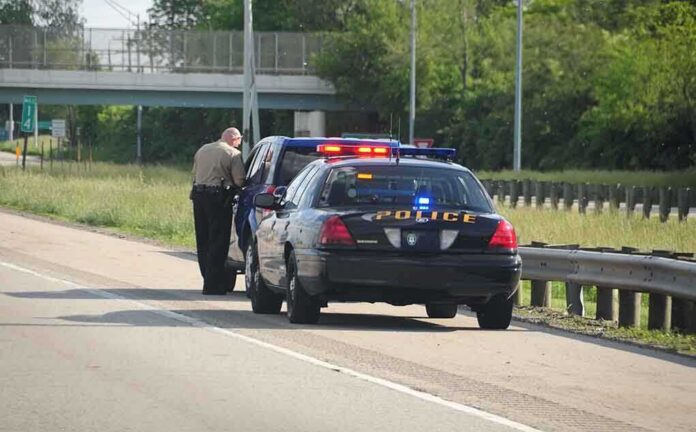
One stale police alert turned a normal drive on Interstate 94 into a high-risk stop that could have ended in tragedy.
Story Snapshot
- Brookfield police stopped a silver sport utility vehicle after a Flock Safety alert linked it to a Milwaukee homicide case.
- Officials later said the alert was outdated because Milwaukee police had not removed the vehicle from the system.
- The people in the vehicle had no connection to the homicide, but officers treated the stop as a serious threat.
- The case has sharpened debate over whether automated plate readers create danger when bad data moves too fast.
What Happened on Interstate 94
Brookfield police conducted a high-risk traffic stop on Interstate 94 after a Flock Safety camera alert flagged a silver sport utility vehicle as tied to a Milwaukee homicide investigation. The stop happened in Waukesha County and involved two innocent occupants who were detained at gunpoint. Local reporting said the vehicle had no connection to the homicide, and the incident quickly spread across Wisconsin news coverage.
Milwaukee police later said the alert was not a Flock defect. They said staff had failed to remove the wanted-vehicle alert from the system after it was no longer needed. Brookfield police chief Chris Garcia also defended his officers and said they acted on the information they received. That shifts the core mistake to human data handling, but it does not erase the danger created once the stale alert reached officers.
Why the Incident Hit a Nerve
This case matters because it shows how a small record-keeping error can escalate into an armed roadside encounter. Flock cameras are marketed as tools that help police find wanted vehicles by matching scanned plates against alerts and other data. In practice, that means the system can move fast, but it also means bad input can spread fast. Critics say that is where the real risk lives.
The broader fight over Flock is not limited to one stop in Wisconsin. Across the state, local governments and public institutions have pulled back from the technology, including moves in Dane County, Kaukauna, Oshkosh, and the University of Wisconsin–Madison. Supporters see a crime-fighting tool. Opponents see a surveillance network that can magnify mistakes, invade privacy, and leave ordinary drivers exposed to force.
What Officials Say the Case Proves
Brookfield and Milwaukee officials are using the incident to argue that the root problem was not the camera system itself. Their view is simple: police data was stale, the alert should have been removed, and officers responded to what appeared to be an active homicide lead. That explanation may limit blame on the vendor, but it also shows how vulnerable the whole chain can be when one database entry is wrong.
The Plymouth, Wisconsin case adds another warning sign. In that incident, police said a stolen plate had been improperly entered into the National Crime Information Center, and Flock later said alerts should be treated as one part of an investigation, not the whole basis for a stop. Together, the two cases show the same pattern: automated tools can speed up police work, but they can also turn human mistakes into instant danger.
Sources:
townhall.com, youtube.com, cbs58.com, jsonline.com, fox11online.com, wisconsinwatch.org, wbay.com, aclu-wi.org, seehafernews.com
© headlineupdates.com 2026. All rights reserved.