
A federal judge has now dismissed the Adani criminal case, but the court’s sharp questions about the Justice Department’s move keep the decision under a cloud of suspicion.
Quick Take
- The Justice Department asked the court to dismiss the case and said it would not spend more resources on it.
- Judge Nicholas Garaufis had already demanded a sworn answer about any possible quid pro quo.
- Adani denied that a proposed United States investment played any role in the dismissal.
- The case now stands as a major example of how fast legal, political, and public trust issues can collide.
Judge Ends the Case After Months of Scrutiny
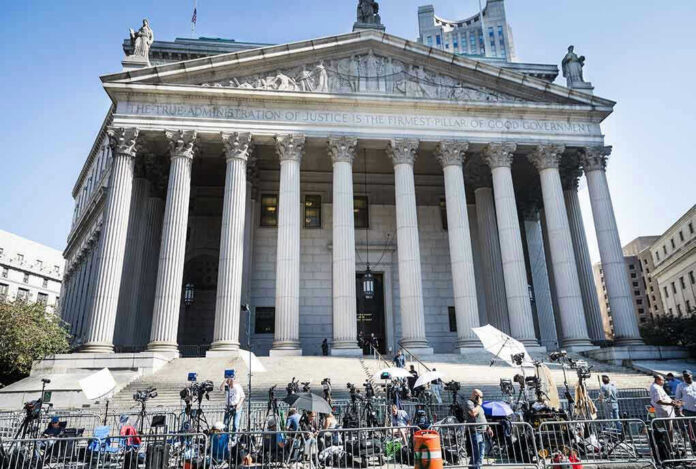
Judge Nicholas Garaufis dismissed the criminal case against Gautam Adani after the Justice Department moved to end the prosecution. Reuters reported that the judge granted the request on Monday, after the department said it would no longer pursue fraud and bribery charges against the Indian billionaire and his associates. The ruling follows a long stretch of court review, including a demand for more detail on why prosecutors wanted the case tossed.
The dismissal did not come as a quiet paperwork step. The judge had already asked Adani to answer, under oath, whether anything was promised in exchange for dropping the indictment. That kind of judicial inquiry is rare and shows the court wanted more than a short prosecutorial explanation. Even though prosecutors can end cases, judges still must approve the dismissal, which gave the court room to press for answers.
Why the Justice Department Wanted Out
Public filings said the Justice Department had reviewed the matter and decided, in its prosecutorial discretion, not to devote more resources to the charges. Reuters and the Associated Press reported that the paperwork was signed by senior Justice Department officials, including Principal Associate Deputy Attorney General R. Trent McCotter and Brooklyn U.S. Attorney Joseph Nocella Jr. That detail matters because it shows the decision came from the top of the department, not from a routine local plea bargain.
The reported case against Adani centered on claims that he and others agreed to bribe Indian officials so a solar project could move forward, then misled United States investors about anti-corruption practices. The Justice Department’s explanation focused on where the alleged conduct happened and on the cost of continuing the case, but the public record provided here does not include the full motion or a complete internal memo. That leaves the exact strength of the department’s reasoning partly hidden from view.
Why the Court Raised Quid Pro Quo Concerns
The biggest source of public doubt is the judge’s own concern about whether the dismissal involved a deal. CBS reported that Garaufis ordered Adani to explain whether any promise, offer, request, receipt, agreement, or acceptance was tied to the end of the case. That order gave weight to suspicion that was already building in the press, especially because the case involved a powerful foreign tycoon, a politically visible Justice Department, and a very fast shift in prosecutorial posture.
Its 03:03 AM NIGHT
🚨 BIG RELIEF FOR ADANI
US JUDGE DISMISSES CRIMINAL CASE AGAINST GAUTAM ADANI. 🇮🇳🇺🇸
A major legal overhang has now been removed.
The US Justice Department had decided to abandon the criminal prosecution, and a federal judge has now… pic.twitter.com/HJpDP4WHrk
— SHARE PURANA (शेयर पुराण) (@SharePurana) August 10, 2026
Adani tried to calm that suspicion in a sworn filing. NBC reported that he said, to his knowledge, his group’s interest in investing in the United States had no role in the Justice Department’s decision, and that he was not aware of any exchange for the dismissal. The New York Times separately reported that Adani acknowledged offering a $10 billion United States investment as part of the resolution, while still denying it affected the decision. Those two points keep the timing dispute alive, even after the court’s dismissal.
What the Ruling Means for the Bigger Picture
The Adani case now sits at the intersection of law, politics, and public trust. One side sees a standard exercise of prosecutorial discretion in a difficult foreign case. The other sees a process shaped by senior officials, a large investment pledge, and a judge who wanted more facts before letting the matter end. The reporting does not prove a secret bargain, but it does show why many readers will see the case as another example of elite power being handled behind closed doors.
The broader lesson is simpler than the partisan noise around it. When a high-profile case ends through a short court filing, and when the judge himself demands answers about possible side deals, the public will naturally ask who benefited and why. That concern crosses party lines. It speaks to a deeper fear that big cases are too often managed by insiders who answer to each other first and the public second.
Sources:
cbsnews.com, nbcnews.com, aljazeera.com, bbc.com, en.wikipedia.org, apnews.com, theguardian.com
© headlineupdates.com 2026. All rights reserved.