
ICE’s airport arrests are putting the Fourth Amendment back at the center of immigration enforcement, and airlines are now sounding the alarm.
Quick Take
- Federal immigration officers have stepped up arrests inside airport terminals, prompting viral videos and new airline concern.
- Congressional legal guidance says the Fourth Amendment still applies to immigration arrests and detentions.
- Warrantless immigration arrests require probable cause and a belief the person is likely to escape before a warrant can be obtained.
- Airport settings do not erase constitutional limits, even though travel screening has its own security rules.
Airport Arrests Draw Airline Attention
Federal immigration officers have increased arrests inside airport terminals, according to recent reporting, and that has triggered public video clips, legal questions, and airline criticism. The arrests are drawing more attention because they happen in a place most travelers associate with routine screening, not street-level enforcement. That contrast is feeding concern that immigration police powers are being pushed into a high-traffic setting where people have little time to understand what is happening.
Airlines are not arguing that immigration laws do not exist. Their concern is about how and where those laws are being used, especially when arrests happen near gates, ticket counters, and other visible parts of an airport. The issue is landing in a broader public mood that already distrusts government power, whether the complaint comes from people worried about border enforcement or people worried about overreach. In both cases, the same question is now being asked: how far can the federal government go without crossing a constitutional line?
Why the Fourth Amendment Matters Here
Congressional Research Service guidance says there are constitutional limits on the authority of immigration officers to arrest people suspected of civil immigration violations. It also says the Fourth Amendment’s ban on unreasonable searches and seizures generally applies to immigration-related arrests and detentions. In plain terms, that means the government does not get a free pass just because the arrest is tied to immigration rather than a criminal charge.
The same legal guidance says warrantless immigration arrests are allowed only when officers have facts that amount to probable cause, or the immigration-law equivalent, and a reason to believe the person is likely to escape before a warrant can be obtained. Other legal summaries make the same basic point, saying federal law gives immigration agents arrest power, but the Constitution still bars unreasonable seizures. That is why critics say airport arrests can create a rights problem even when the agency says it is acting within its authority.
Why Airports Make the Conflict More Visible
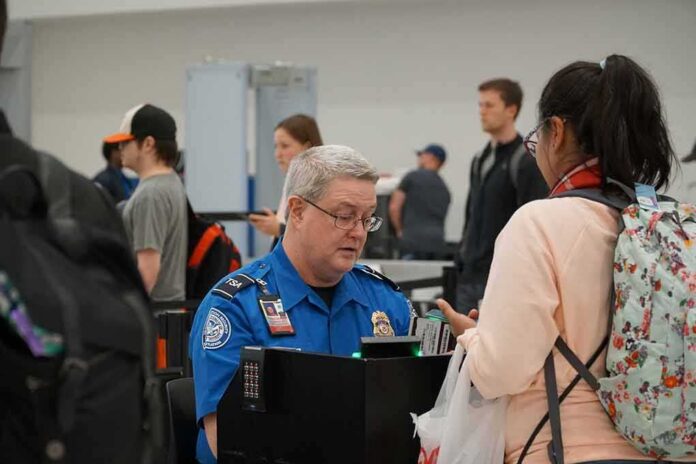
Airports create a sharp tension between federal security rules and ordinary constitutional protections. The Transportation Security Administration screening process is a separate administrative search system, but that does not wipe out the Fourth Amendment for every other law enforcement action in the terminal. A traveler may expect screening at a checkpoint. A sudden immigration arrest at a gate or in a waiting area is a different event, and that difference is now at the center of the debate.
Legal advocates say those arrests matter because civil immigration enforcement can still turn into a seizure that must meet constitutional standards. Reports on recent airport arrests say passengers have been abruptly swept up while traveling, which has made the issue more visible and more politically charged. That visibility cuts both ways: supporters of aggressive enforcement see a government finally acting, while critics see another example of federal power moving faster than the law can clearly explain.
The Bigger Political Problem
This fight fits a larger pattern in Washington. The law may sound clear on paper, but the facts of a given arrest often are not clear enough for the public to judge it right away. That gap leaves room for fear, suspicion, and broad claims of abuse on one side, and claims of necessary enforcement on the other. The result is another front in the larger argument over whether federal agencies are still respecting the limits the Constitution was built to impose.
For now, the most concrete point is also the simplest: airport arrests are not automatically unlawful, but they are not automatically immune from constitutional scrutiny either. That is why this issue is touching such a raw nerve. It combines immigration, travel, and the basic question of who gets to decide when federal power has gone too far.
Sources:
reason.com, congress.gov, aclu.org, npr.org, americanimmigrationcouncil.org, brennancenter.org, law.stanford.edu, pbs.org, cdn.vanderbilt.edu, cnn.com
© headlineupdates.com 2026. All rights reserved.