
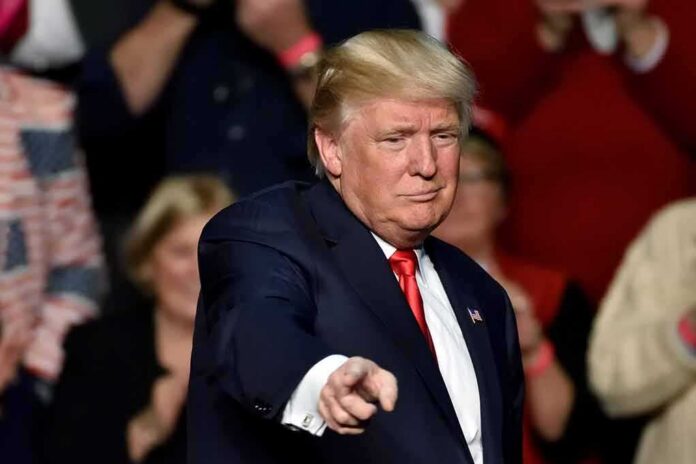
Trump brushed off repeated attempts on his life by saying only “consequential” presidents get shot at — a stark reminder of today’s heated politics and the courage required to face it head-on.
Story Highlights
- Trump said “only consequential presidents get shot at” after multiple attempts on his life.
- Federal Bureau of Investigation (FBI) treated the Butler, Pennsylvania shooting as an assassination attempt and potential domestic terrorism.
- Scholars and records show attacks on presidents span U.S. history, not only “great men” moments.
- Critics argued Trump’s framing risks downplaying the gravity; others noted an intense climate of rhetoric.
Trump’s Remark And Why It Landed
Trump told supporters that “only consequential presidents get shot at” after returning to public events following a second apparent attempt on his life. Reports from the New York Post, Anadolu Agency, and Asharq Al-Awsat captured the exact line and the context: he linked the danger he faces to the weight of his presidency and agenda. Many supporters heard resolve. They saw a leader who will not flinch, even as threats rise and political rage stays high.
The statement came after months of tightened security and public concern. The Butler, Pennsylvania shooting in July 2024 left one supporter dead and wounded Trump. The Federal Bureau of Investigation publicly called it an attempted assassination and said it is investigating it as potential domestic terrorism. That formal label matters. It confirms authorities see intent to kill a national leader, not a random act. It also places the threat inside a broader homeland security problem.
What The Record Shows About Presidential Attacks
Congressional research and historical records show that direct assaults against presidents, presidents-elect, and candidates have happened many times across eras, with several deadly outcomes. The Warren Commission’s historical appendix noted attempts have struck roughly one in five presidents since the 1800s. This history undercuts any claim that attacks occur only against so-called “transformational” figures. The pattern reflects periods of intense division, exposure in public settings, and the symbolic power of the office.
These data points help us keep perspective. Violence against leaders is not new, but it feels more constant in our current climate. Many readers see a direct line from reckless talk to real harm. Conservative watchdogs catalogued voices that branded Trump an “existential threat” and compared him to Adolf Hitler before the second attempt, adding fuel to an already hot fire. Strong words are not crimes. But they raise the risk that unstable people hear a green light. History suggests that mix can turn deadly.
Debate Over Tone, Responsibility, And Free Speech
After the attacks, opinion writers on the left warned that “turning down the temperature” should not silence criticism of Trump. That view protects open debate. But it also risks ignoring how nonstop demonization can push fringe actors over the edge. Our system must hold two truths: free speech is essential, and leaders, media, and influencers have a duty to avoid language that paints political rivals as subhuman or beyond the law. That is not censorship; it is civic responsibility.
Trump shrugs off assassination attempts, remarking 'only consequential presidents get shot' https://t.co/DP7a9DhnmG #FoxNews
— Kristine Parks (@KristineP25) August 24, 2026
Some critics argued Trump’s “consequential” line makes light of real danger. Others heard a plain statement of grit from a president who keeps showing up. Both reactions can be true at once, but the hard facts remain the anchor. Federal investigators named the Butler attack an assassination attempt. Independent records document that such attacks recur across history, not just around one figure. Against that record, the right question is not about tone. It is about prevention, protection, and justice.
What Matters Now For Safety And Liberty
The federal government under President Trump must keep hardening security without smothering free assembly. Americans still deserve open rallies, town halls, and everyday access to leaders. That balance starts with better intelligence sharing, tighter site control, and faster interdiction. It also means equal justice for would-be assassins, no excuses. When government misses clear warnings, Congress should demand answers. When critics cross the line into incitement, prosecutors should act within the Constitution’s guardrails.
For readers, the takeaway is simple. The threats are real. The office is a target. The mission is to defend life, defend speech, and defend the peaceful transfer and exercise of power. Trump’s remark captured the weight of this moment. But the proof that matters sits in the case files and the history books: an attempted assassination confirmed by the Federal Bureau of Investigation, and a long record showing that political violence rises when a nation is divided and leaders remain in the open. Resolve, not retreat, must lead us forward.
Sources:
npr.org, nypost.com, presidency.ucsb.edu, english.aawsat.com, bbc.com, taskforce-kelly.house.gov, youtube.com, the-independent.com
© headlineupdates.com 2026. All rights reserved.