
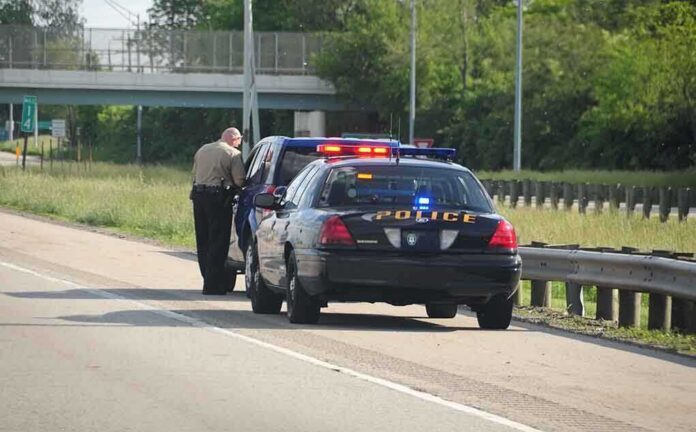
A simple tap on your taillight can mark a stop, steady a tense moment, and signal how policing really works on America’s roads.
Story Snapshot
- Police often touch the rear of a car during stops to mark contact and manage risk.
- The tap can leave fingerprint evidence tying the officer to that exact vehicle if danger unfolds.
- Officers also use the touch as a quick trunk check and a brief tactical pause before approach.
- Body cameras reduced the need for prints, but many officers still do the tap out of habit and training.
What Officers Say the Taillight Tap Does
Police trainers and union leaders say the rear tap is about safety and proof. During a stop, an officer may touch the taillight or trunk to leave a physical mark and to center their focus before moving to the window. William Johnson of the National Association of Police Organizations told fact-checkers that officers do touch the rear to leave fingerprints that tie the stop to that car if things go wrong. A retired academy instructor echoed the same point about prints and presence.
Beyond prints, the touch can serve a second safety check. Officers may press the trunk to make sure it is closed and that no one can jump out. Some training write-ups also describe the move as a brief pause that lets the officer scan mirrors, hands, and motion inside the car before they commit to the driver’s window. This step is small, but it helps the officer keep control in the first seconds, when stops are most tense and mistakes can rise.
How Cameras Changed, But Did Not End, the Habit
Dash cameras and body cameras now record most stops. Those tools can show who stopped whom and when, which lowers the need to rely on fingerprints. Still, the taillight tap remains common in many places because habits stick and some instructors still teach it as one layer in a safety stack. Officers learn to manage space, watch hands, call backup when needed, and keep a record of contact. The tap fits into that larger set of basic tactics.
People often ask if the tap is legal. General explainers say a brief touch tied to a lawful stop and safety check is allowed. The motion is quick, does not damage the car, and relates to the officer’s duty to document and control the scene. Some debate exists online over how often prints matter now, but the core idea—a physical link and a moment to assess risk—remains the stated reason across guides and union comments.
Why This Small Gesture Draws Big Attention
Traffic stops are the most common point of contact between the public and the state. A small gesture becomes a symbol of bigger issues: officer safety, transparency, and trust. Many citizens on the left and the right fear that routine power can be misused. Others worry that officers lack support and tools to stay safe. The taillight tap sits in that crossfire. It is simple, cheap, and human, but it raises hard questions about process, proof, and fair treatment.
For drivers, the takeaway is practical. When you see an officer walk up and touch the back of your car, do not panic. Keep your hands visible. Wait for instructions. That light touch is usually a safety step and a marker of contact, not a trick. For leaders, the lesson is clear too. Clear training, clear policy, and clear communication help calm tense stops and reduce doubt about why each move happens the way it does.
Sources:
carparts.com, news.yahoo.com, threebrosauto.com
© headlineupdates.com 2026. All rights reserved.