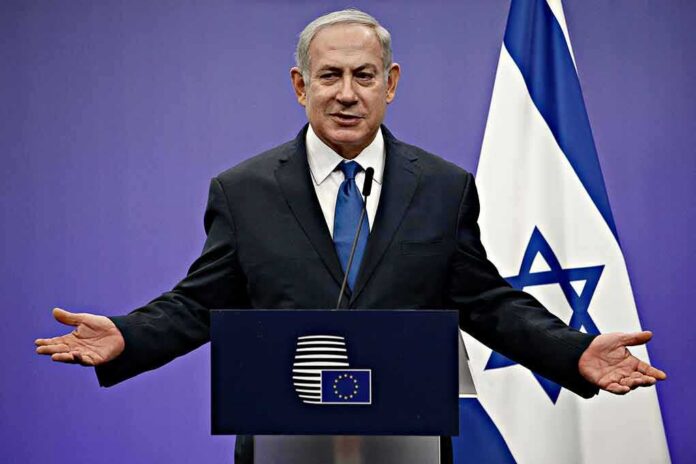
Israel’s prime minister vowed to call out New York’s mayor at the United Nations while the mayor admits the city cannot arrest him under an international warrant.
Story Highlights
- Prime Minister Benjamin Netanyahu plans a brief New York trip and says he will denounce Mayor Zohran Mamdani from the UN stage.
- Mayor Mamdani called Netanyahu a “war criminal” but now says New York lacks legal power to enforce the International Criminal Court warrant.
- The United States is not a member of the International Criminal Court, making any arrest a federal call, not a city action.
- Israeli officials reject the court’s allegations, while activists push Washington to back the warrant during the UN week.
What Sparked The Clash Ahead Of The UN Visit
Prime Minister Benjamin Netanyahu said he will “tell the truth” at the United Nations and publicly condemn New York City Mayor Zohran Mamdani, escalating a feud as world leaders gather in New York. Netanyahu’s trip is expected to be short, with a tight schedule and heavy security planning, as protests and political pressure rise around the visit. The tension follows months of debate over an International Criminal Court arrest warrant and whether any U.S. authority would act on it.
Mayor Mamdani previously urged that Netanyahu be arrested if he entered the city, citing the court’s action. He has since said his administration reviewed every option and found the city has no independent authority to carry out the warrant. He has pressed the federal government to back the court and execute the warrant if possible, shifting the focus from City Hall to Washington. Israeli and allied voices called his stance hateful, while supporters framed it as lawful accountability.
What The International Criminal Court Warrant Does And Does Not Do
The International Criminal Court issued warrants in 2024 for Netanyahu and former defense chief Yoav Gallant over alleged war crimes tied to the Gaza conflict. The warrants cite charges such as using starvation as a method of war and targeting civilians, allegations Israeli leaders deny. The warrants are real legal instruments, but they rely on member countries to arrest suspects. The United States is not a party to the court’s treaty, which limits enforcement on U.S. soil.
Reports note that court members are expected to arrest a suspect if that person enters their territory, which creates risk for international travel through those states. New York City is not a sovereign nation and cannot make foreign policy or enforce international court orders on its own. That is why Mamdani’s position narrowed to an appeal for federal action rather than a city-led arrest plan. The issue is less about whether the warrant exists and more about who can lawfully act on it inside the United States.
Why This Fight Resonates With Voters Across The Spectrum
Many Americans see leaders arguing about process while core duties go unmet. Here, a global court issued a serious warrant, yet the power to act is tangled in treaties and jurisdiction. City officials cannot enforce it. Federal officials may not want to. That gap feeds a deeper worry that powerful figures live by different rules. It also shows how global crises quickly become stage fights that do not solve safety, cost of living, or basic trust in government.
Israeli Ambassador to the United Nations Danny Danon has called for the arrest of New York City Mayor Zohran Mamdani, sharply escalating an already heated dispute ahead of Israeli Prime Minister Benjamin Netanyahu’s expected visit to New York for the United Nations General… pic.twitter.com/reAvn0MXYj
— Shiri_Sabra (@sabra_the) September 21, 2026
Conservatives will view the court as outside pressure and welcome a firm defense of national control. Liberals will stress that no one should be above the law, even a head of government. Both sides may agree on one thing: a system that cannot give clear answers breeds anger. As the UN week unfolds, expect loud speeches, tight security, and little movement on the core legal question. The outcome still hinges on Washington, not City Hall, and not the UN podium.
Sources:
english.ahram.org.eg, bbc.com, reuters.com, theguardian.com, ecchr.eu
© headlineupdates.com 2026. All rights reserved.