Yemen’s Houthi rebels say they hit “sensitive sites” deep inside Saudi Arabia’s capital, but Saudi officials say their air defenses shot the missile down before it ever got there.
Story Snapshot
- Houthi spokesman Yahya Saree claimed two “successful military operations,” including a strike on Riyadh, on September 19-20, 2026.
- Saudi-led coalition officials say air defenses intercepted and destroyed a ballistic missile aimed at Riyadh before it hit anything.
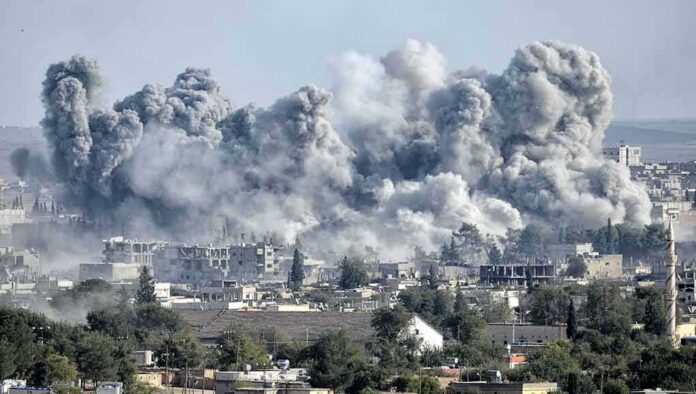
- Flames and thick smoke were seen near Riyadh’s King Khalid International Airport, though the cause was not confirmed.
- No casualties or damage have been reported by either side, and no independent evidence has confirmed a successful hit.
Houthis Claim Strikes On Saudi Capital
Houthi military spokesman Yahya Saree announced that his group carried out “two successful military operations,” saying the first “targeted sensitive sites in the Saudi capital, Riyadh.” He said fighters used a mix of ballistic missiles, cruise missiles, and drones. The statement did not name a specific building, base, or facility that was hit, leaving the actual target unclear.
Saudi officials tell a different story. Coalition spokesperson Major General Turki al-Maliki said Saudi air defenses “successfully intercepted and destroyed” a ballistic missile launched by the Houthis toward Riyadh at dawn. He said the missile never reached its target and caused no damage on the ground.
Smoke Near Airport Raises Questions
Reuters reported that flames and a large plume of smoke were seen near Riyadh’s main airport not long after the Houthi claim went public. Saudi civil defense sent out an emergency alert warning of a “hostile aerial threat” before later issuing an all-clear. Reporters on the ground could not confirm what caused the smoke.
The Associated Press said Saudi Arabia’s confirmation came hours after the early morning incident, and the coalition statement made clear its position: the missile was intercepted, and “there were no reports of casualties or damage.” That timeline gap, and the lack of matching evidence, is part of why the two sides’ accounts remain hard to square.
A Pattern Of Disputed Claims
This is not the first time Riyadh and the Houthis have told opposite stories about the same missile. Research groups tracking the war note that cross-border strikes on Saudi Arabia have become common since 2015, with the Houthis often claiming success while Saudi officials say their defenses stopped the threat. The public rarely gets clear proof either way in the hours right after an attack.
That repeated pattern matters beyond this one incident. Millions of barrels of oil move through the region, and any strike near Saudi energy infrastructure can shake global markets even before anyone confirms what actually happened. Investors and governments often react to the claim itself, not the eventual facts.
Houthis hit Riyadh: Saudi Arabia says it intercepted a Houthi ballistic missile targeting the capital as black smoke rose from an Aramco fuel depot near King Khalid International Airport.
What happened — and why it matters: https://t.co/7LKEDLobUO
— Piyush Gupta (@PiyushNeekhra) September 20, 2026
For now, the record shows a real attempted attack, a real emergency response in Riyadh, and two flatly contradicting accounts of what happened next. Saudi Arabia says its defenses worked and nothing was damaged. The Houthis say they scored a direct hit. Without independent evidence like debris analysis or verified footage, neither claim can be fully confirmed, and neither side has any reason to back down from its story.
Sources:
middleeasteye.net, aljazeera.com, timesofindia.indiatimes.com, washingtonpost.com
© headlineupdates.com 2026. All rights reserved.