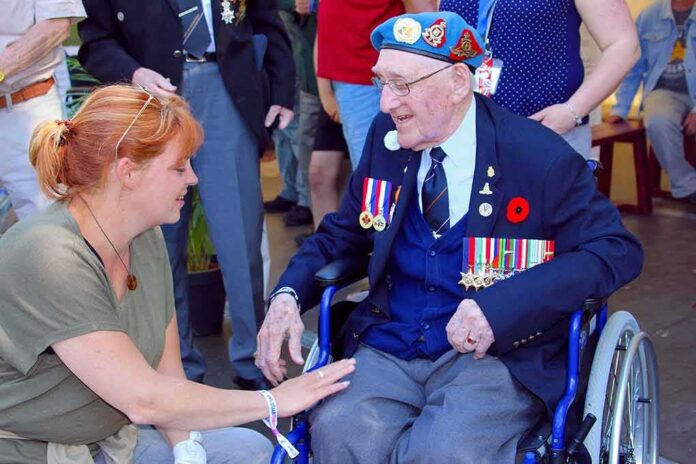
Four out of five people with military ties say the country honors their service in words but forgets them in practice.
Story Snapshot
- About 79% of surveyed veterans, service members, and families feel left behind by politicians and society.
- The survey covered 731 people with direct military ties and reported a 4% margin of error.
- Americans broadly trust veterans as leaders, even as many veterans feel unseen in daily policy.
- The split points to a gap between praise for service and support for real needs.
What the Survey Found and Why It Hit a Nerve
Common Defense Civic Engagement commissioned polling in mid-September and released the findings in late October. The survey asked veterans, active-duty service members, and military family members if politicians and society were leaving them behind. About 79% said yes. Nearly half said they strongly agreed. Only 15% pushed back. The sample size was 731, and the reported margin of error was four percentage points. The message is plain: polite thanks do not cover everyday gaps in care and support.
Respondents described a frustration many readers will recognize. They see headline praise on Veterans Day and at ballgames. They hear vows to fix health care backlogs and speed claims. Then they run into slow referrals, confusing rules, and a maze of forms. Families face relocations, child care gaps, and job loss after moves. These are not abstract issues. They are rent, food, time, and health. When leaders talk a big game but deliver weak follow-through, trust thins fast.
The Paradox: High Trust, Low Confidence in Support
National polls show strong trust in veterans as leaders. Gallup found seven in ten Americans hold a high level of confidence in veterans, and a large majority say they would trust a veteran in office a great deal or a fair amount. Another Gallup measure found 55% say military service makes them more likely to vote for a candidate. These are big numbers. They reflect respect for duty, teamwork, and accountability. Yet esteem for veterans as people does not erase spotty delivery on core services.
That split reveals a basic truth. Symbolic support feels good, but it does not schedule a mental health appointment. It does not fix a late disability claim. It does not guarantee a steady job after separation. Voters can admire veterans and still elect leaders who do not make veteran issues a top-line priority. Praise without policy becomes a pat on the back that fades by Monday morning. Conservative common sense says results matter more than rhetoric.
Where the System Misses and How to Close the Gap
Care coordination breaks down at handoffs. People move from active duty to the Department of Veterans Affairs with partial records and unclear contacts. Spouses change states and lose licenses or wait months for recognition. Community colleges and job centers vary in quality and know-how. Local clinics may not have enough providers, or any with trauma expertise. None of this is solved by a single speech. It demands clear lines of authority, simpler forms, faster clocks, and public scorecards that track results.
Several steps would align with limited, effective government. First, set a 30-day standard for primary mental health visits and publish on-time rates by facility. Second, make interstate license transfer automatic for a list of common jobs for military spouses. Third, create a one-page benefits snapshot for every separating service member, delivered 120 days before exit. Fourth, expand veteran hiring pipelines in skilled trades, where high wages meet chronic shortages. These are targeted fixes that respect taxpayers and deliver real help.
Why This Moment Demands Action, Not Slogans
The survey should not be read as a demand for endless programs. It is a demand for promises kept. Voters respect veterans because they meet standards and own outcomes. Government should reflect that ethic. Publish the targets, fund to the target, and fire the targets if they miss. If a claims office lags, surge trained staff for 90 days and clear the deck. If a state blocks license transfers, tie federal grants to reform. Accountability is not cruelty; it is how you show respect.
My responded to Community Note:
When You Are Allowed to Wear the UniformFederal law (10 U.S. Code § 772) and Department of Defense regulations (DoD Instruction 1334.01) strictly limit uniform wear for former service members:
• Immediately after discharge: You may wear the… pic.twitter.com/TyWdy7LNgE— Texian4Ever (@R6K5S) November 2, 2026
Public trust in veterans remains a key national asset. Research shows that when veterans and military families serve in civic roles, they boost public confidence in our systems. That reservoir of trust is precious and earned. It should not be spent on empty gestures. The poll’s 79% figure is not a call for pity. It is a scoreboard flashing red. Close the gap between what leaders say and what families live. Results, not rituals, will lower that number the right way.
Sources:
military.com, peaceandplanetnews.org, naturalnews.com
© headlineupdates.com 2026. All rights reserved.