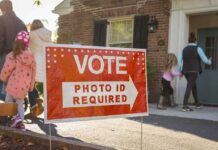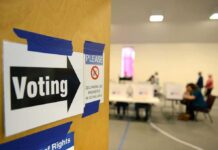
Fulton County, Georgia confirmed on Election Day that fake text messages told voters their polling places had moved, forcing officials to scramble and warn the public in real time.
Quick Take
- Fulton County officials confirmed voters got fake texts claiming polling places changed on Election Day, November 3, 2026.
- The county said it did not send the messages and told voters to verify their polling place through the state’s My Voter Page or by phone.
- Reporters and officials have not identified who sent the texts or how many voters got them.
- Separate claims about thousands of unusually old voter registrations in Michigan have surfaced but remain unconfirmed by any court filing or audit.
- The episode fits a long pattern of Election Day “dirty tricks” meant to confuse voters about where and how to vote.
Fake Texts Hit Fulton County On Election Day
Fulton County’s government posted a warning on social media as voters headed to the polls on November 3, 2026. The post said some voters reported getting text messages about polling place changes. The county stated plainly that it did not send those messages. That kind of confusion, dropped in the middle of a live election, is exactly the sort of trick that can throw off busy voters trying to get their ballot cast before polls close.
Fulton County has a long and troubled history with election administration, so any new source of voter confusion draws fast attention. Officials moved quickly to get ahead of the story, posting the warning the same day the texts started circulating, according to contemporaneous Election Day coverage.
County Scrambles To Verify Voter Locations
Fulton County told voters to double-check their assigned polling place two ways. They could look it up on the Georgia My Voter Page, the state’s official voter-lookup tool, or call the county election office directly at 404-612-7020. That guidance went out statewide through local television and newspaper live blogs as Georgians voted, a sign officials treated the fake texts as an urgent, active threat rather than a minor nuisance.
Polls in Fulton County stayed open until 7 p.m. that day, and the county’s own election page reminded voters they must cast their ballot at their assigned location, not wherever a text message told them to go. That reminder matters because a voter who shows up at the wrong precinct can face delays, confusion, or in some cases a provisional ballot instead of a regular one.
Source And Scope Remain Unknown
Nobody has publicly identified who sent the fake texts. Reporting from Election Day said the source had not been determined and that a county spokesperson did not immediately offer more detail. That leaves basic questions unanswered: how many voters got the texts, whether they targeted specific neighborhoods, and whether anyone missed their chance to vote because of them.
Conservative outlets were quick to note this was not the first time Fulton County voters faced this exact problem. One report framed it bluntly as a repeat event, pointing out that fake polling-place texts have hit the county before on Election Day. For voters who already distrust how Fulton County runs its elections, a repeat scam is not reassuring.
A Pattern Conservatives Have Warned About For Years
Fake notices meant to confuse voters about when, where, or how to vote are an old trick. Researchers who study election security note that tactics like phony date-change notices and decoy information have existed for decades, and digital messaging just makes them cheaper and faster to spread. The texts hitting Fulton County voters this year fit that mold exactly, using a quick, anonymous blast to sow doubt on the one day it matters most.
Separately, claims have circulated this election cycle about Michigan voter rolls containing thousands of registrants listed as well over 100 years old. No court filing, state audit, or named official response confirming that specific figure has surfaced in current reporting, so the number itself remains an open question rather than a settled fact.
Both stories point to the same underlying truth conservatives have pushed for years: election systems need stronger safeguards, faster verification, and real accountability when something goes wrong. Fulton County’s quick warning helped voters protect their own ballots this time. But an anonymous actor being able to spread false polling information statewide, with no identified source days later, is not a problem that gets solved by a phone number and a website link alone.
Sources:
pjmedia.com, appenmedia.com, ajc.com, nampa.org, roughdraftatlanta.com, palmbeachpost.com, economictimes.com
© headlineupdates.com 2026. All rights reserved.