
Washington put up to $20 million on the table to help catch two alleged Guatemalan narcotics bosses, signaling a hard push against cross-border drug networks.
Story Snapshot
- State Department offered up to $10 million per target for tips leading to arrests or convictions.
- Targets named as Axel Bladimir Montejo Saenz (“Mosh”) and Walfre Donaldo Calderón‑Calderón (“El Teniente Jr.”).
- Rewards come under the long-running Narcotics Rewards Program with past successes.
- Experts say “kingpin” takedowns can disrupt cartels but also risk more violence and fragmentation.
State Department Names Two Guatemalan Targets and Offers Major Rewards
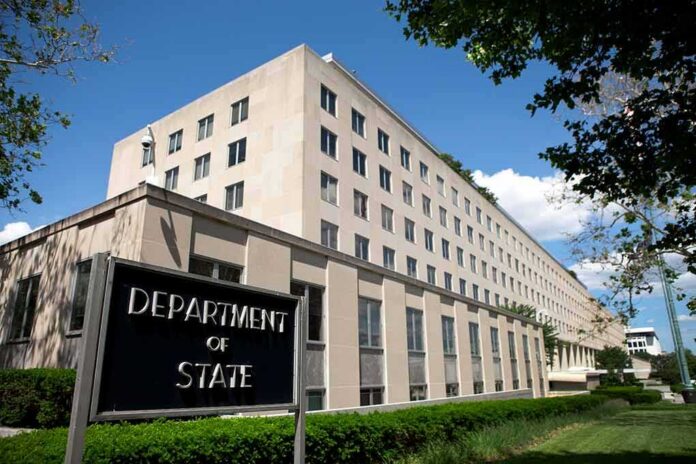
The Department of State said its Bureau of International Narcotics and Law Enforcement Affairs is offering up to $10 million for each of two alleged Guatemalan narcotics traffickers. The notice identifies Axel Bladimir Montejo Saenz, also known as “Mosh,” and Walfre Donaldo Calderón‑Calderón, known as “El Teniente Jr.” The State Department says the offers apply to information that leads to arrests and or convictions in any country. The announcement frames the move as part of a broader push to disrupt foreign drug networks.
The wanted profile for Walfre Donaldo Calderón‑Calderón lists his aliases and the reward amount, and it directs the public to provide credible tips through official channels. Officials often release such profiles to standardize names, nicknames, and known roles. That helps law enforcement avoid confusion when groups use multiple identities. This clarity matters when rewards reach eight figures. People need a clear way to match faces and names if they plan to come forward with information.
How the Narcotics Rewards Program Works and What It Has Achieved
The Narcotics Rewards Program gives the Secretary of State authority to offer large sums for help bringing major foreign traffickers to justice. The department says it has supported dozens of captures and convictions and has paid over one hundred million dollars over the years. In April 2026, a separate Guatemalan target named by the program was arrested, showing how tips and pressure can lead to custody. The new Guatemalan rewards follow that same playbook and scale.
Washington has used public rewards, sanctions, and indictments for decades to hit drug groups at the top. Supporters argue that leader-focused moves break command chains and force retreats. Critics warn that leaders are often replaced fast. They say the trade shifts routes and methods to adapt. Academic work in Mexico links kingpin captures to higher homicide in the short run and to more splinter groups that fight for turf after a capture or killing.
Why This Push Matters for Communities in the United States and Guatemala
United States leaders frame these rewards as a way to protect American neighborhoods from cocaine and other drugs that flow north through Central America. Guatemalan communities also face harm from organized crime. The State Department’s trafficking report says gangs there coerce boys and men into drug transport and extortion while exploiting girls in sex trafficking. When a group loses a boss, some areas can see sudden turf battles. Those fights raise risks for families, police, and small businesses caught in the middle.
Readers across the political spectrum share a core concern: powerful criminal networks profit while regular people pay the price. Conservatives point to drugs crossing borders and the strain on public safety. Liberals point to human rights abuses and the risk to poor communities. Both sides see a government that must show results, not headlines. Big rewards can spark useful tips, but they must link to arrests, fair trials, and cuts in the actual drug supply to win trust over time.
What to Watch Next: Tips, Arrests, and Measurable Results
Officials will watch for credible tips, arrests, and early court steps tied to these two targets. Past cases show that patience matters. International arrests can take months as agencies gather evidence and arrange extradition. The public should expect few details until there is a capture, since active leads are sensitive. Clear updates on arrests, seizures, and convictions will help show whether these rewards make communities safer on both sides of the border.
For now, the signal is clear. The United States is paying for information that helps crack high-level networks tied to Guatemala. The next chapter depends on whether the money prompts insiders or locals to speak up. If arrests follow and violence does not spike, this move will look like progress. If groups splinter and fighting grows, leaders will face hard questions about how to pair kingpin hits with community safety plans that hold over time.
Sources:
washingtontimes.com, state.gov, occrp.org, nber.org, resolve.cambridge.org
© headlineupdates.com 2026. All rights reserved.