
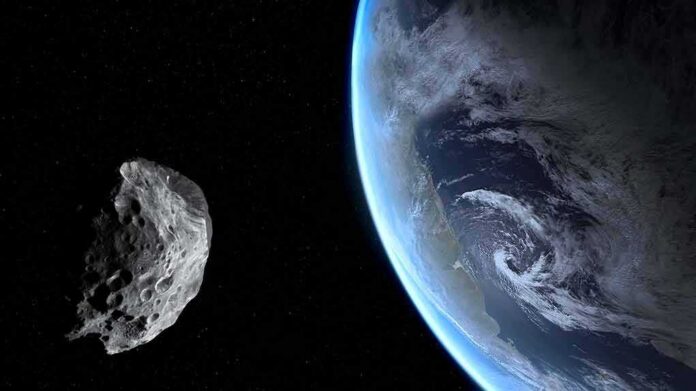
Voyager 1 crossed the one light-day mark from Earth, turning raw distance into human history.
Story Highlights
- NASA set the milestone at November 18, 2026, 5:16:07 a.m. Eastern Time.
- One light-day equals 16,094,799,096 miles, or 25,902,068,356 kilometers.
- Voyager 1 is the farthest human-made object and the first to reach this distance.
- A radio signal now needs 24 hours each way between Earth and Voyager 1.
The Exact Moment Humanity Marked a New Outer Limit
NASA placed a pin in the cosmos at a precise tick of the clock: November 18, 2026, at 5:16:07 a.m. Eastern Time, Voyager 1 reached a distance of one light-day from Earth, a specific, calculated threshold that turns a moving target into a milestone. The agency framed the moment as both scientific and civic, inviting the public to mark the occasion and underscoring a simple truth: no other human-made object has ever been this far from home.
One light-day is not a metaphor. It is a number you can write down and check: 16,094,799,096 miles, or 25,902,068,356 kilometers. That is how far light travels in 24 hours. NASA used that crisp yardstick to turn a constant journey into a fixed signpost in space. The agency’s materials explained it in plain terms, because the meaning hits hard only when the math is clear and the units are honest.
How Voyager 1 Got There And Keeps Going
Voyager 1 did not sprint. It cruised for decades at about 38,000 miles per hour, roughly 61,000 kilometers per hour. That steady pace across 49 years, two months, and 11 days added up to the one-light-day mark. The spacecraft now sits in interstellar space. That label reflects the region beyond the Sun’s bubble of charged particles, not the edge of the Sun’s gravity. The path is still outbound, and the speed still stacks miles, day after day.
The Deep Space Network listens for Voyager 1 with giant antennas in California, Spain, and Australia. Those dishes can still pick up the spacecraft’s faint whisper. The system has supported missions across the solar system for decades and remains how engineers time, track, and talk to the most distant craft we have. The communication routine is slow now for a simple reason: the signal moves at light speed, and light needs a full day to get there, and a full day to get back.
What One Light-Day Changes For Earthbound Minds
NASA’s outreach treated this like more than a lab note. The agency asked the world to pause, look up, and “shine bright” in honor of the moment. That choice fits a long pattern in spaceflight: turn a long, quiet climb into a clear rung on the ladder. Reporters, teachers, and parents can all point to a single line: here is the day when human work reached a full day’s worth of light from home. The line will not move, even as the spacecraft keeps moving.
Some language about “leaving the solar system” can blur different ideas. NASA’s own pages separate the physical distance of a light-day from the boundary of the Sun’s particle bubble and from the Sun’s larger gravitational reach. The milestone proves distance and delay with clockwork clarity. It does not claim a final border crossing of every kind. That distinction matters because clear terms protect public trust and keep awe grounded in facts.
The Conservative Case For Celebrating Precision And Grit
The milestone rewards values that built the mission: discipline, thrift, and craft. Engineers launched Voyager 1 in the 1970s, planned for decades, and kept the lights on through careful power management. They relied on simple physics, rigorous timing, and patient maintenance. That is not hype. That is stewardship. When an agency states a time down to the second and ties it to a defined distance, it shows respect for taxpayers and for truth in numbers.
After nearly 50 years, Voyager 1 has traveled more than one light-day from Earth.
Hear about what the Voyager mission has taught us about our solar system—and beyond—in the newest episode of our Curious Universe podcast: https://t.co/myZespHoPz pic.twitter.com/bRi1iaSWCs
— NASA (@NASA) November 18, 2026
What comes next follows the same rules. The spacecraft will continue to add miles at the same steady rate. The radio link will grow fainter and slower. The Deep Space Network will keep listening as long as the signal can be heard. The story is now less about new pictures and more about what endurance means. The lesson is simple and tough: small, honest gains, kept up for a very long time, can carry human work beyond what anyone can see with the naked eye.
Sources:
youtube.com, nasa.gov, science.nasa.gov
© headlineupdates.com 2026. All rights reserved.