
The most unsettling part of the Minneapolis ICE shooting is that two people carried the same training, the same video, and the same law in their heads—and still walked away with opposite definitions of justice.
Story Snapshot
- A 37-year-old U.S. citizen, Renee Nicole Good, was shot and killed by an ICE Special Response Team officer in Minneapolis during a morning enforcement action.
- Federal leaders quickly framed the event as self-defense and even “domestic terrorism,” while Minneapolis officials called it reckless and demanded ICE leave the city.
- Multiple bystander videos turned the shooting into an instant national referendum on federal force, vehicles as weapons, and political spin.
- A retired ICE agent, Silverman, dissected the incident, arguing the officer’s training and a previous car-dragging injury made his decision to fire almost instinctive.
How A Minneapolis Street Became A Collision Of Law, Fear, And Politics
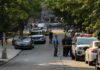
Witnesses in Minneapolis woke up to chaos at East 34th Street and Portland Avenue when an ICE enforcement action ended with three bullets and a crashed vehicle. Renee Nicole Good, a 37-year-old U.S. citizen, was behind the wheel when an ICE Special Response Team officer opened fire—one round through the windshield, two through the driver’s side window—as her car accelerated and turned away. Firefighters pulled her from the vehicle, medics rushed her to Hennepin County Medical Center, and she later died.
Phones were already rolling when it happened. Bystander videos, from multiple angles, hit the internet before most Americans finished their coffee. The footage showed officers around Good’s car, positioned oddly perpendicular to the street, and then that brief, violent sequence: movement, acceleration, an officer stepping aside, muzzle flashes, a vehicle lurching, then crashing. Those few seconds became raw material for an entire nation to project its politics, fears, and assumptions about federal power onto one Minneapolis intersection.
Why A Retired ICE Agent Says The Shooting Made Tactical Sense
Retired ICE agent Silverman watched the same videos and saw something most civilians missed: training scars. He pointed out that the shooter was not a routine deportation officer but a Special Response Team member with about a decade of tactical experience—and, crucially, a recent trauma. Six months earlier, the same officer had been dragged by a car in another incident, suffering injuries that required dozens of stitches. Once a vehicle has chewed up your body, you never again see a rolling bumper as harmless.
Silverman explained that ICE and other federal agencies drill agents to treat a vehicle as a lethal weapon the moment it appears to target them. Within that framework, the key legal question is narrow: did the officer reasonably believe he faced deadly force when Good accelerated? Silverman argues that when an officer has already been pulled under a car once, the brain does not calmly recalculate trajectory once he steps out of the direct path. Training and fear compress into one instinct: stop the threat before it reaches you—or your partner.
Why Minneapolis Leaders Saw Recklessness, Not Self-Defense
Minneapolis’s leaders looked at the same footage and reached the opposite moral verdict. Mayor Jacob Frey called the shooting an example of a federal agent “recklessly using power that resulted in somebody dying” and told ICE, in profane terms, to get out of the city. City officials said they had “dreaded this moment” since ICE ramped up its presence in Minneapolis, describing federal operations as destabilizing and terrorizing immigrant-heavy neighborhoods. To them, the real threat on that street was not a car; it was Washington.
The local frustration did not arise in a vacuum. Minneapolis police did not fire a single shot; they arrived after the fact to manage the aftermath. Residents saw federal officers running an operation in a residential area, ending with a U.S. citizen dead and federal leaders immediately declaring the case closed in public before independent investigators finished their work. For Americans who value federalism and limited centralized power, a distant political class preempting the facts should raise red flags, regardless of views on immigration enforcement.
When Washington Spoke Before The Evidence, And Cops Pushed Back
Within hours, the Trump administration defined the narrative. DHS and ICE stated that Good tried to run over officers, justifying the shooting as self-defense.Vice President J.D. Vance said her death was a “tragedy of her own making,” claiming she tried to “ram somebody with her car” and describing the incident as an attack on federal law enforcement and “on the American people.” DHS Secretary Kristi Noem labeled the alleged act “domestic terrorism.” None of that waited for an investigative report.
Federal law enforcement associations, hardly a left-wing constituency, urged something rare these days: patience. Their leaders warned that heated political rhetoric—on either side—would damage public trust and make it harder for agents to do their jobs. Former DHS Secretary Chad Wolf, speaking as a commentator, stressed that the legal standard centers on what was reasonable in the officer’s mind at that instant, not on social media verdicts. That perspective aligns with a conservative respect for due process: facts first, punishment or vindication second.
What This Shooting Reveals About American Power And Common Sense
The Minneapolis ICE shooting compresses several uncomfortable truths into one case. Federal agents do sometimes face genuine lethal threats, including vehicles used as weapons. Training that treats cars as potential battering rams is not fantasy; it is a response to real attacks on officers. At the same time, training that hardwires “vehicle equals imminent death” can push split-second decisions toward the trigger when other options might exist—especially in dense urban neighborhoods with cameras everywhere.
Common sense suggests a middle ground too many politicians ignored. Americans can support tough, lawful immigration enforcement and still demand that federal force be rare, well-justified, and transparently reviewed. They can acknowledge an officer’s prior trauma while refusing to let that trauma become a blank check for deadly force. They can grieve a citizen dead in her car and still insist on evidence before endorsing claims of “domestic terrorism.” That balance—order with restraint, enforcement with humility—is exactly what this case puts on trial.
Sources:
Federal law enforcement community seeks more patience in response to ICE shooting
Minneapolis responds to fatal shooting of woman by federal agent
Minneapolis ICE shooting live updates: Vance calls fatal shooting ‘tragedy of her own making’