A once-rare legal tool is now at the center of the largest citizenship-stripping push in modern history, and it raises hard questions about fraud, safety, and government overreach.
Story Snapshot
- The Trump administration has launched the largest denaturalization push in U.S. history, targeting naturalized citizens accused of fraud and serious crimes.
- Justice Department officials say the campaign focuses on terrorists, war criminals, sex offenders, and fraudsters who lied to get citizenship.
- Civil-liberties groups warn the expanded effort could create fear for millions of law-abiding naturalized Americans.
- High legal standards and slow courts still make stripping citizenship difficult, keeping real numbers low compared with total naturalizations.
What Denaturalization Is – And Why It Is Back in the Spotlight
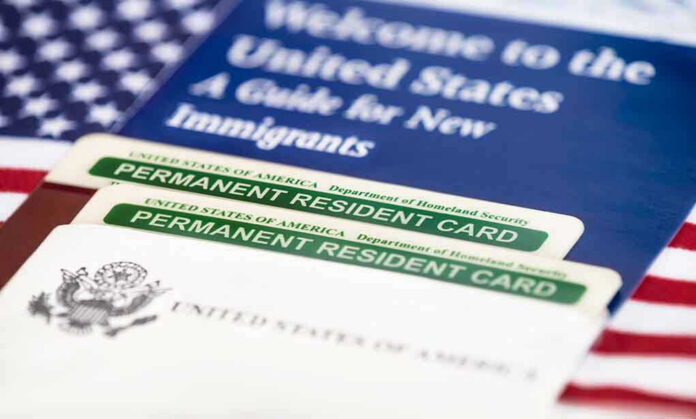
Denaturalization is the legal process the federal government uses to revoke the citizenship of someone who became American through naturalization, usually for fraud or hiding serious crimes.[8] For decades it was rare, used mostly against Nazi war criminals and a small number of people tied to terrorism or espionage.[4][7] Under both Trump terms, that low-profile tool has moved to center stage as officials frame it as a way to protect national security and clean up past immigration fraud.[1][6]
The Immigration and Nationality Act allows a judge to cancel naturalization if it was “illegally procured” or obtained by hiding a material fact or making a willful lie.[1][8] That means the government must prove, in federal court, that the person lied about something that truly mattered to the decision to grant citizenship.[6][8] The National Immigration Forum notes that denaturalization can happen only by judicial order, either through a civil lawsuit or a criminal conviction for naturalization fraud.[8]
Trump’s Expanded Campaign: From Extreme Cases to a Systematic Push
During Trump’s first term, the Department of Justice created a dedicated “Denaturalization Section” inside its Office of Immigration Litigation to hunt for suspect cases.[5][6] Officials said this new team would focus on “terrorists, war criminals, sex offenders, and other fraudsters” who lied their way into citizenship.[6] The American Immigration Council reports that between 1990 and 2017, only about 300 naturalization cases were pursued, but that number climbed sharply once this office was in place.[6]
Media reports and advocacy groups describe that first-term ramp-up as the largest denaturalization effort in modern times.[2][3] One CBS report detailed a Justice Department plan to revoke the citizenship of 17 Americans accused of immigration fraud or other crimes, calling it an “unprecedented denaturalization campaign.”[2] Another story described the government filing denaturalization cases across federal courts against dozens of people accused of fraud, terrorism ties, and other serious offenses.[3] These cases signaled a shift from one-off prosecutions to a broader, organized program.
Record-Setting Filings and New 2025–2026 Policies
By the second Trump term, the Department of Justice had moved beyond scattered prosecutions into a sustained push guided by policy memos and quotas.[2][6] Democracy Forward reports that a January 2025 executive order told top officials to devote “adequate resources” to finding violations of the naturalization process and enforcing denaturalization laws.[2] In June 2025, a Civil Division memo then instructed government lawyers to “prioritize and maximally pursue denaturalization proceedings,” creating broad categories for which cases to bring.[2]
That memo included a wide “catch‑all” category for any case the Division deemed “sufficiently important” to pursue.[2] Legal critics worry this catch‑all could sweep in people for political speech, minor past conduct, or technical errors, not just hardened criminals.[2][5] At the same time, internal guidance to immigration field offices reportedly urged them to send the Department of Justice 100 to 200 possible denaturalization cases per month, a level Democracy Now and other outlets described as a “massive escalation” compared with earlier decades.[3][6]
Who Is Being Targeted: Terrorists, War Criminals, and Fraudsters
Administration officials defend the denaturalization campaign as basic law and order focused on dangerous offenders. A 2026 Justice Department press release announced denaturalization actions in several courts against 12 individuals accused of hiding support for terrorist groups, committing war crimes, spying, or sexually abusing a minor.[1][6] The statement stressed that these people allegedly concealed material facts that, if known, would have blocked them from ever becoming citizens.[1]
The Trump Administration Moves to Strip Citizenship From 17 People in Expansion of Aggressive Denaturalization Efforts #Time https://t.co/XNvQ9rpkei
— #TuckFrump (@realTuckFrumper) June 8, 2026
The American Immigration Council notes that most modern denaturalization cases involve people accused of serious crimes or clear immigration fraud, such as lying about past deportation orders or criminal records.[6][8] In theory, that focus aligns with conservative priorities: punish those who cheat the system, protect communities from predators, and maintain trust in the naturalization process. But the same sources warn that as the pool of investigated cases grows, the chance of borderline or mistaken cases also grows.[6][8]
Fear, High Legal Hurdles, and What It Means for Law‑Abiding Patriots
Civil-liberties groups like the American Civil Liberties Union argue that the Trump denaturalization project risks scaring millions of naturalized Americans who did nothing wrong.[5][6] Their fact sheets stress that denaturalization is supposed to be “rarely used” and limited to clear fraud, and that broad campaigns send a message that citizenship for immigrants is never fully secure.[5] The American Immigration Lawyers Association similarly warns that unprecedented use of denaturalization threatens the rights of naturalized citizens and raises serious civil-liberties concerns.[5]
At the same time, the Brennan Center and other legal experts point out that stripping citizenship remains hard to do in practice.[7][8] Courts require the government to meet a “clear, convincing, and unequivocal” standard to prove that the person’s lie was material.[5][6] Historically, even when administrations reviewed thousands of files for fraud, only a tiny share ended in actual denaturalization, and many flagged cases were never taken to court.[6][7] For conservative readers, that means two things can be true at once: strong tools exist to expel true bad actors, and eternal “review” can still be used as a pressure tactic that feels like government overreach.
Sources:
[1] Web – LARGEST DENATURALIZATION OF CITIZENS
[2] Web – Trump Administration Pushes Denaturalization Push
[3] Web – Trump administration launches largest-ever effort to denaturalize U.S. …
[4] Web – Trump administration ramps up denaturalization campaign, targeting …
[5] Web – DOJ moves to strip citizenship from 17 people in unprecedented …
[6] Web – [PDF] The Trump Administration’s Plan to Strip Citizenship from … – …
[7] Web – Justice Department Moves to Denaturalize 12 Individuals for …
[8] Web – Featured Issue: Denaturalization
© headlineupdates.com 2026. All rights reserved.