
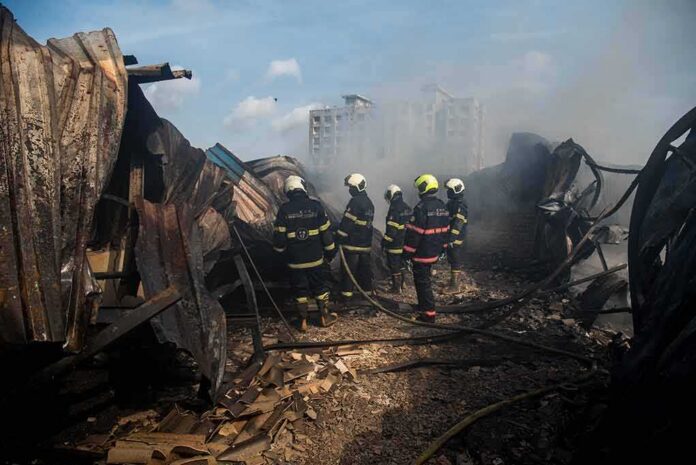
Ukrainian drones struck multiple sites across Russia, killing at least six and igniting major warehouse fires, according to regional officials and companies on the ground.
Story Snapshot
- Regional officials in Russia reported at least six deaths after overnight Ukrainian drone strikes.
- Russia’s Wildberries said a warehouse near St. Petersburg caught fire after a drone hit, with no casualties there.
- Wire services tracked a days-long pattern of drone strikes on Russian logistics and industrial sites.
- Conflicting local reports show casualties at some warehouses and evacuations with no injuries at others.
What Happened In Russia Overnight
Regional governors in Russia said Ukrainian drones hit several warehouses and industrial sites overnight, leaving at least six people dead and nine injured across different locations. Officials in the Moscow region cited deaths tied to a warehouse strike, while others reported fires and damage without fatalities. Ukraine has not detailed every target, but both sides have described many hits as logistics or industrial facilities. These reports came through official statements and company updates carried by major wire services.
Wildberries, Russia’s largest online retailer, said a warehouse near St. Petersburg caught fire after a drone strike and that staff were evacuated, with no injuries reported at that site. Earlier wire copy recorded repeated hits on Wildberries facilities over several days, with fires and disrupted operations. Local officials reported separate casualties at other warehouse locations, especially around the Moscow region. This mix of outcomes shows that the human toll varied by site and time within the broader drone wave.
Why Warehouses And Logistics Matter
Logistics hubs move goods, fuel, and parts that can feed a war economy. Strikes on warehouses and sorting centers can slow deliveries, raise costs, and stress supply chains. Reuters reported that at least seven Wildberries warehouses were damaged in late July, with one estimate that about ten percent of its storage capacity was lost during that period. Russian authorities and Ukrainian officials have both framed some targets as industrial or logistics nodes, not random sites, even as civilians have been among the victims.
Several major outlets have documented a steady expansion of long-range strikes since 2025. Wire services and broadcasters have tracked Ukrainian drones reaching deep inside Russia, including the Moscow area and the St. Petersburg region. This latest series fits that pattern. The reporting relies on statements from regional officials and companies, which is common in wartime. That limits outside verification in the first hours, but the broad picture of multi-site hits has held across reputable outlets.
Conflicting Reports And What We Can Prove
Casualty counts are not uniform across sites. Local authorities reported deaths at a warehouse south of Moscow, while Wildberries said no one was hurt at its St. Petersburg-area facility that caught fire. These differences match what often happens in fast-moving conflicts. Some places see mass casualties, others see quick evacuations. Wire reports stress what is confirmed: fires, evacuations, and named officials giving numbers. The exact total for one “massive” attack can shift as events span several days and regions.
A huge plume of smoke rose from a Wildberries warehouse near Moscow after a major Ukrainian drone attack.
A regional governor said an 83-year-old man was killed and several people were injured in Podolsk.#Moscow #Russia #Ukraine #DroneAttack pic.twitter.com/1YVS1H6gTY
— CGTN Europe (@CGTNEurope) August 16, 2026
For readers in the United States, the stakes go beyond the battlefield. When drones can strike deep into a major economy, supply chains wobble. That can raise prices on global goods, energy, and insurance. Americans know what that feels like. Higher costs hit families while leaders argue. People on the left and right both see a system that reacts late and blames someone else. Clear facts help, but they often arrive slower than the spin. That gap feeds anger at elites who seem unaccountable.
What To Watch Next
Watch for satellite images and fire service logs that confirm the scope of damage at each site. Look for hospital and investigative committee records that tie casualties to specific strikes. Track corporate disclosures from Wildberries and other firms about lost capacity and insurance claims. Finally, look for any official Ukrainian statements that name target classes. These details can turn a foggy picture into a firm map of who was hit, how badly, and why it matters.
Sources:
abcnews.com, themoscowtimes.com, reuters.com, aljazeera.com, apnews.com
© headlineupdates.com 2026. All rights reserved.