Five Federal Bureau of Investigation (FBI) analysts just lost their jobs over a memo that the bureau itself quietly buried — and the “just following orders” defense didn’t save a single one of them.
Story Snapshot
- The FBI fired five analysts connected to a withdrawn 2023 intelligence memo that attempted to link traditionalist Catholics to violent extremism.
- An internal review found the memo failed to meet proper standards and contained errors in professional judgment, but found no evidence of malicious intent.
- A Justice Department inspector general review found no evidence anyone ordered analysts to find religious linkages — meaning the framing came from the analysts themselves.
- The memo had already been withdrawn under former FBI Director Chris Wray before the firings occurred under Director Kash Patel.
What the Richmond Memo Actually Set in Motion
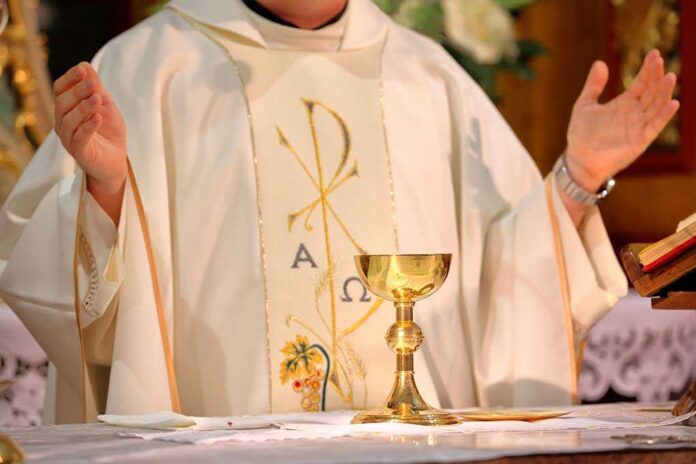
In 2023, FBI analysts at the Richmond field office produced an internal intelligence memo that attempted to draw connections between traditionalist Catholic ideology and violent extremism. The memo was withdrawn under former FBI Director Chris Wray after it drew fierce criticism. That withdrawal was not the end of the story — it was the beginning of a reckoning that took two years to fully arrive. Five analysts are now out of a job, and the paper trail explains why. [1]
The internal FBI review that followed the memo’s withdrawal reached two significant conclusions. First, the memo failed to adhere to proper professional standards. Second, it contained errors in professional judgment. Those are bureaucratic phrases that carry real weight in a credentialed intelligence environment where analytic tradecraft is supposed to be rigorous, documented, and defensible. A memo that fails on both counts is not a minor clerical error — it is a fundamental breakdown in the process that is supposed to keep federal law enforcement from targeting Americans based on religion. [1]
No Orders From Above — The Analysts Made This Call Themselves
The most consequential finding in this entire episode comes from the Justice Department inspector general review. Investigators found no evidence that anyone ordered or directed the analysts to find linkages between violent extremists and certain religions. That single finding dismantles the most obvious exit ramp available to the fired employees. When no superior told you to frame Catholics as a threat category, the framing is yours. The decision to build that analytical structure belonged to the people who built it. [1]
The internal review also found no evidence of malicious intent and no evidence of discriminatory or inappropriate comments by the analysts. Those findings matter, and they deserve honest acknowledgment. The record supports poor judgment and standards failures more clearly than it supports deliberate anti-Catholic animus. But poor judgment applied to a memo that singles out a religious community — with no directive from above and no evidentiary basis strong enough to survive a standards review — is still a serious failure. The absence of proven malice does not make the product acceptable. [1]
The Southern Poverty Law Center Problem Nobody Wants to Discuss
Reporting on the Richmond memo raised an additional concern that cuts to the heart of how this product was built: the analysts allegedly placed misplaced reliance on material from the Southern Poverty Law Center. That organization has faced sustained and credible criticism for designating mainstream conservative and religious organizations as hate groups. If FBI intelligence products are being built on that organization’s classifications as a primary source, the standards failure identified by the internal review is not just procedural — it reflects a sourcing problem that could systematically skew threat assessments against religious conservatives. That question deserves a direct answer from the bureau. [1]
FBI fires 5 employees tied to controversial 2023 memo on traditionalist Catholics
The FBI has reportedly fired five employees connected with a controversial 2023 intelligence memo that tied white supremacist extremist ideology to traditionalist Catholic communities.
According… pic.twitter.com/4SPTKti9EE
— Feisty-n-Friends (@FriendsFeisty) June 6, 2026
The FBI has not released the full memo, the internal review report, or the individualized disciplinary findings for each of the five fired employees. That documentation gap is real and frustrating. Without the memo text, the exact language used to frame Catholics as a threat category cannot be independently evaluated. Without the personnel records, it is impossible to know whether each termination was based on authorship, supervisory failure, procedural violations, or some combination. The public is currently working from press summaries of internal findings rather than primary documents — and that is a transparency problem the bureau created by keeping the underlying records sealed. [1]
What the Firings Tell Us About Accountability at the FBI
Firing five analysts over a single withdrawn memo is not a routine personnel action. Agencies absorb bad memos all the time with retraining, reprimands, or reassignments. Terminations signal that the reviewing authority concluded the conduct crossed a threshold that lesser discipline could not adequately address. Whether those firings were driven purely by the evidentiary record or partly by the political environment surrounding FBI Director Kash Patel’s broader reform agenda is a legitimate question. Both things can be true simultaneously: the memo may have genuinely warranted serious consequences, and the current leadership may have had additional motivations for acting decisively. [1]
What is not in dispute is that a group of federal analysts produced a document targeting a religious community, that document failed to meet the bureau’s own standards, no one told them to do it, and they are now unemployed. The Nuremberg defense — I was just doing my job — has never been a complete answer in American law or American values. It turns out it is not a complete answer at the FBI either.
Sources:
[1] Web – FBI Analysts Learn the Anti-Catholic Memo Crew Can’t Hide Behind ‘Just …
© headlineupdates.com 2026. All rights reserved.