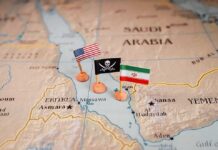
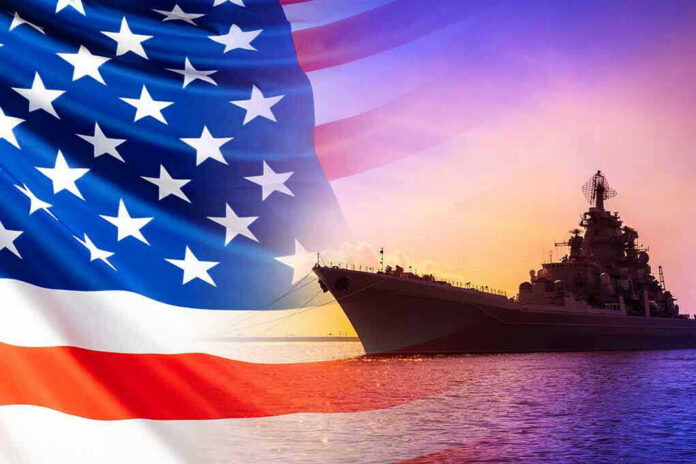
President Trump ordered the U.S. Navy to blockade Iranian ports in the Strait of Hormuz as of 10:00 a.m. ET on April 13, 2026, marking a dramatic escalation in an ongoing conflict that threatens global energy markets and raises questions about whether diplomacy has been permanently abandoned in favor of military confrontation.
Story Snapshot
- U.S. Navy began a partial blockade of Iranian ports at 10:00 a.m. ET following President Trump’s early morning Truth Social announcement
- The blockade targets vessels entering or exiting Iranian ports while allowing transit to non-Iranian destinations through the Strait of Hormuz
- Iran condemned the action as “illegal piracy” and threatened retaliation against all Gulf ports if its facilities remain under threat
- The move follows failed weekend peace talks in Islamabad and occurs amid claims that Iran’s navy has been “obliterated” with 158 ships destroyed
Trump Announces Blockade After Diplomacy Collapses
President Trump announced the naval blockade shortly after midnight ET on April 13, 2026, via Truth Social, directing the U.S. Navy to restrict all vessel traffic entering or exiting Iranian ports beginning at 10:00 a.m. ET. The announcement came on the heels of marathon peace talks in Islamabad, Pakistan, that ended over the weekend without producing a diplomatic resolution. U.S. Central Command confirmed the restrictions would apply to Iranian facilities in the Arabian Gulf, Gulf of Oman, and Arabian Sea. The blockade represents a significant escalation in the ongoing U.S.-Iran war, with Trump framing the action as necessary after Iran’s continued control over Strait of Hormuz traffic reduced ship passages to a fraction of normal levels.
Partial Blockade Distinguishes Non-Iranian Traffic
Unlike a complete closure of the Strait of Hormuz, the U.S. blockade specifically targets vessels bound for Iranian ports while permitting ships destined for other regional ports to transit the waterway. This distinction aims to isolate Iran economically without fully shutting down the strait, a vital chokepoint through which oil, fertilizer, and goods flow to global markets. The UK Maritime Trade Operations issued advisories confirming restrictions on all vessels engaging with Iranian facilities, regardless of flag. The approach reflects an attempt to minimize disruption to international commerce while maximizing pressure on Tehran, though the risk of Iranian retaliation against neighboring ports complicates this calculus.
Iran Threatens Retaliation as Naval Forces Diminished
Iran’s Khatam Al-Anbiya Central Command condemned the blockade as “illegal piracy” and warned that no Gulf port would be safe if Iranian facilities remained under threat. President Trump claimed in a follow-up Truth Social post that Iran’s navy had been “completely obliterated,” with 158 ships sunk, excluding fast attack craft. These assertions, while unverified by independent sources, suggest significant prior military engagement that has degraded Iran’s naval capabilities. Iran’s threatened retaliation raises concerns about attacks on Saudi, Kuwaiti, and other regional ports, potentially expanding the conflict beyond U.S.-Iranian confrontation and drawing neighboring states into direct hostilities.
UK Declines Participation, Focuses on Coalition Navigation
British Prime Minister Sir Keir Starmer declined to join the U.S. blockade, instead focusing UK efforts on leading a 40-nation coalition designed to protect navigation through the Strait of Hormuz. The UK issued maritime advisories but emphasized a preference for de-escalation and reopening the strait through multilateral cooperation rather than direct military involvement in the blockade. This divergence highlights transatlantic tensions over strategy, with European allies prioritizing energy security and avoiding actions that could further inflame the region. The coalition approach suggests NATO members and other partners view the strait’s reopening as essential but prefer collective security measures over unilateral blockades that risk broader war.
The blockade’s impact on global energy markets and fertilizer supplies remains uncertain, with short-term fears of surging oil prices and long-term risks of a full strait closure looming over international commerce. Pakistan, which mediated the failed talks, awaits further responses from Washington and Tehran. Americans across the political spectrum may reasonably question whether the government’s shift from diplomacy to blockade serves national interests or merely accelerates a conflict that could spiral into a costly regional war with unpredictable consequences for energy prices, inflation, and the lives of service members deployed to enforce the president’s directive.
Sources:
CBS News: Iran War – U.S. Blockade of Iranian Ports, Strait of Hormuz