
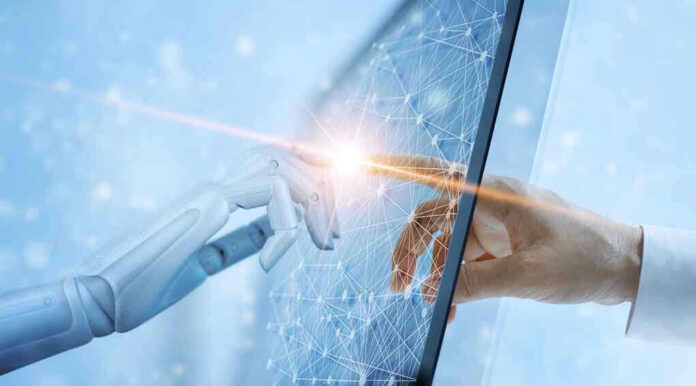
Elon Musk just told aspiring doctors their decade of training will be worthless in three years when robots outperform the world’s best surgeons.
Story Snapshot
- Musk predicts Tesla’s Optimus robots will surpass elite human surgeons within three years and outnumber all human surgeons by 2030
- NYU bioethicist Professor Arthur Caplan calls the claim “not credible,” citing slow progress in robotic surgery and inherent human anatomical variability
- Musk suggests medical school will become “pointless” as AI-powered robots address global surgeon shortages
- Expert consensus distinguishes between robotic assistance, which already exists, and autonomous replacement, which remains speculative
The Three-Year Countdown That Shocked Medicine
Speaking on Peter Diamandis’s “Moonshots” podcast in January 2026, Musk delivered a prediction that sent shockwaves through medical education: humanoid robots would not merely assist surgeons but completely replace them. Within three years, these machines would outperform the best human surgeons across all specialties. By 2030, Optimus robots skilled in surgery would outnumber every human surgeon on Earth. The timeline wasn’t vague futurism but a specific deadline with profound implications for anyone currently in medical school or contemplating that career path.
Musk framed his prediction around genuine healthcare challenges. Global surgeon shortages persist across continents. Medical training requires over a decade of intensive education. Human hands have physical limitations that robotic precision can surpass, as demonstrated by Neuralink’s brain electrode insertions that require accuracy beyond human capability. Medical knowledge evolves constantly, yet individual doctors struggle to keep pace with every advancement. These observations contain undeniable truth. The question centers not on whether problems exist but whether Musk’s proposed solution represents realistic technological progression or premature disruption.
When Bioethics Meets Silicon Valley Optimism
Professor Arthur Caplan of NYU Grossman School of Medicine delivered a blunt assessment: the claim lacks credibility. Caplan, a respected bioethicist with decades of experience evaluating medical technology, pointed to robotic surgery’s actual track record. Progress has been slow even in relatively straightforward procedures like prostate operations. Current surgical robots remain assistive tools under human control rather than autonomous operators. The da Vinci Surgical System, the most established platform in robotic surgery, still requires skilled human surgeons to guide every movement and make critical real-time decisions.
Caplan identified three fundamental obstacles to Musk’s timeline. First, human anatomical variability defies simple programming. No two patients present identical surgical scenarios, particularly in complex specialties like cardiac surgery, neurosurgery, orthopedics, and pediatric procedures. Second, demonstrating that robots match or exceed human surgical outcomes requires years of comparative studies with rigorous validation protocols. Medical regulators demand overwhelming evidence before approving autonomous systems that could kill patients through algorithmic errors. Third, some surgical specialties border on artistic judgment involving burn repair, trauma surgery, and reconstructive procedures where improvisation and aesthetic sensibility matter as much as technical precision.
The Autonomous Vehicle Parallel Nobody Wants to Discuss
Caplan drew an uncomfortable comparison for Musk: autonomous vehicles. Despite billions in investment and years of development, robot drivers still cannot safely navigate city streets filled with unpredictable taxis and delivery trucks. Tesla’s Full Self-Driving system remains under constant human supervision despite its name. If machines struggle with the comparatively simple task of driving, surgery presents exponentially greater complexity. Roads follow predictable patterns; human bodies contain infinite variations. Traffic has rules; biological systems have tendencies that frequently defy expectations. The parallel suggests Musk’s three-year surgical timeline suffers from the same optimistic miscalculation that has plagued autonomous driving predictions.
Musk’s counterargument relies on Neuralink’s demonstrated precision. The robotic systems that insert brain electrodes achieve accuracy impossible for human hands, threading connections into specific neural regions without damaging surrounding tissue. This technical achievement is real and impressive. However, precision represents only one component of surgical excellence. Judgment, adaptability, ethical decision-making under pressure, communication with patients and families, and accountability for outcomes remain distinctly human responsibilities. Current AI excels at pattern recognition within defined parameters but struggles with novel situations requiring contextual understanding and moral reasoning.
What Medical Students Should Actually Consider
Musk’s declaration that medical school is “pointless” deserves scrutiny grounded in common sense rather than techno-futurism. Medical education teaches far more than surgical technique. Physicians develop diagnostic reasoning, patient communication skills, ethical frameworks for life-and-death decisions, understanding of social determinants of health, and the judgment to recognize when standard approaches fail and improvisation becomes necessary. These capabilities resist algorithmic replication because they emerge from integrating knowledge across domains while navigating human complexity that extends beyond purely technical execution.
The realistic trajectory involves augmentation rather than replacement. AI already assists radiologists in detecting anomalies in medical imaging. Robotic systems provide surgeons with enhanced visualization and steadier instrument control. Automation handles routine pathology analysis, freeing specialists for complex diagnostic challenges. This collaboration between human expertise and technological capability improves outcomes without eliminating the need for highly trained physicians. The distinction between assistance and replacement matters profoundly for aspiring doctors evaluating whether their educational investment retains value.
The Pattern Behind the Prediction
Musk’s surgical robot timeline fits within his broader pattern of optimistic technological forecasts. He predicted Artificial General Intelligence would arrive in 2026 and that AI would exceed the collective intelligence of all humans by 2030. These claims share a common thread: specific timelines for revolutionary breakthroughs that experts consider premature. History suggests caution when evaluating such predictions. Technological progress often arrives later than visionaries anticipate, particularly in heavily regulated fields like medicine where patient safety demands conservative validation processes before widespread adoption.
The debate ultimately reflects competing visions of healthcare’s future. Musk sees technological solutions to structural problems like physician shortages and training bottlenecks. Medical experts emphasize irreplaceable human elements in patient care that resist automation. Both perspectives contain partial truth. Technology will transform surgical practice, but the timeline and extent remain genuinely uncertain. Conservative values suggest respecting accumulated medical wisdom and demanding proof before dismantling educational systems that have produced competent physicians for generations. Innovation deserves encouragement, but not at the expense of patient safety or premature declarations that devalue essential human expertise.
Sources:
Elon Musk predicts robots will outshine even the best surgeons within 5 years – Fox Business
Elon Musk’s 4 bold predictions put doctors and surgeons on a three-year deadline – Times of India
Elon Musk’s future of work predictions: retirement, lifespan, robot surgeons – Fortune