
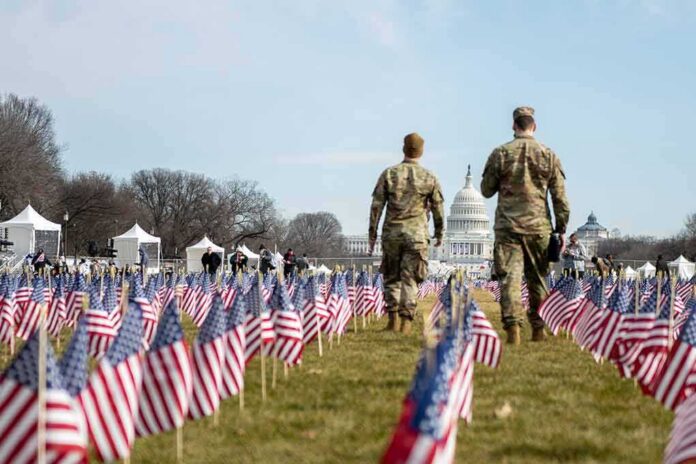
Congress is moving to let qualified special operations veterans carry concealed nationwide by adding them to a proven federal framework used by retired police.
Story Highlights
- A House and Senate bill would extend nationwide concealed carry to “qualified special operators.”
- The plan mirrors the retired-law-enforcement model under federal law 18 U.S.C. 926C.
- Sponsors describe photo ID checks and, in the Senate version, yearly firearms qualifications.
- Gun-control groups warn it would override state limits, echoing fights over LEOSA reforms.
What Congress Is Proposing and Why It Matters
House Bill H.R. 8332 states its purpose in plain words: provide concealed-carry privileges to qualified special operators by amending the federal retired-officer carry statute. The bill entered the normal process this spring with formal introduction and committee referral, signaling a real push rather than a trial balloon. The Senate introduced a companion, S. 5208, placing the same policy on the upper chamber’s docket. Both texts anchor to the existing federal carry framework in 18 U.S.C. 926C.
Representative Pat Harrigan, a former Green Beret, says the measure extends carry authority to current and former special operators whose training meets or beats retired police standards. His office describes a clear verification path: the Department of Defense and the Department of Veterans Affairs must stand up a photo identification program within 180 days. That credential would confirm a veteran’s honorable service and unit status before any nationwide carry applies. Supporters say this is about trust earned in uniform.
How The Senate Version Tightens Training and Safety Rules
The Senate bill sponsor frames the plan as a responsible, narrow expansion tied to real standards. The Senate description adds yearly, state-standard firearms qualification and a Department of Justice certified “Concealed Carry Use of Force in Society” course. That design answers a common critique by showing this is not a blanket pass but an ongoing duty to stay sharp and lawful. It keeps carry tied to proven skill and current knowledge of use-of-force rules.
Both versions aim to include only select personnel, not the entire veteran community. Public descriptions reference specific pay grades and designated units like Army Special Forces, the 75th Ranger Regiment, Navy SEALs, and Marine Raiders. The intent is a small, vetted group with rigorous firearms training and judgment from years of missions. That tight scope mirrors the retired-officer approach, which grants carry rights to a defined class with known qualifications and identification checks.
Why The Legal Model Points To Real Nationwide Recognition
The bills borrow from the retired-officer statute because courts have treated it as a true federal right that preempts conflicting state rules when the carrier meets all conditions. A federal appeals court reaffirmed that point in 2024, confirming that compliant retirees can carry despite contrary state laws. By placing qualified special operators into that model, Congress signals it wants the same clarity and uniform rules across state lines for this select group.
New bills would give qualified SEALs, Green Berets and other special operations veterans nationwide concealed-carry privileges. https://t.co/C36O3KHwTJ
— Military.com (@Militarydotcom) August 14, 2026
Gun-control groups and some lawmakers object, warning that federal carry rules weaken state limits and open more places to concealed firearms. A national group’s letter opposing related reforms calls it a threat to state authority, private property choices, and safety in sensitive areas. Those are familiar talking points from the fights over the retired-officer statute. The sponsors answer with tight eligibility, photo IDs, and, in the Senate, yearly qualifications and a use-of-force course.
What Still Needs Clarity Before A Final Vote
Key details still need committee work. The House and Senate versions differ on training renewal, and agencies have not publicly released implementation plans for the identification program. Cost, anti-fraud controls, and how local officers verify credentials on the roadside are open items. Still, Congress has a ready template in the retired-officer law and its case history. If leaders harmonize the training rules and credential checks, passage would offer a clear, narrow win for the Second Amendment.
Sources:
military.com, relevote.com, harrigan.house.gov, foxnews.com, quiverquant.com
© headlineupdates.com 2026. All rights reserved.