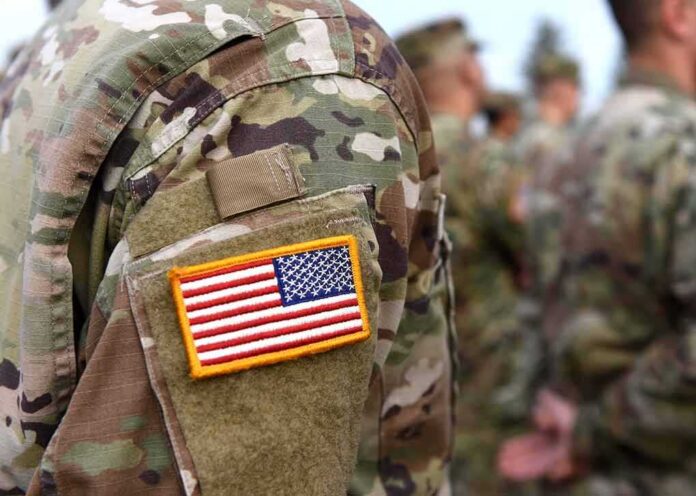
U.S. Army 1st Infantry Division troops are rotating into Lithuania to deter Russia and backstop NATO’s Baltic frontline, continuing a mission that has run for years.
Story Highlights
- 2nd Brigade Combat Team, 1st Infantry Division is deploying to Lithuania as a planned rotation.
- The unit replaces a prior U.S. brigade as part of Operation Atlantic Resolve’s ongoing presence.
- Army reporting and Lithuanian leaders describe the move as routine but essential to deterrence.
- About 1,000 U.S. troops have operated in Lithuania during recent rotations, training with NATO allies.
What The Army Announced And Why It Matters
Army spokespeople confirmed soldiers from the 2nd Brigade Combat Team, 1st Infantry Division, are deploying to Lithuania to continue the U.S. rotational presence on NATO’s eastern flank. The unit replaces a prior brigade as part of Operation Atlantic Resolve, the long-running effort to deter Russian aggression and reassure allies. Reporting on the move describes it as a scheduled handoff, not a new permanent base. This rotation keeps U.S. armor, infantry, and support teams sharp and ready alongside Baltic partners.
Lithuania’s leadership said the next U.S. rotation is already inbound, closing questions about a gap after earlier units returned home. Army officials in Europe also tied the move to routine rotations under the Atlantic Resolve framework. That message is simple: the U.S. is present, reliable, and focused on deterrence. Regular relief-in-place schedules avoid burnout for troops and families while keeping trained forces forward, which supports readiness and signals resolve to Moscow.
How The Rotation Fits NATO’s Eastern Defense
This deployment continues a pattern that began after Russia’s seizure of Crimea in 2014. NATO placed multinational battlegroups in each Baltic state and Poland, while the United States sustained separate rotations under Atlantic Resolve. Together, these forces train, exercise, and integrate plans with host nations. Studies and analysts have debated the size needed for airtight defense, but allies agree that persistent rotations raise the cost of any attack and improve speed, trust, and combined skills.
U.S. troops in Lithuania routinely train on Baltic ranges with allied units. The Army has noted that more than 1,000 American troops have operated and trained in Lithuania during recent rotations, taking part in multiple joint exercises. These activities sharpen gunnery, logistics, air defense coordination, and medical support. They also stress-test roads, rails, ports, and fuel networks that would be vital in a crisis. Those drills turn paper plans into practiced routines that save lives if trouble starts.
What This Means Under President Trump’s Watch
President Trump’s team is keeping pressure on Moscow while avoiding open-ended new bases. Scheduled rotations protect American interests, support a key ally on Russia’s border, and share the load with Europeans. This approach backs strength without writing a blank check. It aligns with conservative priorities: peace through strength, clear missions, and fiscal sense. It also respects sovereignty, because Lithuania invests in host-nation support and infrastructure, which helps our troops work and train effectively on site.
For conservative readers, the stakes are clear. Deterrence abroad helps prevent a costlier fight later. A steady U.S. presence tells the Kremlin that the Baltic states are not soft targets. It also shows allies that America stands by its word while expecting them to step up. The Army’s public deployment notices keep the plan transparent. That gives families predictability and signals to adversaries that our rotations will not fade or falter with news cycles or pressure campaigns.
The Mission On The Ground: Training, Mobility, And Firepower
Rotational brigades bring combined arms power: tanks, infantry fighting vehicles, artillery, engineers, and sustainment. Prior Atlantic Resolve movements have moved large numbers of tanks, Bradley Fighting Vehicles, and self-propelled howitzers across Europe to meet mission needs. That lift proves the U.S. can surge heavy forces quickly when needed, and that rail and road links are ready to move iron. These logistics tests matter as much as live-fire drills, because a plan fails if fuel and ammo arrive late.
1st Infantry Division soldiers deploy to Lithuania in ongoing effort to deter Russia
Soldiers with the 2nd Brigade Combat Team, 1st Infantry Division, will deploy to Lithuania as the U.S. continues its military presence on NATO’s eastern flank, Maj. Montrell Russell, an Army… pic.twitter.com/OqckXDyxtt
— Armed Forces Press (@AFP_press) September 24, 2026
Troops will train with Lithuanian forces and other NATO partners to practice defense in forests, towns, and river-crossing sites common in the Baltics. They will rehearse medical evacuation and air-ground coordination and will work communications plans across languages and systems. Each rotation learns the terrain, passes lessons to the next unit, and builds ties with local commanders. That handoff preserves experience on the ground even as fresh soldiers and leaders rotate in on schedule.
Bottom Line: Strong, Routine, And Purpose-Built
The 1st Infantry Division rotation to Lithuania is routine, but it is not trivial. It keeps American firepower close to a risky border, where presence and speed matter. It strengthens NATO training and war plans. It tells Russia that any attack would face American armor, allied units, and a ready network behind them. It fits a conservative doctrine: defend the homeland by stopping threats early, spend wisely, and honor the troops with clear missions and real support from allies.
Sources:
taskandpurpose.com, stripes.com, army.mil, dvidshub.net
© headlineupdates.com 2026. All rights reserved.