Local prosecutors say a grieving father used his car to kill a deputy on purpose, while parts of the public now cast him as a tragic hero.
Story Snapshot
- Prosecutors charge Rodney Hinton Jr. with intentional killing of Deputy Larry Henderson.
- Officials say Hinton lined up, accelerated, and struck the deputy after viewing body-cam of his son’s shooting.
- A judge removed the death penalty due to serious mental illness findings, but murder charges remain.
- Online narratives praise Hinton or excuse him, despite the case moving toward trial on intent.
What Prosecutors Allege About The Collision
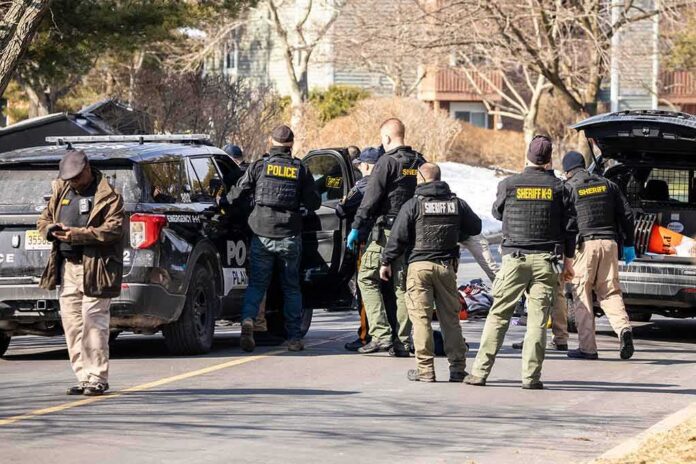
Hamilton County prosecutors charged Rodney Hinton Jr. with aggravated murder, murder, and felonious assault after Deputy Larry Henderson died from a vehicle strike near the University of Cincinnati commencement detail. In court, they argued Hinton deliberately positioned his car and accelerated into Henderson, calling the act calculated and premeditated. Local coverage maintained the frame of an intentional strike through later hearings, as the case advanced toward trial on those charges. These filings signal a focus on intent as the core issue.
Reports place Hinton at a police facility that morning to view body-camera video of his son Ryan’s shooting. The fatal collision followed around midday, creating a tight timeline that prosecutors say shows retaliatory motive. Coverage states the deputy was working traffic duty for the University of Cincinnati event when he was hit, highlighting that he was performing a public safety role at the time. While this narrative is clear in court filings, the public forensic details behind speed or braking have not been disclosed in reporting.
The Defense’s Mental Health Argument And The Court’s Ruling
Defense filings and hearings describe Hinton’s serious mental illness, including bipolar disorder, and claim he suffered a psychiatric episode after seeing the video of his son’s death. A judge removed the death penalty from the case, citing serious mental illness findings under Ohio law, but left the homicide charges in place. This ruling affects the maximum penalty, not the state’s burden to prove intent for murder. The trial remains set to test whether Hinton acted purposely under the law.
Commentary and broadcast segments describe expert views that his disorder likely impaired judgment. Those accounts frame his state of mind as deeply affected by grief and stress. They do not, by themselves, negate intent under criminal statutes, which require proof of purpose at the time of the act. The court’s decision narrowed punishment exposure but did not decide guilt. The jury will hear evidence on both the alleged deliberate act and the claimed mental impairment.
Why Online Narratives Are Running Ahead Of Evidence
Social posts and videos present Hinton as a victim who “snapped” after a painful loss, or even as justified in anger. That emotional story travels fast, especially when official crash data and full witness accounts are not public. Media and court reports still describe the case as an intentional killing, with a set trial date, not as an accident. When evidence is partial in public view, strong feelings tend to fill the gap before jurors see the full record.
Rodney Hinton Jr. is scheduled to stand trial for aggravated murder on October 5, 2026, for allegedly using his vehicle to strike a police officer after watching bodycam footage of his 18 year old son being fatally shot by police! pic.twitter.com/akdQoNAM8h
— Azlannnn (@Shaibu_AO) September 10, 2026
This split matters beyond one case. Vehicle-as-weapon cases often hinge on proving intent without a simple confession or a clear video angle. National guides define vehicle ramming as an intentional act, yet many events also involve mental disturbance, which clouds public judgment before trial. That mix feeds a broader distrust: people on the left and right worry that officials spin stories, while institutions struggle to release clear facts quickly. Transparent evidence can calm that storm.
What To Watch Next: Evidence, Not Echoes
Jurors will need concrete facts: crash reconstruction, event data from the car, and reliable witness accounts. Those details can show steering, speed, and braking, which point toward intent or away from it. Prosecutors say Hinton aligned and accelerated; the defense points to illness and impaired judgment. Both sides will test those claims in court. Until then, strong opinions online should not outweigh sworn testimony and hard measurements presented under oath.
Sources:
thegatewaypundit.com, dayton247now.com, cincinnati.com, spectrumlocalnews.com, wcpo.com, lawcommentary.com
© headlineupdates.com 2026. All rights reserved.