headlineupdates.com — When a Russian attack drone slammed into a Romanian apartment block, the real blast wave hit Europe’s assumptions about how far the Ukraine war can spill into NATO territory. [1]
Story Snapshot
- Russian drone tracked in Romanian airspace crashed into a residential building in Galați, injuring civilians and forcing evacuations.
- Romania’s president convened the Supreme National Defence Council and called the incident “without precedent,” demanding a firm national and allied response. [2][1]
- Bucharest moved to close Russia’s consulate in Constanța and expel its consul, drawing clear lines on sovereignty and accountability. [1]
- The strike exposes how cheap drones can test NATO’s resolve, deterrence, and common-sense expectations that borders actually mean something. [2]
Romanian civilians wake up on the front line
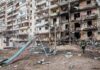
Residents of the eastern Romanian city of Galați went to bed assuming the Ukraine war was still one border away; by morning, a Russian drone had proven them wrong. According to Romanian authorities, a drone that was part of an overnight Russian attack on Ukraine crashed into the roof of an apartment building, injuring two people and sparking a fire. Officials evacuated residents from the area, underscoring that this was not an abstract diplomatic incident but a physical shock to everyday life.
Romania’s Defence Ministry reported that the drone had been tracked by radar in Romanian airspace before impact, meaning this was not a mystery object discovered after the explosion but a monitored air incursion. That detail matters. Tracking confirms the drone was not some stray civilian craft; it arrived amid a broader Russian strike package targeting Ukrainian territory across the border. For citizens who assumed NATO membership insulated them from direct spillover, the radar track is a blunt reminder that geography and cheap drones can outpace political comfort.
A president forced to turn rhetoric into action
Romanian President Nicușor Dan responded by convening the Supreme National Defence Council, putting the incident squarely on the table as a national security issue rather than a mere accident report. [2][1] On his official channel, he described the event as having an unprecedented character that demands a “firm, coordinated and proportionate response” at the national, allied, and international levels. [2] That language reflects a conservative instinct many Americans would recognize: when your airspace is violated and your civilians are hit, you do not shrug and call it routine.
The Defence Council meeting did not stay in the realm of vague concern. Romanian authorities decided to close the Russian consulate in the Black Sea port city of Constanța and declared the Russian consul persona non grata. [1] They also summoned Russia’s ambassador in Bucharest. [1] These moves stop short of military escalation but send a clear diplomatic message that Romania will not normalize repeat violations of its territory. The logic mirrors common-sense border enforcement: if someone keeps cutting through your fence, you tighten access and raise the cost of misbehavior.
How “unprecedented” fits a pattern of drone pressure
Romanian and European outlets have stressed that this is not the first time Russian drones crossed into Romanian territory during attacks on Ukraine, with earlier violations reported in 2025. [2] The difference this time is impact: for the first time, a Russian drone struck a residential building on Romanian soil. [2] In that narrow but important sense, the president’s “unprecedented” label lines up with the facts. The war has crossed borders before as debris and fragments; this time, it arrived as a direct hit on a civilian structure.
European allies including Berlin, London, and Paris condemned the crash, reinforcing that any strike on NATO territory, even if unintended, touches on collective security expectations. [2] Yet the public record still lacks a full forensic reconstruction of the drone’s origin and control at the moment of impact. Romanian statements identify it as Russian and part of the Ukrainian attack wave, but no open-source serial-number analysis or declassified flight path has been released. That gap leaves space for Moscow or sympathetic voices to spin the event as an accident or exaggeration, a familiar pattern in information warfare.
Deterrence, escalation, and the drone gray zone
The Galați crash highlights an uncomfortable truth for Western planners: low-cost attack drones allow Russia to keep pressure on Ukraine while repeatedly brushing against NATO borders, daring leaders to decide what counts as a red line. Radar tracking and physical damage in Romania show that these are not hypothetical war games. At the same time, the absence of proof of deliberate targeting of Romania lets cautious politicians argue the incident stays below the threshold for direct military retaliation against Russia.
From a conservative, rule-of-law perspective, the core issue is sovereignty. A hostile power launched a weapon system in the course of offensive operations, and that system crossed into a NATO country and hit a civilian apartment block. Whether Russia intended that specific crash or simply accepted the risk, the effect on Romanian citizens is the same. The Defence Council’s mix of diplomatic punishment, alliance consultation, and public firmness reflects a basic common-sense stance: borders are not suggestions, and excuses do not extinguish responsibility.
Sources:
[1] Web – Romanian president calls defence council meeting over ‘unprecedented’ …
[2] Web – Russian drone launched against Ukraine crashes in Romania …
© headlineupdates.com 2026. All rights reserved.