
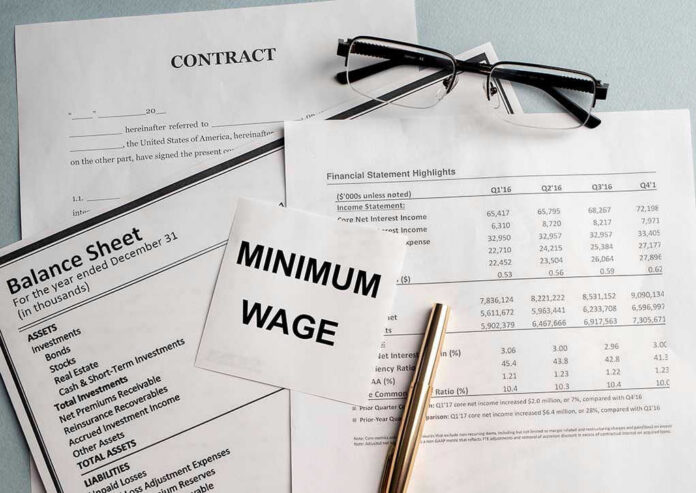
President Trump’s January 2026 jobs report delivers a powerful rebuke to leftist critics, showcasing private sector strength with 172,000 new jobs and robust wage growth that validates the administration’s pro-growth agenda.
Story Highlights
- Private sector added 172,000 jobs in January 2026, more than doubling economist predictions while unemployment held at 4.3%
- Construction employment surged by 33,000 positions, including 25,000 specialty trade jobs—the highest monthly gain in five years
- Average weekly earnings climbed 4.3% during Trump’s second term, putting more money in working Americans’ pockets
- Federal workforce streamlined by 42,000 positions, reaching lowest government employment level since 1966 while private sector thrives
Private Sector Strength Validates Trump Economic Agenda
The January 2026 employment report confirms what conservatives have known all along: limited government and pro-growth policies deliver results for American workers. The Trump administration added 172,000 private sector jobs in January alone, bringing the second-term total to 615,000 new private sector positions. This job creation occurred while the federal government shed 42,000 positions, demonstrating that prosperity comes from entrepreneurs and businesses, not bloated bureaucracy. The 4.3% unemployment rate reflects a healthy labor market built on real economic fundamentals rather than government dependency.
Construction Boom Reflects Manufacturing Renaissance
Construction employment jumped by 33,000 jobs in January, with specialty trades accounting for 25,000 of those positions—marking the strongest monthly gain in five years. This surge directly correlates with manufacturing investments and factory groundbreakings across America, reversing decades of offshoring that gutted communities under globalist policies. The administration correctly attributes this construction renaissance to policies prioritizing American manufacturing over foreign competition. Prime-age labor force participation reached its highest level since 2001, indicating that working-age Americans are returning to productive employment instead of languishing on government assistance programs promoted by previous administrations.
Wage Growth Delivers Real Affordability Gains
Average weekly earnings for private sector employees have grown 4.3% during Trump’s second term, with hourly earnings up 3.7%. These aren’t empty statistics—they represent real purchasing power returning to households after years of inflation caused by reckless government spending. The administration’s messaging connecting job growth and wage increases to improved living standards makes perfect sense when government stops competing with the private sector for workers and resources. Federal employment reaching its lowest share of the total workforce in recorded history means more Americans work in productive jobs creating goods and services rather than shuffling paperwork in government offices.
Biden-Era Distortions Corrected by Honest Reporting
The Trump administration entered its second term after discovering the Biden administration had overstated job growth by 1.9 million positions over its final two years. This massive misrepresentation typifies the dishonesty that characterized the previous administration’s economic messaging. Now, transparent reporting shows genuine economic momentum rather than manufactured statistics designed to deceive voters. White House Deputy Press Secretary Kush Desai accurately characterized the results as proof that “President Trump’s pro-growth policies are starting to deliver real momentum in the labor market.” The contrast between private sector vitality and federal workforce reduction demonstrates that smaller government enables greater prosperity for working Americans.
Sources:
This Is the Trump Economy: Job Growth Crushes Expectations as More Americans Work for Higher Wages
Trump administration says slower job growth reflects economic shift, not weakness
Trump administration says slower job growth reflects economic shift, not weakness