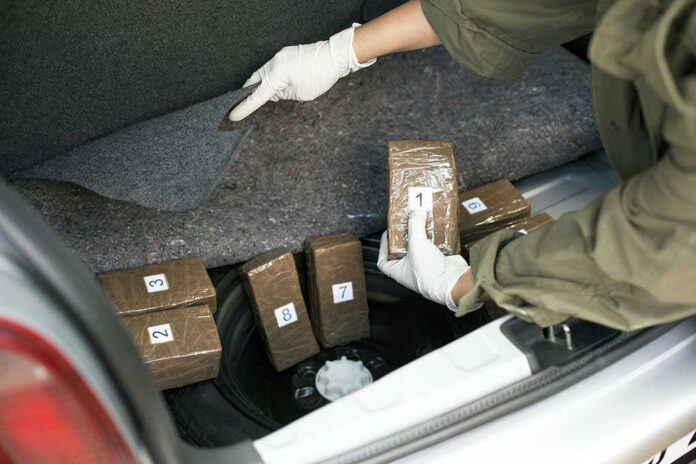
A 23-year-old allegedly tried to fly out of Miami with nearly 75 pounds of marijuana—proof that border and airport enforcement still matters, even as America’s drug laws get muddied by half-legal, half-illegal politics.
Quick Take
- CBP officers at Miami International Airport found 65 vacuum-sealed packages of marijuana in two checked suitcases, totaling about 74.98 pounds.
- Authorities say the passenger, Harrison O’Neill Tiernan of Austin, Texas, was headed for a British Airways flight to London Heathrow.
- Miami-Dade law enforcement booked the case as cannabis trafficking after CBP’s inspection turned up the drugs.
- Reports indicate Tiernan was held at Metrowest Detention Center, with later coverage citing a $20,000 bond and GPS monitoring if posted.
CBP Stops an International Smuggling Attempt at Miami’s Major Hub
U.S. Customs and Border Protection officers stopped the alleged smuggling attempt during outbound screening at Miami International Airport, a place that routinely sees interdiction activity because of its international connections. Authorities say Harrison O’Neill Tiernan, 23, checked two suitcases for a flight to London, and officers discovered 65 vacuum-sealed marijuana packages during inspection. The total weight was reported at roughly 74.98 pounds, a large amount for a single traveler.
The basic facts also cut through the media’s temptation to turn a serious trafficking allegation into a meme. Some online chatter leans on a “smirking stoner” framing, but the available reporting focuses on what law enforcement found and where it was headed. Whatever someone thinks about marijuana policy at home, taking tens of pounds onto an international flight is not casual personal use; it is a planned export attempt.
What We Know About the Suspect and the Case Status
Reports identify Tiernan as an Austin, Texas resident, arrested with assistance from the Miami-Dade Sheriff’s Office after the CBP discovery. Coverage says he requested an attorney after the arrest, and early reporting described him being held at the Metrowest Detention Center while bond details were still being finalized. Subsequent reporting cited bond being set at $20,000 with a GPS monitor requirement if he posts it, but no trial schedule was reported.
There are also minor timing differences in how outlets describe the sequence—some emphasize the Saturday interdiction date, while others focus on the Monday publication date when details became public. That gap is common in arrest coverage, especially when booking, charging, and first appearance timelines vary by county procedures. None of those variations change the central claim: officers found nearly 75 pounds of marijuana inside checked luggage destined for an overseas flight.
The Law Is Clear: “State-Legal” Doesn’t Mean “Airport-Export Legal”
The case also highlights a reality voters have been forced to navigate for years: marijuana rules have been politically blurred, but enforcement can become very clear the moment travel and federal jurisdiction enter the picture. Marijuana remains illegal under federal law, and exporting controlled substances is treated differently than possession debates inside state lines. Florida law also treats trafficking weights harshly, and reporting notes severe penalties can apply when quantities exceed key thresholds.
Why This Matters Beyond One Arrest: Security, Sovereignty, and Rule of Law
For a country still dealing with the consequences of years of selective enforcement and mixed messaging, cases like this underline why consistent rule-of-law policing matters. Miami’s airport is a major gateway, and interdiction work there is about more than one suspect—it is about keeping U.S. infrastructure from being used as a pipeline for black-market commerce. When law enforcement focuses on measurable facts—packages, weights, destinations—it builds public trust in a system that many Americans feel was politicized.
Smirking stoner, 23, caught at Miami airport with a whopping 75 pounds of marijuana stashed in luggage
https://t.co/xAzeT46d6DAuthorities discovered 65 vacuum-sealed packages containing “green leafy” substances in the two bags Harrison Tiernan had checked for his British Air…
— Lets Go Mets (@NYMetsfan11279) March 12, 2026
There are limits to what the public can responsibly conclude right now. No reporting cited accomplices, larger networks, or evidence beyond the luggage seizure and arrest details, and no expert commentary was included in the available coverage. Still, the enforcement outcome is straightforward: CBP interdicted the shipment before it left the country, and local authorities moved the case into the courts. For voters tired of disorder, that kind of basic competence is the standard—especially at major ports of entry and exit.
Sources:
https://www.aol.com/articles/man-packed-75-pounds-marijuana-230641928.html
https://www.miamiherald.com/news/local/crime/article314986696.html