
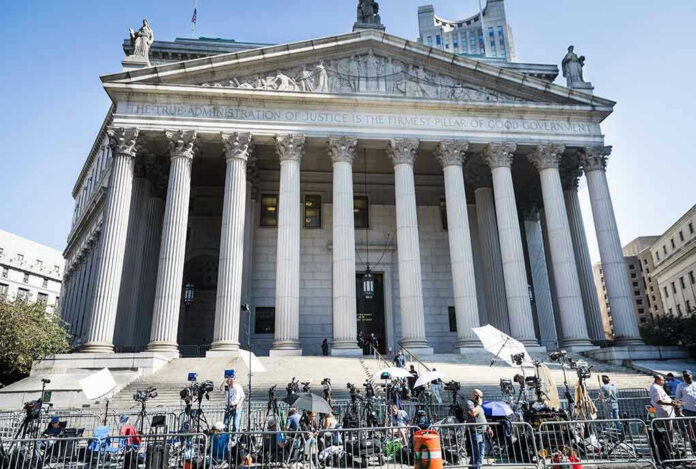
Reports that Luigi Mangione may plead guilty in federal court mark a major turn in a case that has gripped the country.
Story Highlights
- Sources say prosecutors and Mangione’s lawyers discussed a possible federal guilty plea.
- Mangione has pleaded not guilty to all federal charges to date.
- A judge removed death-eligible federal counts, narrowing the case posture.
- Defense challenges key evidence over search and Miranda issues.
What new reports say about possible plea talks
ABC News, CNN, and a New York local outlet reported that defense attorneys and federal prosecutors discussed a possible guilty plea. The talks came ahead of a scheduled federal court conference in Manhattan. The outlets, citing unnamed sources, said it was unclear how close the sides came to a deal, and that earlier negotiations did not produce an agreement. This is common in federal cases, where most outcomes come from plea deals rather than trials.
Prosecutors and defense lawyers often test terms before any filing hits the docket. That does not mean a plea is certain, or even likely. It does show both sides are weighing risk and cost. In a high-profile case, that includes victim interests, public trust, and years of appeals if a jury convicts. For readers tired of courtroom theater, this step signals both teams are doing the math on time, evidence, and sentencing exposure.
Where the federal case stands today
Luigi Mangione has pleaded not guilty to the federal charges tied to the 2024 killing of UnitedHealthcare Chief Executive Officer Brian Thompson. He also pleaded not guilty in state court. He has maintained that position in public court appearances since his federal arraignment. Plea discussions do not change those pleas unless a judge accepts a formal agreement in open court, which has not happened yet based on available reporting.
The federal posture shifted after a judge dismissed the murder and weapons counts that could have carried the death penalty. That ruling left other federal charges, including stalking-related counts, which can still bring long prison terms if a jury convicts or if a plea is entered. This change narrows the stakes but keeps major federal exposure on the table. Any federal deal could also affect strategy in the separate New York state murder case.
Fights over evidence and rights shape leverage
Defense lawyers have attacked parts of the investigation. They argued police searched a backpack without a warrant. A judge later let in some items, like a gun and a notebook, but excluded others as the result of an improper search. The defense also says officers questioned Mangione for nearly twenty minutes before reading his rights, which they argue should block those statements from trial. These rulings and disputes matter because they raise or lower each side’s bargaining power.
BREAKING: Luigi Mangione is expected to plead guilty under a federal deal, with his lawyers and prosecutors requesting a last-minute conference for tomorrow at 11 a.m.
Mangione faces two federal interstate stalking charges resulting in Brian Thompson’s death, which carry a… pic.twitter.com/RhXZkKC46D
— Fox News (@FoxNews) August 13, 2026
Prosecutors, for their part, have outlined writings and planning they say show motive and targeting. They point to entries they say suggest a plan that “checks every box,” which they link to the insurance industry and the victim’s role. If jurors find that evidence credible, it can be powerful. If judges cut parts of the record or jurors doubt it, the case weakens. That push and pull explains why both sides might explore a deal, even while saying they are ready for trial.
Why this moment taps national frustrations
High-stakes cases like this often move behind closed doors, which fuels public doubt. Many Americans believe the system favors insiders and delays hard answers. Plea talks can look like backroom bargaining, even though they are routine and sometimes spare victims years of appeals. When a death-eligible path disappears and evidence fights drag on, people across the political spectrum ask if justice is clear, consistent, and equal—or if outcomes depend on power and process rather than truth.
Readers on the right see a system that often fails to deliver swift justice. Readers on the left see unequal treatment and a process that may miss deeper causes of violence. Both worry that complex cases get resolved in ways they cannot track. The best guardrail is transparency: clear filings, open hearings, and precise rulings. If a plea comes, details on the counts, the facts, and the sentence range will matter more than headlines.
What to watch next in court
Watch for a formal notice on any plea hearing and a signed agreement filed with the court. Look for how prosecutors describe the factual basis for any plea, and what sentence range the parties expect. Track any new rulings on the backpack search or statements to police, which can change leverage again. If the federal case resolves, see how New York state prosecutors adjust their timeline and charges. Until the judge accepts a plea, Mangione’s not-guilty stance stands.
Sources:
insiderpaper.com, abcnews.com, nbcnewyork.com, cnn.com, en.wikipedia.org, foxnews.com, bbc.com, pbs.org, theguardian.com, youtube.com
© headlineupdates.com 2026. All rights reserved.