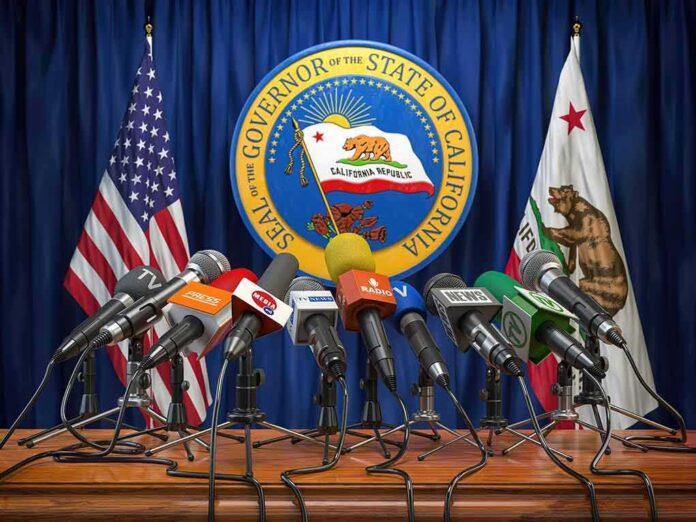
California’s own auditors say weak controls cost taxpayers billions, yet no officials have been held directly accountable for the failures they documented.
Story Snapshot
- State audits cite massive fraud and control gaps in unemployment benefits, not partisan schemes.
- A federal review warned homelessness funds were at risk but found no new fraud cases.
- The United States Department of Labor opened a new probe into California’s payment integrity.
- Commentators allege political motives, but public records point to program failures, not proof of party enrichment.
What California’s Audits Actually Found
California’s State Auditor said the Employment Development Department made serious mistakes during the pandemic rush. The audit described “significant missteps and inaction” that opened the door to fake and improper unemployment claims. The report said the agency could have stopped billions in bad payments with basic checks in place. News coverage at the time reported at least $10.4 billion in fraudulent claims, reflecting how deep the control failures ran inside the system. The finding targeted operations, not political actors.
State documents separated “benefit fraud” and “impostor fraud” as categories of wrongdoing to fix. The language focused on identity checks, address flags, and call center backlogs. It did not claim that one party built a fraud machine or that cash flowed to political allies. That difference matters. It points to a broken process in a huge program, not evidence of a partisan slush fund. The gap between what the audits prove and what pundits claim fuels public mistrust from both sides.
Homelessness Funds Faced Risk, Not Proven Theft
A federal review of California’s housing department said the state risked $319.5 million in federal homelessness funds because anti-fraud rules were weak. The same review also said it did not uncover any new cases of fraud. That nuance gets lost in the noise. Weak rules can let bad actors in, but risk is not the same as theft. Voters deserve both facts at once: controls were soft, and investigators did not find new fraud in that review.
These findings match a broader pattern in large benefit systems. When demand surges, payment integrity often breaks. Agencies rush to pay, and checks lag behind. The United States Department of Labor has now launched a new probe into California’s payment integrity, reflecting how serious and lingering the problem is. That federal action adds weight to the concern that controls still need work. It also underscores that oversight is ongoing, not closed.
Public Anger Is Real, But Proof Still Matters
Commentators and politicians have pushed sweeping claims about plots and partisan gain. A podcast host said total fraud in California could top $100 billion, and others argue the money flows to “Democrat elites.” Those are major charges, but they are not proven by the audits on record here. The strongest verified numbers come from unemployment audits that show massive control breakdowns and billions lost to fraudsters, not political beneficiaries. Big problems do not erase the need for solid evidence.
Californians across the spectrum feel burned. Conservatives see waste and weak borders. Liberals see a system that fails the vulnerable and rewards insiders. Both groups now share a grim view: the government keeps missing the basics. The audit trail backs part of that view. It shows late fixes, ignored warnings, and slow responses that cost real money. That is not a partisan story. It is a management story that harms taxpayers and those who truly need help.
Accountability Steps That Would Actually Help
Lawmakers and watchdogs can close the gap between anger and proof. First, force disclosure of warning memos and risk dashboards sent to top officials during the peak failure years. Those records would show who knew what, and when. Second, demand vendor-by-vendor payment trails to see whether contractors with political ties profited. Third, order a full claims-data test for identity theft, prison matches, and duplicate accounts across affected programs. These steps would turn suspicion into facts.
FULL SEGMENT!
I joined Matt Gaetz on OAN to talk about the scale of fraud in California and what we actually have to do to stop it. pic.twitter.com/FvHAs4QvIl— Lori Mills (@LoriMills4CA42) September 13, 2026
Citizens also need regular, plain-language scorecards. Agencies should publish monthly metrics on improper payments stopped, dollars clawed back, and timelines for system fixes. The United States Department of Labor probe can set deadlines and public benchmarks. That sunlight would reduce spin from all sides. It would also honor a simple rule most Americans still believe in: if you break trust with public money, you fix it fast or you step aside.
Sources:
herbmorgan.com, information.auditor.ca.gov, abc30.com, sjvsun.com, youtube.com
© headlineupdates.com 2026. All rights reserved.