A UPS cargo jet and a Copa Airlines passenger plane carrying 172 people collided while taxiing at Miami International Airport, with the Copa jet’s wingtip striking the UPS plane’s nose.
Story Snapshot
- The collision happened around 9:15 p.m. where two taxiways cross at Miami International Airport.
- The Copa Airlines Boeing 737 was taxiing to its gate while the UPS Boeing 767 was taxiing for takeoff to Bogotá, Colombia.
- Two people were treated for minor injuries at the scene and did not need to go to the hospital.
- The Federal Aviation Administration (FAA) is investigating, but no cause has been officially confirmed yet.
Two Jets Meet at a Taxiway Crossing
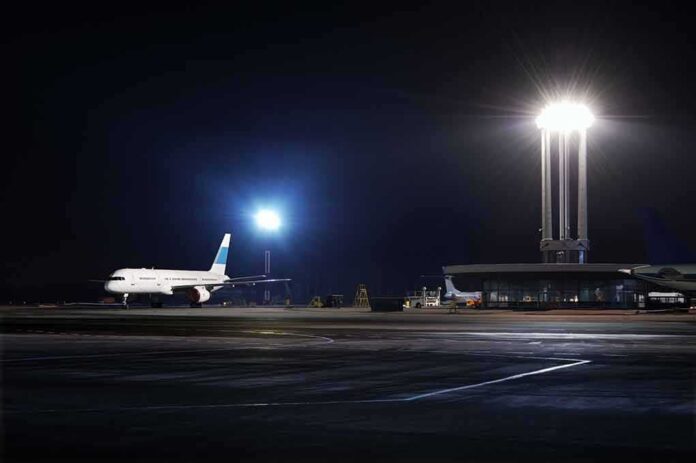
The Federal Aviation Administration (FAA) said the wingtip of a Copa Airlines Boeing 737 struck the nose of a UPS Boeing 767 while both planes were taxiing on the ground. Miami International Airport communications director Greg Chin said the contact happened at approximately 9:15 p.m. where two taxiways intersect. Neither plane was airborne when the collision occurred.
The Copa 737 was moving toward its gate after landing, carrying 172 passengers and crew. At the same time, the UPS 767 cargo plane was taxiing toward the runway, preparing to depart for Bogotá, Colombia. The two aircraft met at the taxiway crossing, and the resulting contact damaged the nose of the UPS jet and the wingtip of the Copa plane.
Minor Injuries, No Hospital Stays
Miami-Dade Aviation and Miami-Dade Fire Rescue said two people were treated at the scene for minor injuries. Neither person needed to be taken to a hospital. UPS confirmed one of its aircraft was involved and said its crew was safe. The company said it was working with authorities to determine what happened.
Some early reports said there were no injuries at all, while later accounts from fire rescue and aviation officials described two minor injuries. That kind of mismatch is common in the first hours after an incident, when different agencies release information at different times based on what they know so far.
What the FAA Has Confirmed So Far
The FAA’s statement identifies which plane hit which and where the planes were headed. It does not say why the planes ended up on a collision path. That means no one has yet confirmed whether a clearance mistake, a missed radio call, a visibility problem, or some other factor caused the two aircraft to meet at that intersection.
Figuring out what caused the crash will likely require details not yet public: air traffic control recordings, taxi clearances, and ground radar data that tracks exactly where each plane was and when. The National Transportation Safety Board typically reviews this kind of evidence in surface collision cases to build a full timeline of events.
A Recurring Risk on Airport Ground Surfaces
Incidents where aircraft, vehicles, or people end up somewhere they shouldn’t be on active airport surfaces are not rare. The FAA recorded about 1,760 such incursions during fiscal year 2023, out of roughly 54.3 million takeoffs and landings nationwide. General aviation aircraft, which are typically smaller private planes, accounted for about 80% of those cases.
That broad incursion count covers near misses and smaller planes far more often than it covers crashes between two commercial jets like this one. Still, it shows that ground collisions and close calls remain a known weak spot in the aviation safety system, one regulators have worked for years to reduce through better airport tracking technology.
Why This Story Resonates Beyond Aviation
For travelers already uneasy about flight safety after a string of recent aviation incidents nationwide, a collision involving a passenger jet carrying 172 people lands hard, even with injuries limited to minor treatment at the scene. The incident adds to a broader public conversation about whether the systems meant to keep planes safely separated on the ground are keeping pace with air traffic volume.
Both UPS and Copa Airlines have said they are cooperating with investigators, and the FAA has confirmed an investigation is underway. Until that investigation produces findings on cause and responsibility, the known facts are limited to what happened, where, and who was hurt, not why two aircraft ended up occupying the same taxiway space.
TWO PLANES COLLIDED AT MIAMI INTERNATIONAL AIRPORT.
THEY WEREN’T EVEN IN THE AIR. ✈️
A Copa Airlines passenger jet and a UPS cargo plane collided on the ground Saturday night near a taxiway intersection.
The Copa flight had arrived from Panama City with 172 people aboard.
The… pic.twitter.com/nHdivt7wf6
— Daniel C (@chowoohpolice) November 15, 2026
Passengers aboard the Copa flight were not evacuated under emergency conditions, and airport officials have not reported extended disruptions to overall operations tied to the collision. The full scope of aircraft damage, including repair timelines for both the UPS 767 and the Copa 737, has not yet been detailed publicly.
Sources:
facebook.com, cbsnews.com, people.com, edition.cnn.com
© headlineupdates.com 2026. All rights reserved.