
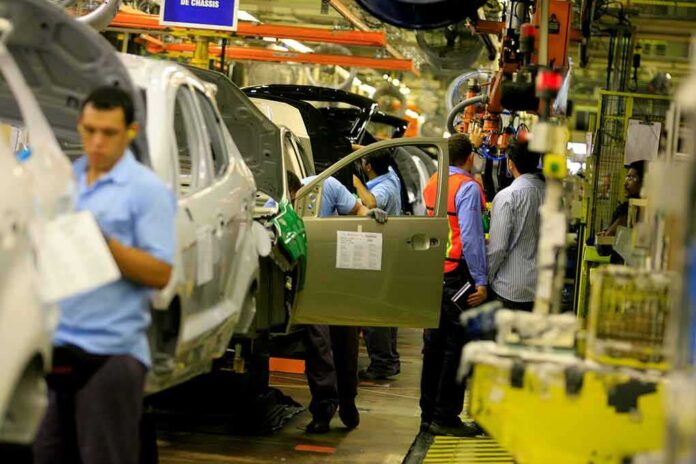
BMW’s planned reduction of about 8,000 jobs by the end of 2027 is a textbook example of how European automakers now restructure: large-scale headcount cuts framed as voluntary, negotiated with employee representatives, and targeted at white‑collar roles rather than the factory floor.
Key Points
- BMW intends to slim its global workforce by roughly 8,000 positions by end‑2027, with most reductions occurring in Germany and concentrated in non‑production roles.
- The company is relying on voluntary severance offers and natural attrition rather than classic layoffs, under a framework negotiated with its works council.
- The program reflects mounting cost pressures, profit squeeze, and EV transition investments across the German auto sector, not an isolated BMW decision.
- Labor groups have grounds to scrutinize how “voluntary” the exits will feel in practice, even though no hard evidence of coercion has surfaced to date.
BMW’s 8,000‑Job Target: Scope, Timing, and Who Is Affected
Across multiple independent reports, the core picture is consistent: BMW plans to reduce its workforce by about 8,000 positions worldwide between October 2026 and the end of 2027, with the bulk of cuts expected to fall on German staff in desk‑based functions. The company employs roughly 154,000 people globally, of whom around 84,000–85,000 work in Germany. Within that German headcount, approximately 40,000 permanent employees—nearly half of the domestic workforce—will receive offers of voluntary redundancy beginning in October. These offers are explicitly aimed at administrative, research and development, and other non‑production roles; production line workers are to be excluded from the program.
The plan is designed as a one‑off restructuring window rather than a rolling downsizing. The severance program will run from autumn 2026 through the end of 2027, after which BMW expects the workforce reduction to have largely been achieved. Company sources and German media agree on the target scale—around 8,000 positions—but differ slightly on the geography: some emphasize that this figure is global, while noting that more than half of the actual exits will occur in Germany because that is where severance offers are concentrated.
Mechanism: Voluntary Severance and Natural Attrition
BMW’s management is explicit that this is not a classic redundancy program built on compulsory layoffs. Instead, the company is combining two mechanisms: voluntary severance packages in Germany for non‑production staff, and natural attrition (ordinary retirements, resignations, and non‑replacement of departures) across its global workforce. In public investor communication, BMW’s chief financial officer has flagged roughly €1 billion in one‑off restructuring costs, largely tied to severance payments and related measures. That spending is framed as an investment to unlock a leaner cost base from 2028 onward, once the program’s upfront charges are behind the company.
Crucially, the severance framework was not imposed unilaterally. BMW’s works council—the elected employee representative body mandated under German co‑determination law—negotiated and agreed the basic parameters with management. This accords with a long‑standing German pattern: major job‑cut programs in large manufacturers are typically packaged as “socially acceptable” restructurings, combining buyouts, early retirement, redeployment, and attrition rather than simple dismissal notices. Public statements from the works council emphasize “feasible solutions through dialogue” and a responsibility to avoid abrupt wage shocks or plant‑level destabilization.
Why BMW Is Restructuring: Profit Squeeze and the EV Transition
BMW’s decision does not arise in a vacuum. It follows a profit warning in which the company cut its projected automotive operating margin from the mid‑single digits to a range as low as 1–3%, citing weaker demand, particularly in China, and rising costs. At the same time, BMW has spent heavily on its Neue Klasse electric vehicle platform, front‑loading capital expenditure into battery, software, and vehicle architecture development. As the project moves beyond its most intensive development phase, company sources describe the job cuts as part of “scaling back spending” after years of heavy EV investment.
The backdrop is a broader German industrial reset. Since 2019, roughly 125,000 auto jobs have disappeared in Germany, and suppliers like ZF and Bosch have announced five‑figure domestic layoffs.[Finance Bureau video] The German industrial federation BDI estimates manufacturing job losses averaging about 15,000 per month in 2023, with autos leading the decline.[VTV24 video] Volkswagen, for example, is cutting capacity, closing plants, and contemplating up to 100,000 job reductions by 2030 as it struggles with high energy costs, tariffs, and a cost gap of around 30% versus some competitors.[VTV24 video] Against that landscape, BMW’s program reads less as a dramatic outlier than as the last major German carmaker aligning its workforce with sharpened profitability targets and a more capital‑intensive technology mix.
Who Is Spared, Who Bears the Adjustment
One of the more striking elements of BMW’s plan is its deliberate focus on non‑production staff. Production operations—factories and assembly lines—are formally excluded from the severance offers, and sources reiterate that line workers will be “spared the cuts.” By contrast, employees in administration and development divisions, along with other desk‑based roles in Germany, will see the severance window opened to them on a non‑selective basis. Reports describe the scheme as accessible to “several tens of thousands” of such staff, effectively creating a broad pool from which management hopes enough volunteers will emerge to hit the 8,000‑position target.
This design is consistent with how German automakers have historically managed cyclical swings: production remains fully utilized as long as possible—BMW’s factories are described as operating “like clockwork” in earlier downturn coverage—while the white‑collar workforce absorbs the brunt of overhead reductions. By concentrating offers on administrative and R&D functions, BMW aims to trim fixed costs and simplify organizational layers without visibly shuttering plants or announcing mass factory layoffs, events that carry significant political and reputational risk.
Labor Scrutiny: Voluntariness, Pressure, and Fairness
On paper, BMW’s program is voluntary, negotiated, and limited to non‑production roles; that framing gives management and the works council a shared narrative of social responsibility. Nonetheless, labor advocates have several credible angles of scrutiny. First, the sheer scale—an 8,000‑job reduction in a workforce of about 154,000—means the social impact is substantial even without formal layoffs. Workforce shrinkage of roughly 5% is not trivial; it affects career pathways, workload distribution, and the bargaining power of those who remain.
Second, while the program is described as open and non‑selective, the combination of a profit warning, a clearly communicated headcount target, and broad eligibility across non‑production staff creates an environment in which “voluntary” decisions can feel implicitly pressured. When tens of thousands of employees know management expects thousands to leave, some will reasonably worry about future advancement if they decline a buyout now—especially in units marked for restructuring. Labor groups therefore have grounds to examine internal communications, incentive structures, and management behavior for signs that voluntary exits are being encouraged with more than neutral information.
Third, the publicly available record does not include the full text of the works‑council agreement, nor annexes detailing safeguards against coercion or fallback plans if uptake falls short. Commentators know the framework exists and that it was negotiated, but they cannot yet assess the robustness of its protective provisions. This absence does not prove unfairness; it simply leaves open procedural questions that unions and labor lawyers may pursue.
At the same time, it is important to be clear about the limits of current evidence. There is, in the material provided so far, no documented case of BMW using explicit threats, negative performance actions, or unilateral dismissals to force participation in the program. Nor is there a competing financial analysis demonstrating that the job cuts are unnecessary or purely opportunistic. Labor critiques therefore center on prudence and social impact rather than on claims of factual misrepresentation by BMW.
🇩🇪 BMW just became the last major German carmaker to announce a restructuring program.
It's expected that by the end of 2027, 8,000 jobs might be eliminated worldwide. In Germany, BMW plans to offer voluntary severance to nearly half of its 85,000 German employees, about 40,000…— Data Explained (@dataexplain) July 29, 2026
BMW’s Plan in the Wider German and European Pattern
BMW’s restructuring fits squarely into a wider European trend in legacy manufacturing. Major employers increasingly frame headcount reductions as “voluntary” and “socially acceptable,” relying on attrition, early retirement, and severance programs to achieve what, in other jurisdictions, might be labeled layoffs. This approach is partly cultural—rooted in Germany’s co‑determination system and strong union presence—and partly strategic, as firms seek to maintain brand reputations and political goodwill while radically rebalancing their labor costs.
The auto sector adds a specific twist. German automakers are caught between profitable but carbon‑intensive combustion engine portfolios and the capital‑hungry, highly competitive world of electric vehicles and software‑defined cars. Chinese manufacturers now supply a majority of global EV sales and compete directly in the premium segment with advanced, feature‑rich vehicles at lower prices.[Finance Bureau video] German brands, including BMW, must fund a double transition: away from combustion, and toward software architectures and battery ecosystems in which they no longer hold unchallenged technical leadership. That double burden makes overhead reduction and organizational streamlining not just attractive but, in many boardrooms, non‑negotiable.
What This Means Looking Ahead
For BMW employees in Germany’s non‑production roles, the coming severance window is more than a short‑term choice; it marks a structural shift in the company’s labor model. Those who exit will do so with negotiated packages, but the organization they leave behind will be leaner, more tightly focused on core EV and technology programs, and under continued pressure to deliver margins in a tougher competitive landscape. For production workers, the immediate threat is lighter, yet history suggests that if demand falters or political conditions change, factory employment can still come under review—just later in the cycle.
For Germany’s industrial base, BMW’s program underscores a sobering reality: the era in which major automakers could indefinitely sustain large, stable domestic white‑collar workforces while offshoring only incremental production is ending. The EV transition, digitalization, and geopolitical cost shocks are forcing even the most profitable firms to revisit their staffing structures. Voluntary severance and attrition soften the optics, but they do not change the underlying arithmetic: fewer jobs, particularly in the administrative and development layers that once seemed insulated from cyclical swings.
Whether BMW’s restructuring ultimately proves sufficient—and fair—will depend on several variables: the take‑up rate of severance offers; the robustness of worker protections in the agreed framework; the company’s success in regaining margin stability; and Germany’s broader ability to keep its auto and manufacturing sectors technologically relevant under new competitive and energy conditions. What is clear already is that the 8,000‑job target is not an isolated headline; it is one more step in a long, challenging rebalancing of German industrial employment.
Sources:
insiderpaper.com, bloomberg.com, reuters.com, globalbankingandfinance.com, handelsblatt.com, malaymail.com, n-tv.de, spiegel.de, tagesspiegel.de, sueddeutsche.de
© headlineupdates.com 2026. All rights reserved.