
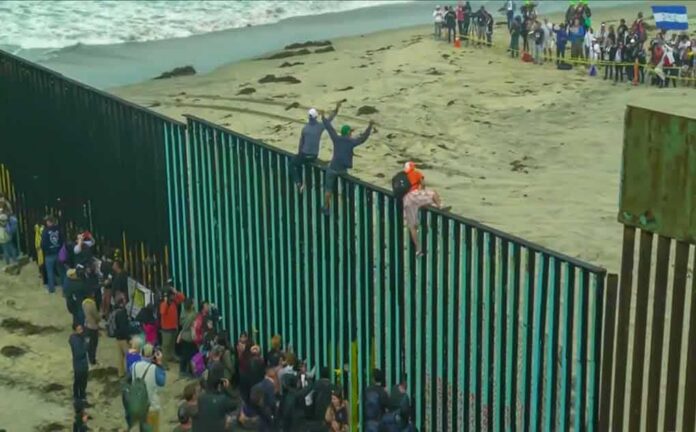
Thousands of migrants suddenly crossing from Morocco into Spain’s tiny enclave of Ceuta have turned a long‑running border problem into a full‑blown humanitarian emergency that Europe’s leaders still seem unwilling — or unable — to fix.
Story Snapshot
- Thousands of migrants have entered or tried to enter Ceuta from Morocco in recent days, many by swimming.
- Ceuta’s leader says reception centers are “collapsed,” with hundreds sleeping outside and calls for a national emergency.
- The surge revives tensions between Spain and Morocco and echoes earlier mass crossings in 2017 and 2021.
- The crisis highlights how small communities and vulnerable migrants pay the price when bigger governments and elites fail to manage borders and migration.
Ceuta faces a sudden surge that its small city cannot absorb
Local officials in Ceuta report that more than 1,500 migrants, including adults and minors, have reached the enclave by sea from Morocco in just a few days. Many swam around breakwaters or waded along the shore, risking their lives in strong currents and cold waters. Television footage shows people arriving exhausted, then running into the town once they reach land. Spain’s border forces say migrants are “massively entering from the sea” through the Tarajal breakwater and nearby beaches. This rapid rush has overwhelmed normal border control.
Ceuta’s Mayor‑President Juan Jesús Vivas has warned that “in the past few days more than 1,500 migrants, both adults and minors, have come to Ceuta by sea” and that reception centers are now saturated. He describes the situation as a humanitarian and security emergency and says there is “no more room for anyone” in existing facilities, with more than 200 people arriving per day. Hundreds are sleeping outside crowded shelters or on streets, making a local strain that feels like collapse in a city of only about 85,000 residents.
A familiar crisis pattern between Spain and Morocco
This is not the first time Ceuta has been overwhelmed at the border. In 2021, about 8,000 people crossed into Ceuta from Morocco over two days, most by swimming around sea fences or walking at low tide, creating a major humanitarian crisis. Spanish officials again had to send troops and armored vehicles to restore order and return many people to Morocco. In 2017, around 700 migrants stormed the high fence at the land border; nearly 500 made it across despite razor wire and heavy policing. Each surge leaves local people and migrants caught in the middle of bigger political fights.
Reports say most of the recent arrivals are Moroccan, with some Algerians who had been living in Morocco while seeking a path into Europe. Earlier French reporting found that thousands of Moroccans trying to reach Ceuta were arrested or turned back by Moroccan police, showing how much pressure is building on the border even when crossings fail. At times, Moroccan authorities have relaxed controls, leading to sudden mass entries that strain relations with Spain and the wider European Union. Ordinary citizens see this and question whether powerful governments are using human beings as pieces in a diplomatic game.
Human toll and local fears on both sides of the debate
The human cost of these crossings is high. Local officials say dozens of bodies have been found at sea near Ceuta over the past year, as migrants drown trying to swim around border defenses. In one recent attempt, about 100 people, many of them children, tried to cross; most were stopped, but a handful of children did reach shore before being taken into care. These stories show why many people emphasize the humanitarian side of the crisis and worry that the most vulnerable are paying the highest price for policy failures.
Hundreds of migrants from Morocco have swum into the Spanish enclave of Ceuta over the last week. https://t.co/txIOLQgfSl
— Newsweek (@Newsweek) July 30, 2026
At the same time, Ceuta’s residents face real strains. When hundreds of people sleep outside and support services are “collapsed,” locals worry about safety, social order, and basic resources. Spain has deployed troops in past surges to protect citizens and restore control, a step that signals how serious the situation can become. For many on the right in Europe and the United States, events like Ceuta confirm fears that borders are porous and that officials talk about “management” while small communities carry the burden.
What Ceuta’s crisis says about elite failure and border policy
The Ceuta emergency shows a deeper problem that both conservatives and liberals often agree on: big governments and elites talk about values but struggle to act in ways that protect both citizens and migrants. Spain and Morocco have had years to plan for predictable surges, yet small cities like Ceuta still end up with saturated shelters, exhausted police, and desperate people in the water. European leaders speak about “shared responsibility,” but the reality on the ground is that local communities deal with the chaos.
The pattern also feels familiar to many Americans watching from afar. People who worry about uncontrolled migration, security, and social strain see Ceuta as another sign that borders worldwide are under pressure and that promises of “orderly migration” ring hollow. People who focus on human rights see children and adults risking death because they believe no legal path exists for a better life. Both sides can look at Ceuta and conclude that distant decision‑makers are failing, while regular citizens and vulnerable migrants carry the cost.
Sources:
insiderpaper.com, bbc.com, theglobeandmail.com, amp.dw.com, yahoo.com, en.wikipedia.org, apnews.com, youtube.com
© headlineupdates.com 2026. All rights reserved.