Marco Rubio is betting that China—hooked on Gulf oil and allergic to market chaos—will lean on Iran to stop playing chicken with the world’s energy chokepoint.
Story Snapshot
- Rubio urges Beijing to tell Tehran its behavior in the Strait of Hormuz makes it “the bad guy.” [1]
- Warnings include claims of mining, ship attacks, and potential tolls that would jolt global trade. [1][2]
- A United Nations maritime resolution is floated as a credibility test for the institution. [4]
- U.S. forces signal readiness to respond to escalations around the strait. [6]
Rubio’s Message to Beijing: Your Oil, Your Problem
Secretary of State Marco Rubio framed Iran’s conduct in the Strait of Hormuz as a global liability and called on China to deliver a blunt private message to Tehran: stop threatening shipping or accept deeper isolation. His on-record remarks described ship attacks, mines, and a coercive squeeze on the world economy, paired with a pointed appeal to Beijing’s self-interest as a top buyer of Gulf crude. Rubio’s line was simple logic: if oil flows stop, China pays first and worst. [1]
Rubio has coupled the diplomatic ask with a deterrent drumbeat, warning that Iran may attempt to impose tolls on transiting vessels and suggesting the United States will not accept a precedent that normalizes armed rent-seeking at the world’s most fragile waterway. The political bet is that a potential “pay to pass” regime would shock insurance markets, reroute tankers, and push prices up—outcomes Beijing abhors. That gives China leverage Rubio wants deployed now, not after the next incident. [2]
The Strait’s Physics: One Lane, No Shoulder
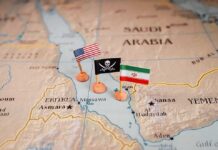
The Strait of Hormuz concentrates the world’s anxiety into a handful of nautical miles. A single disabled tanker, a mined channel, or a harassment campaign can distort freight rates and premiums within hours. Rubio’s narrative rides that physics. He argues that attacks and mining—if tolerated—turn a chokepoint into a tollbooth run by a revolutionary guard with asymmetric tools and few scruples. Oil traders can hedge; navies can patrol; but the geometric risk of a narrow strait punishes hesitation. [1][6]
Calls for a United Nations resolution fold lawfare into seamanship. Rubio is challenging the body to affirm navigational freedoms and condemn threats against commercial shipping, effectively forcing fence-sitters to pick a lane. The draft reported in trade media cites Iran’s alleged violations and continuing threats, a formulation designed to tighten diplomatic nooses without committing members to new enforcement burdens. The move tests whether institutional credibility can be rebuilt in a theater defined by speed and deniability. [4]
What Strengthens the Case—and What Does Not
The argument’s strongest plank is motive alignment: China needs cheap, predictable seaborne energy; Iran’s brinkmanship inflates risk premia. That interdependence makes Beijing the only outside actor with both carrots and sticks Tehran cares about—oil purchases, banking channels, and diplomatic cover. Rubio’s insistence that China “deliver the message” recognizes that sanctions alone rarely move Tehran, but energy buyers sometimes do, especially if insurance markets and escort costs begin to nibble at margins. [1]
The weaknesses sit where evidence should. The public record cited around Rubio’s claims lacks primary Iranian denials or granular maritime forensics that attribute specific ship strikes or mines beyond reasonable doubt. That gap does not exonerate Iran, but it does dilute the legal case for escalatory coalition measures. Without vessel-by-vessel attribution, insurer circulars, or classification-society data, diplomats ask the world to accept narrative momentum over documented causality. Conservatives value deterrence, but they also value proof. [2][4]
Deterrence, Credibility, and the Cost Curve
The United States has signaled that its navy will respond to attacks on its vessels and, by implication, protect the principle of free navigation against state-backed harassment. That clarity matters because ambiguity at chokepoints inflates shipping costs quickly. However, deterrence works best when paired with enforceable rules and a diplomatic off-ramp. Rubio’s two-step—United Nations pressure plus Chinese leverage—seeks to cap the crisis before a miscalculation drags escorts, convoys, and insurers into a long war of attrition. [6]
Marco Rubio says China should pressure Iran to reduce tensions because instability in the Persian Gulf threatens China’s energy and shipping interests.
— Mel Gibson (@MelGibsongh7) May 13, 2026
China’s calculus will determine the next chapter. If Beijing privately threatens to reduce purchases or tighten payments unless Iran cools the strait, Tehran will notice. If Beijing shrugs, Iran reads that as permission to keep experimenting with risk. Rubio’s wager is that market self-interest can do what stern lectures rarely do: shift the cost curve for aggression. If he is right, tankers keep moving and prices settle. If he is wrong, the next “minor” incident could become an expensive global civics lesson. [1][2][4]
Sources:
[1] Web – Rubio hopes China tells Iran’s FM they are ‘the bad guy’ in Hormuz …
[2] YouTube – Marco Rubio Says Iran May Impose Toll on Strait of Hormuz Shipping
[4] Web – Rubio challenges UN to prove its worth with Iran maritime resolution
[6] YouTube – U.S. Navy Will Respond After Strait of Hormuz Escalation