Six people found dead in a sealed rail boxcar in Laredo is not just a tragedy—it is a flashing red light about heat, concealment, and gaps in rail-yard security that common sense says should not be this easy to exploit.
Story Snapshot
- Laredo police confirmed six deceased individuals were discovered in a Union Pacific boxcar; no survivors were found [3].
- Union Pacific said it is cooperating fully and expressed condolences, signaling an active investigation but few details [1].
- Temperatures near the scene reached the mid-to-upper 90s Fahrenheit; heat is discussed as a possible factor but not confirmed [1][2].
- Identities, causes of death, and how the victims entered the railcar remain undisclosed, leaving crucial questions open [1][3].
Verified Facts From Police And Railroad Officials
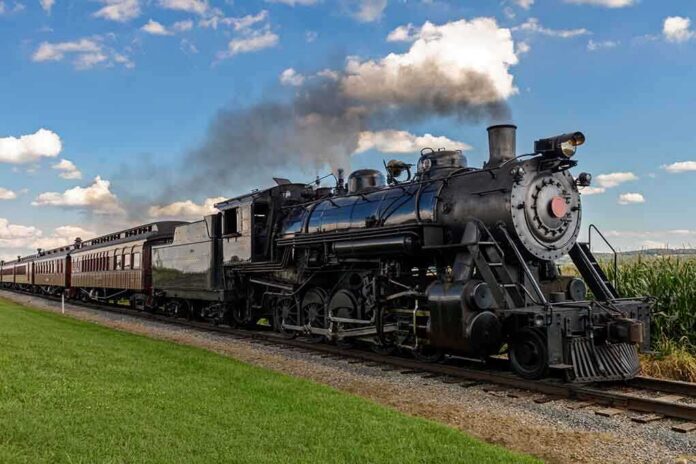
Laredo Police Department reported six bodies were discovered during an inspection at the rail yard near mile marker 13 along 12100 Jim Young Way. First responders arrived, checked the railcar, and confirmed all six were deceased, with no survivors found at the scene [3]. Union Pacific acknowledged the incident, stated it was saddened by the loss of life, and pledged to work closely with investigators to determine what happened [1]. Authorities said the investigation remains open and more information will be released when available [3].
Local newsrooms aligned on the core facts: six deceased in a Union Pacific boxcar in Laredo, discovered during a yard inspection, and no one found alive inside [1][3]. Reports referenced a Sunday afternoon timeline with notifications starting just after 2:30 p.m., followed by confirmation updates later in the afternoon [1][3]. Law enforcement did not release victim identities or nationalities, a standard practice at this stage that also limits public certainty about motive, travel path, or whether trafficking or smuggling played any role [1][3].
Heat, Sealed Spaces, And The Physics Of A Deadly Box
Weather conditions in Laredo reached the low-to-mid 90s Fahrenheit, with some coverage citing up to 97 degrees. Temperatures inside a sealed metal boxcar can rise far higher, creating a lethal environment through hyperthermia or oxygen depletion if ventilation is limited [1][2]. A separate report noted a medical examiner’s belief that heat stroke may have contributed in this case, while stressing the pending investigation and the need for formal findings before drawing conclusions [5]. That distinction matters: speculation hardens narratives, but only autopsy and toxicology settle cause.
Common sense aligns with the physics; when external temperatures approach 100 degrees, heat gain inside an enclosed steel compartment can outpace human tolerance quickly. Yet responsibility hinges on verifiable evidence: entry method, time sealed, ventilation state, and any protective measures taken. Those details remain unreported publicly. Without them, the honest answer is that heat is plausible, not proven. Investigators will need to reconstruct the boxcar’s condition and timeline to move from probability to fact [1][3][5].
Security Gaps, Repeated Incidents, And What Accountability Looks Like
Local coverage linked a similar event reported days earlier in Dallas, raising pattern questions that push beyond a single-day mishap [1]. Union Pacific’s generic cooperation line communicates sympathy and process, but it does not answer whether the company’s yard access controls, inspection cadence, or railcar security features have been stress-tested against unauthorized entry. That is where corporate responsibility intersects with public safety. Americans expect predictable systems to close obvious loopholes, especially at border-adjacent hubs.
DEVELOPING STORY | Six bodies were discovered during an inspection at a railyard in Laredo, Texas, not far from the Mexican border. No survivors were found inside the Union Pacific boxcar: https://t.co/la1rHMih6F pic.twitter.com/OYgfgQUBnP
— KCENNews (@6NewsCTX) May 11, 2026
Policy and practice will be judged by what investigators verify: surveillance footage, entry points, yard logs, and whether personnel followed protocol. If this turns out to be a failure of basic control—doors left unsecured, inspection lapses, or poor monitoring—then accountability should include hard fixes and timelines, not just statements. If, however, actors defeated locks or exploited gaps with sophisticated methods, the remedy shifts toward deterrence, technology upgrades, and coordination with law enforcement for targeted interdiction. Either way, a credible after-action plan is warranted.
The Open Questions That Decide The Story
Five answers will determine whether this becomes a cautionary tale or an avoidable scandal. First, precise cause of death confirmed by the medical examiner—hyperthermia, asphyxiation, toxic exposure, or trauma [1][3][5]. Second, verified identities and travel histories to establish whether smuggling or trafficking networks played a role, or whether this was an act of desperate self-transport [1][3]. Third, exact entry point and time stamp into the boxcar, ideally from surveillance or device telemetry. Fourth, boxcar condition: seal integrity, ventilation, and locking mechanisms. Fifth, any prior alerts missed or ignored.
Conservative common sense resists instant politicization and demands clean facts. Police confirmed six deceased and no survivors. The railroad promised cooperation. Heat likely compounded risk, but the cause is not official. Until investigators publish findings, the responsible stance is firm and focused: protect life, harden rail security, insist on transparency from all stakeholders, and avoid turning grief into clickbait. When the evidence lands, accountability and prevention should follow—swiftly and publicly [1][2][3][5].
Sources:
[1] Web – Six people confirmed dead in Union Pacific cargo train at Laredo …
[2] YouTube – 6 bodies found inside Union Pacific boxcar near Laredo as temps hit …
[3] Web – 6 found dead inside railroad boxcar, Laredo police say – KSAT
[5] Web – 6 bodies found in Union Pacific boxcar in Laredo, Texas, near Mexico, …