
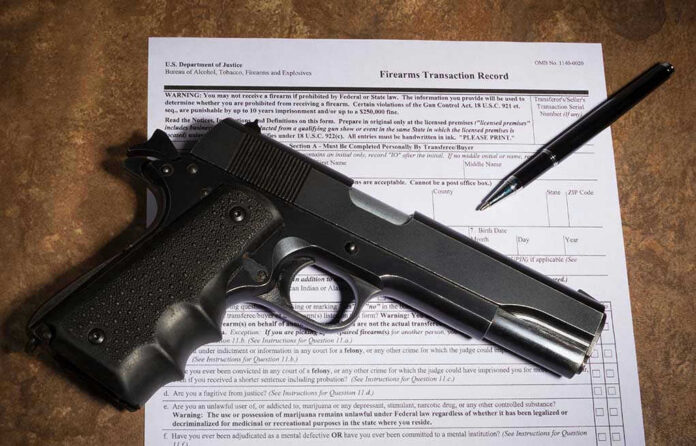
Virginia’s new “assault firearms” ban has done something its authors probably did not intend: it turned the weeks before July 1 into one of the biggest gun-buying frenzies the Commonwealth has ever seen.
Story Snapshot
- Gun background checks in Virginia have more than doubled as residents rush to buy rifles and magazines before the July 1 ban takes effect.
- The law targets future sales, transfers, and imports of so‑called assault firearms and magazines over 15 rounds, while largely grandfathering current owners.
- At least a dozen Commonwealth’s attorneys say they will not enforce the ban, setting up a patchwork of justice by ZIP code.
- Supporters promise greater public safety; opponents see a symbolic restriction that punishes the law‑abiding while leaving criminals and existing stock untouched.
What The New Virginia Gun Law Actually Does
Virginia’s new statute does not send police door to door; it goes after the front door of the gun shop. Starting July 1, it becomes a Class One misdemeanor to buy, sell, transfer, import, or manufacture what the law defines as an “assault firearm,” along with magazines that hold more than 15 rounds.[2] A conviction can mean up to a year in jail and a $2,500 fine for conduct that was perfectly legal on June 30.[2][4]
Lawmakers wrote that definition broadly. Semi‑automatic rifles or pistols that accept a magazine of more than 15 rounds fall under the ban, along with rifles that accept detachable magazines and have features such as a collapsible stock or a second handgrip.[2] The same law bars the sale of magazines capable of holding more than 15 rounds.[2][4] Yet for “most people,” according to local reporting, mere possession of these guns and magazines will not be a crime.[2][4]
Why Gun Buyers Are Racing The Calendar
When you tell Virginians that on July 1 they cannot buy something they lawfully could buy on June 30, do not be surprised when the checkout line gets long. Federal Bureau of Investigation background checks in Virginia more than doubled this May compared with May of the prior year as residents rushed to purchase rifles and magazines before the deadline.[1][2] One local report counted roughly 73,000 checks in May alone, versus about 35,000 in May a year earlier.[2]
Gun dealers are not shy about describing the impact. One shop owner estimated that roughly two‑thirds of his inventory falls under the new restrictions; another said around 90 percent of what he sells will be affected. Those are not exotic, military‑only weapons; those are the everyday semi‑automatic rifles, pistols, and standard‑capacity magazines that ordinary citizens use for home defense, sport shooting, and training. The political class calls it “assault,” but the retail counter says “normal stock.”
Supporters’ Promise: Fewer Casualties, Safer Streets
Governor Abigail Spanberger framed her signature on the bill as a family and police protection measure, declaring that firearms “designed to inflict maximum casualties do not belong on our streets.”[2][3][4] Supporters argue that limiting access to semi‑automatic firearms with higher‑capacity magazines reduces a shooter’s ability to sustain fire and forces more frequent reloading, which they believe can save lives during an attack.[2] They also point out that eleven other states and Washington, D.C., already have similar restrictions on the books.[2][3]
The design of the law reflects that pitch. It focuses on sale‑side access, not sweeping confiscation. Existing owners can largely keep what they already have, which allows backers to claim the law is “narrowly tailored” to future circulation rather than a mass seizure.[2][4] To a moderate voter, that may sound like a compromise: keep granddad’s rifle, but stop stocking the gun case for the next generation. From a conservative perspective, it also means the law’s promised safety gains rest on restricting future lawful purchases, not on disarming violent offenders.
Opponents’ Warning: Symbolic Law, Real Burdens
Opponents argue that the law hits the wrong target. Criminals rarely line up for background checks, yet the only people directly constrained on July 1 are the citizens who do exactly that. The surge in pre‑ban sales underscores the point: rather than shrinking the number of rifles and magazines in Virginia, the law has front‑loaded demand.[1][2] The total number of these firearms in private hands is almost certainly higher on July 1 than it would have been without the law.
Virginia gun sales have surged ahead of a July 1st assault weapons sales ban signed by Gov. Abigail Spanberger, with FBI data showing 75,376 firearm background checks in May, more than double the same month last year. (FOX)
— NTC Armory (@NTC_Armory) June 6, 2026
Then comes enforcement. At least ten, and by some counts fourteen, Commonwealth’s attorneys have publicly announced they will not prosecute violations of the assault‑firearm or magazine provisions, calling them unconstitutional or a misuse of limited resources.[3][4] That means a gun owner in one county could face a criminal charge for a post‑July 1 transfer that a neighbor across a county line would never see in court. Equal treatment under the law turns into a lottery based on your local prosecutor’s politics.
The Unanswered Questions That Matter Most
Both sides talk about safety, but neither side has Virginia‑specific outcome data yet. The reporting so far does not include peer‑reviewed evidence that this particular mix of feature tests and a 15‑round cutoff will reduce murders, suicides, or mass‑casualty shootings in the Commonwealth.[1][2][4] Supporters lean heavily on rhetoric and analogies to other states; opponents lean on constitutional arguments and lived experience, not on a controlled study that shows these bans fail.
That leaves Virginians in an uncomfortable place. A law that dramatically reshapes the future gun market, provokes a buying stampede, and splits prosecutors is being sold as settled wisdom rather than as a contested experiment. From a common‑sense, conservative vantage point, voters are justified in asking for harder proof before accepting that curbing the rights of the law‑abiding—while leaving the existing stock untouched and enforcement optional—is the surest path to safer streets.
Sources:
[1] Web – Virginia gun sales spike ahead of July 1 assault weapons ban signed by …
[2] Web – Virginia sees surge in gun sale background checks ahead of July 1 …
[3] Web – Virginia sees surge in gun sale background checks ahead of July 1 …
[4] YouTube – Virginia assault weapons ban takes effect July 1 as gun …
© headlineupdates.com 2026. All rights reserved.