U.S. officials are again vowing punishment for Iran after tanker attacks tied the Strait of Hormuz to a fast-moving maritime fight.
Quick Take
- The United States says its strikes were a response to attacks on commercial shipping and civilian mariners.
- Central Command says the campaign targets Iran’s maritime, missile, drone, radar, and air defense assets.
- Reporting in major outlets shows the U.S. has used the same shipping-defense rationale across several strike rounds.
- The public record supplied here does not show declassified proof that Tehran ordered the specific tanker attacks.
U.S. Strike Claims Center on Shipping Defense
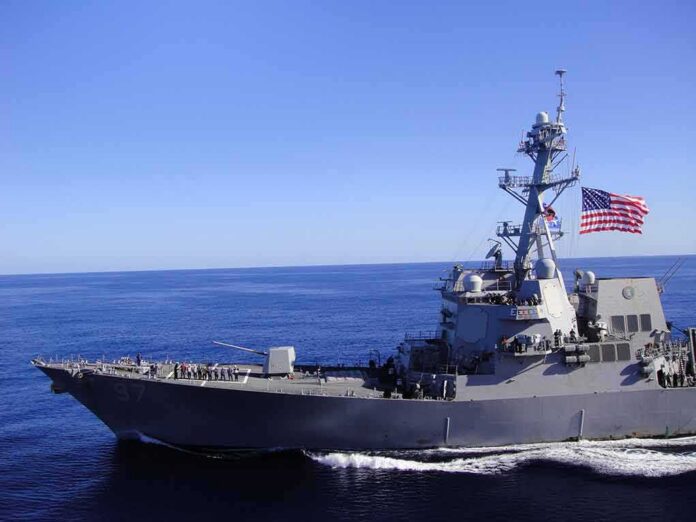
United States Central Command says the latest strikes were meant to weaken Iran’s ability to threaten civilian mariners and commercial vessels. In its public release, Central Command said American forces hit maritime capabilities, missile and drone storage sites, coastal surveillance sites, and air defense assets. The message was clear: the administration is treating attacks on shipping lanes as the trigger for military retaliation rather than as isolated incidents.
That framing matters because it gives the White House and the Pentagon a simple public case. They say Iran backed or carried out attacks that endangered international shipping, and they say the United States is answering with force. Reuters reported earlier this year that Central Command described one round of strikes as self-defense and called it a measured reply to Iranian aggression. That language has become the backbone of the public argument.
How the Public Case Was Built
Major outlets have repeated the same basic claim: the military says Iranian attacks on commercial vessels prompted U.S. strikes. The New York Times reported that airstrikes followed tanker attacks in the Strait of Hormuz, and USA Today said Central Command called one strike a powerful response to an attack on the M/V Ever Lovely. NPR also reported that later strikes hit missile and drone sites, bridges, and power stations.
The pattern is important. Each round of strikes appears broader than the last, but the public justification stays the same. Central Command says it is degrading Iran’s maritime attack network, and officials keep tying that network to danger for merchant ships. That is a familiar argument for readers who want a strong American hand in the Gulf. It is also the kind of argument that can widen a mission fast if Congress does not draw a line.
What the Record Shows, and What It Does Not
The supplied record does not show public forensic proof that Tehran ordered the specific Houthi or Strait of Hormuz attacks at issue. The strongest claims come from Central Command statements and news reports that repeat those statements. Those sources show what the government says happened, but they do not provide intercepted orders, captured tasking messages, or a public intelligence estimate proving command responsibility from Tehran to the exact attack chain.
🇺🇸 – Trump Nears Decision On “Massive” New Attack Against Iran:
President Donald Trump said today he is close to deciding whether to launch strikes larger than those carried out during Operation Epic Fury. No final order has been issued, but Trump says U.S. forces are ready and…
— Belaaz News (@TheBelaaz) July 23, 2026
That gap leaves room for a basic constitutional and policy question: how much force should the executive branch use before the public sees the hard evidence? The record here also shows the target set widening beyond shipping-related assets to bridges, power stations, and other infrastructure. For many conservative readers, that raises a fair concern about mission creep and whether the response stayed tied to the original threat or moved into broader punishment.
Why the Attribution Fight Still Matters
The counter-case is not that nothing happened. The counter-case is that the public evidence supplied here does not fully prove who ordered the attacks, and that matters before the United States keeps escalating. Iran’s public response, as reflected in the supplied material, disputes U.S. authority and frames the strikes as a breach of agreement and sovereignty. It does not, however, offer its own public proof showing some other actor carried out the tanker attacks.
For now, the administration’s case rests on official military assertions, supported by media reports that echo those assertions. That may be enough for immediate action in a crisis, but it is not the same as a fully documented public record. Readers who care about limited government, clear war powers, and plain accountability should notice the difference. The facts in public point to a real shipping threat, but the deeper attribution question remains hidden behind classification.
Sources:
insiderpaper.com, en.wikipedia.org, centcom.mil, reuters.com, cfr.org, npr.org, nytimes.com, usatoday.com, bbc.co.uk, pbs.org, youtube.com, war.gov, legion.org, abcnews.com, fortune.com, cbsnews.com, aljazeera.com, bbc.com
© headlineupdates.com 2026. All rights reserved.