A loaded car bomb caught just miles from the Irish border is a stark reminder that old conflicts and quiet extremists still threaten ordinary people who just want to live their lives in peace.
Story Snapshot
- Irish police stopped a car near the Northern Ireland border and found what officials call an “extremely significant” bomb.
- A woman in her 20s and a man in his 40s were arrested on suspected offenses against the state linked to dissident republicans.
- Army explosives experts made the device safe, and police say a major cross-border attack may have been prevented.
- The case fits a wider pattern of dissident Irish republican groups using car bombs to threaten police and political stability.
Police say a major car bomb plot was stopped near the Irish border
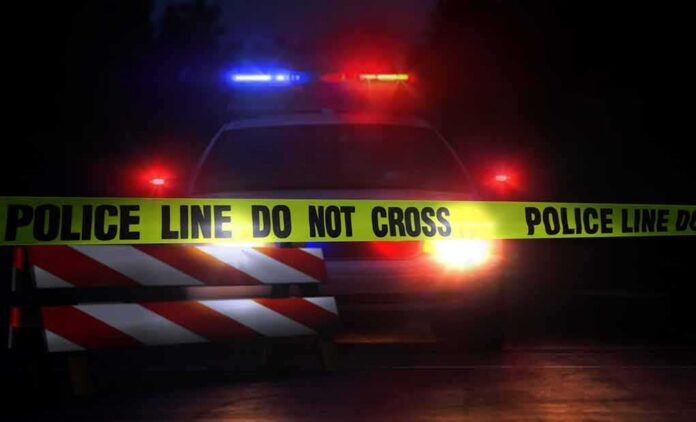
Irish police say detectives acting on intelligence stopped a car close to the town of Carrickmacross in County Monaghan, about six miles from the open border with Northern Ireland. Inside that vehicle, officers found what the national police chief later called an “extremely significant” explosive device. The driver, a woman in her 20s, was arrested on suspicion of offenses against the state, and a man in his 40s was later detained in the same investigation. Police believe the bomb was meant to cross into Northern Ireland for an attack.
After the car was stopped, police requested the Irish Army’s Explosive Ordnance Disposal team, the unit that handles dangerous devices. Those specialists examined the vehicle and made the bomb safe before removing it for forensic work. Officials have not yet shared technical details with the public, which is common in active terror cases. Reporters citing security sources say the device was built and placed to act as a car bomb, not a simple firework or hoax. Police stress that the operation likely prevented a deadly cross-border attack.
Dissident republicans and a long history of border bomb plots
This case does not come out of nowhere. For years, security services in both Ireland and the United Kingdom have warned that dissident Irish republican groups, who reject the peace deal known as the Good Friday Agreement, are still making bombs and planning attacks. Police in past cases have described beer keg bombs, mortars, and car bombs as “ready for use” and designed to kill police officers or civilians near the border. In one earlier incident, officers said those who left a 600‑pound bomb near Newry had “destructive, murderous intent,” showing how serious these devices can be.
Recent attacks in Northern Ireland also show a clear pattern. In Dunmurry, near Belfast, dissident republicans hijacked a delivery driver, forced him to drive his vehicle to a police station, and detonated a gas cylinder bomb outside the building. Police said it was intended to kill officers and cause maximum harm in a crowded neighborhood. In another case linked to the New Irish Republican Army, a bomb was placed under a police officer’s car at a golf club; investigators said it was a “functional device” designed to kill. These events underline why authorities treat any suspected car bomb near the border as a major threat.
Why this matters beyond Ireland: trust, security, and “deep state” fears
The Irish case also touches a bigger issue that many Americans, both conservative and liberal, feel at home: can we trust security officials who warn of serious threats while sharing only limited facts? Police often describe seized bombs as “significant” or “sophisticated” before full details are public, and later records are sometimes thinner than the early warnings suggest. That gap feeds doubt for people who already believe government elites hide the truth and use fear to hold on to power. It is easy for citizens, looking at yet another vague terror alert, to ask who benefits from the story.
An "extremely significant" car bomb has been intercepted by Irish police near the border with Northern Ireland.
A female driver in her 20s has been arrested after Irish police discovered the explosive during an operation targeting "dissident republicans".
The device was found… pic.twitter.com/pS1ZFJGQxz
— World Source News (@Worldsource24) July 24, 2026
At the same time, this case shows real dangers are not just political talking points. An improvised explosive device is, by definition, built to destroy, injure, or terrorize. Border communities in Ireland have lived with that shadow for decades, just as many American communities worry about crime, political violence, and open borders today. When a bomb is stopped before it explodes, most people never see the lives saved. They only see more headlines, more secrecy, and more reasons to doubt a system they already feel is failing them.
Sources:
insiderpaper.com, euronews.com, reuters.com, bbc.com, dw.com, bbc.co.uk
© headlineupdates.com 2026. All rights reserved.