U.S. agents seized web domains that officials say powered years of intrusions into key federal networks, from NASA to the Federal Reserve, and then China publicly denied it.
Story Snapshot
- Justice Department and FBI seized domains tied to QScan and QTRouter platforms.
- Officials linked the tools to a China-backed group called QTFY via a Nanjing company.
- Targets included the Justice Department, NASA, the Senate, and the Federal Reserve.
- Chinese embassies rejected the claims and called them smear tactics.
What U.S. Authorities Say They Shut Down
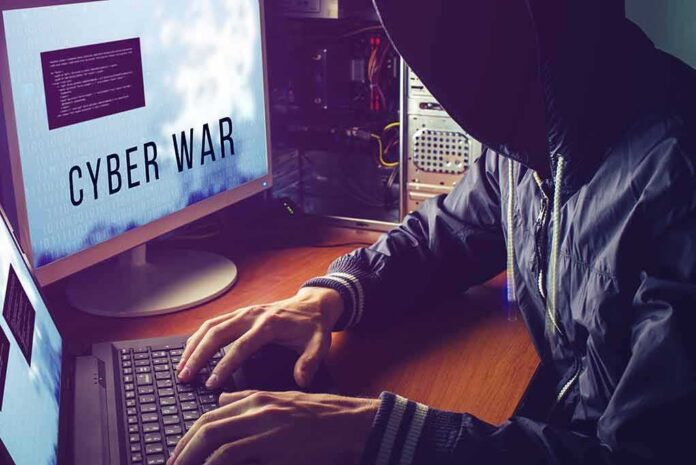
The Justice Department said it carried out court-approved domain seizures against two hacking platforms named QScan and QTRouter. Officials said the goal was to block tools used to hit U.S. government and critical systems. The Federal Bureau of Investigation (FBI) joined the action. Prosecutors said the operation aimed to disrupt ongoing intrusions and prevent new ones. The department framed the takedown as part of a long effort to stop foreign actors from hiding inside American networks.
Unsealed filings described a state-backed group in the People’s Republic of China called QTFY. Prosecutors said QTFY worked through Nanjing Xinjiuwei Network Technology Company. They said QScan scanned the internet and infected large numbers of internet-connected devices. They said QTRouter then used these devices to hide traffic from China. That masking made attack traffic look like it came from everyday computers in other countries.
How The Platforms Allegedly Worked
Prosecutors said QScan searched for weak devices and then loaded malware that handed control to the operators. Those devices then joined the QTRouter network. Officials called QTRouter an obfuscation layer. They said it let hackers bounce their connections through infected machines to reach targets. According to the filing, the seized domains were hard-coded into both tools. Taking the domains offline made the systems stop working at once, officials said.
Officials and press summaries named high-profile targets. They included the Department of Justice, the National Aeronautics and Space Administration (NASA), the Senate, and the Federal Reserve. Reports also mentioned the Department of Health and Human Services and the National Institutes of Health. Some victims were not named in public documents. Reuters said the government linked the platforms to clients in China’s Ministry of State Security and the People’s Liberation Army.
Scope, Gaps, and What Remains Unclear
Government summaries pointed to a campaign that stretched back years, not months. Press accounts citing the affidavit said activity reached as far back as 2018. That suggests a service that was sold and reused across many operations, not a single hack. The public does not yet see all the technical proof. The released materials do not include code hashes, logs, or full victim-by-victim confirmations for every claim.
That missing detail matters for trust. It leaves open questions about which intrusions were successful and which were blocked. It also makes it hard for outside experts to confirm who ran the tools. Still, the seizures and sworn filings form a significant public step. They carry legal risk if false. The action also reflects a pattern where U.S. agencies disclose enough to warn, but keep sensitive data sealed to protect sources and methods.
China’s Denial and The Bigger Stakes For Americans
China’s embassy dismissed the allegations. It said China opposes all hacking and accused the United States of using cybersecurity to smear China. The embassy called the claims unfounded and said they spread disinformation. These statements match past Chinese responses to similar cases in other countries. They argue the charges are political and lack proof made public for review.
ALERT: THE FBI JUST SHUT DOWN A CHINESE HACKING OPERATION THAT HAD BEEN INSIDE NASA, THE FEDERAL RESERVE, AND THE U.S. SENATE FOR 8 YEARS.
Your smart home and appliance may have contributed to the cause of the attack.
Today (August 26), the DOJ and FBI seized three domains that… pic.twitter.com/wdr1O7ktIG— Tom and Laurie Lee (@TomandLaurieLee) August 26, 2026
For Americans, the stakes are simple and serious. When hackers reach agencies that guide health, money, space, and law, trust in basic services takes a hit. People on the right and left already doubt that Washington can protect them. They see big claims with little daylight into the evidence. Clearer, faster sharing of technical indicators would help towns, hospitals, and small firms defend themselves. Sunlight and follow-through—not headlines—build resilience and restore faith in government performance.
Sources:
insiderpaper.com, justice.gov, reuters.com, aa.com.tr
© headlineupdates.com 2026. All rights reserved.