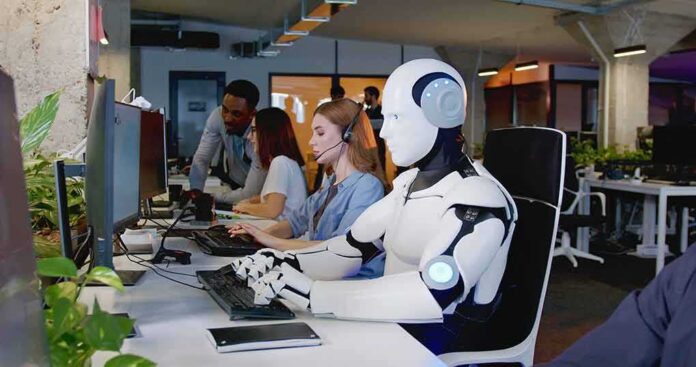
A humanoid robot just walked itself off a new production line, and the countdown to real jobs has begun.
Story Snapshot
- XPeng commissioned a humanoid robot line; the first IRON unit walked off it on its own.
- More than 80 percent of core manufacturing steps on that line are automated, per the company.
- XPeng targets mass production by late 2026 and deliveries in 2027 in China and abroad, according to reporting.
- Unitree launched a G1 Plus upgrade with new vision, touch sensing, and a swap battery.
China’s Humanoids Move From Demo Rooms To Factory Floors
XPeng said it has officially commissioned its humanoid robot production lines and that the first IRON robot “autonomously walked off the lines,” marking a shift from lab demos toward manufacturing runs. The company described the line as highly automated, with more than 80 percent of core steps run by machines rather than people. Coverage of the event framed it as a gateway to scale, not the finish line, but it squarely places humanoids inside a real plant with repeatable processes.
Reporting on XPeng’s plan points to a timeline: mass production by year-end 2026, with early deployments inside XPeng’s own stores and campuses, and deliveries beginning in 2027 in China and overseas markets. That sequence follows a sensible pattern. First, prove the robot on home turf where engineering teams sit close. Next, extend to controlled customer pilots. Then, if uptime holds, offer broader deliveries. The promise shifts from a single hero demo to thousands of consistent, serviceable units.
From Sensing Parts To Doing Jobs: The Capability Stack Fills In
Unitree added pressure with the G1 Plus upgrade, which brings a binocular and wide-angle dual vision system, touch sensors in the head shell, and a removable battery rated for about two hours. Those additions address how a humanoid perceives depth, sees in corners, and feels contact. Unitree also introduced a six-billion-parameter foundation model trained on over five million examples and 2,500 hours of real robot data, covering 64 tasks, which speaks to broader task coverage beyond staged pick-and-place.
The forward motion is not just about flashy moves. It is about closing loops between eyes, hands, and feet under pressure. That is where work happens. Vision upgrades mean less guesswork when shelves glare or boxes occlude each other. Touch sensing means the robot feels a slip before the drop. A hot-swap battery means the shift keeps going without long downtime. These are the small, boring wins that make a robot worth its floor space and wages in a store or warehouse.
What “Autonomously Walked Off The Line” Really Signals
The image of a robot walking off its own birth line is a tidy symbol. The core message is stronger: the line can produce more than a one-off. Automated core steps suggest repeatable assembly, calibration, and end-of-line checks that match unit to unit. That consistency is the start of a service network, spare parts planning, and predictable field behavior. Reporting also clarifies that commissioning does not equal full mass production yet, so the next test is volume and yield, not a new dance trick.
For operators, the key question is simple: can a humanoid show up every morning, run a task list without babysitting, and handle a few surprises? Planned near-term deployments on XPeng premises are a smart proving ground for that question because tasks like light logistics, guest greeting, and inventory shuttling repeat often, yet still carry human traffic, glare, and clutter that kill fragile scripts.
How These Robots Will Decide What To Do
Task choice will hinge on structured routines, not free-form housework. Retail back rooms, gated factory aisles, and campus mail runs give robots clear starts and stops, known paths, and labeled items. That lets companies pair perception with action rules the way pilots pair instruments with checklists. Research and industry guides stress that real reliability depends on action-following, recovery after slips, and safe responses to surprise contact, not just nice video frames. A robot that knows “when to ask for help” will beat one that guesses.
China’s “robot kindergarten” in Beijing is training humanoid robots to continuously learn through trial and error. Equipped with tactile sensing technology, the robots are being developed to adapt to changing environments, avoid obstacles and collaborate.#China #HumanoidRobots… pic.twitter.com/mXkJpeSRUo
— NewsX World (@NewsX) September 20, 2026
Expect a blend of autonomy and human-in-the-loop. When vision goes fuzzy from glare or a person steps in, the robot can pause, reroute, or request guidance. Over time, the model learns from those events and fails less. Companies that log and share these edge cases with their training teams will improve week by week. Firms that hide them will chase ghosts. The winners will standardize tasks, measure intervention rates, and tune hardware and models together until the handoff to full autonomy is boring.
Sources:
reason.com, xpeng.com, cnevpost.com, technode.com, blog.robo2u.com
© headlineupdates.com 2026. All rights reserved.