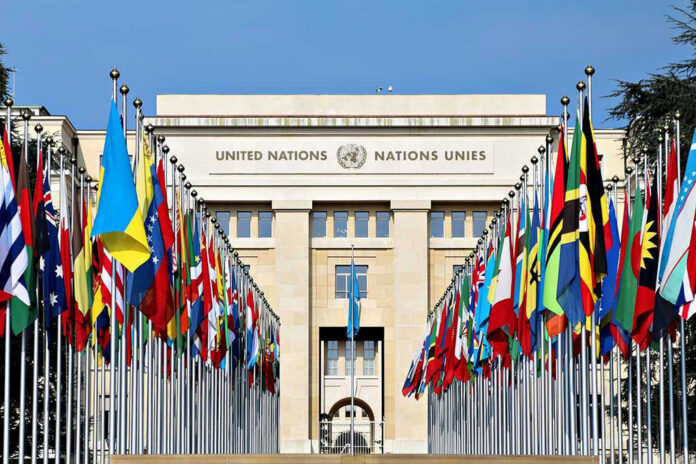
The United States denied Palestinian President Mahmoud Abbas a visa for the second year in a row, forcing him to address world leaders by prerecorded video during the United Nations General Assembly.
Story Highlights
- The State Department extended visa sanctions on Palestinian officials under standing U.S. law, blocking Abbas’s travel.
- United Nations members approved a workaround that let Abbas speak by video again this year.
- Washington tied the ban to Palestinian actions it says undermine peace, including international court cases against Israel.
- Palestinian leaders and rights groups called the move unlawful and punitive, and urged reversal.
What Washington Decided and Why It Matters
The State Department said it would extend sanctions that deny visas to members of the Palestine Liberation Organization and Palestinian Authority officials in line with standing United States law. Officials tied the move to what they called failure to reform and actions that undermine peace prospects, including efforts to pursue cases against Israel at international tribunals. The decision again blocked President Mahmoud Abbas from traveling to New York for the annual United Nations General Assembly.
Reuters reported that this year’s denial continues a ban first imposed last year, signaling an ongoing policy rather than a one-time call. That continuity gives the move extra weight in diplomacy. It hints that Washington plans to keep pressure on Palestinian leaders until it sees changes it deems credible. The reports reviewed did not cite a specific statute number or release a case file for Abbas, which limits outside review of the decision’s legal basis.
How the United Nations Kept the Speech Alive
Member states at the United Nations voted to allow Abbas to speak by video for the second year in a row after the visa denial. This workaround ensured Palestine still addressed world leaders during the General Debate, while avoiding a direct clash on entry to U.S. soil. Last year’s organizers said remote remarks should not become a precedent, yet the same fix returned this year. That repeat underscores how host-country control can shape access.
Diplomats often argue that the United Nations should be open to all member and observer delegations during major meetings. Critics of the United States say using visas as leverage conflicts with that spirit. Supporters counter that United States law and policy apply on American soil and that delegations must meet clear conditions. This year’s vote showed most countries wanted the speech heard even if the travel dispute stayed unresolved.
What Each Side Says About the Ban
United States officials framed the action as a legal and policy step aimed at conduct they say harms peace efforts. They pointed to “internationalizing” the conflict through tribunals as a key factor. That echoes long-standing tensions over Palestinian moves at the International Criminal Court and International Court of Justice. The government’s public case, as reported, rested on general criteria and did not release detailed, individualized findings tied to Abbas’s application.
Palestinian leaders called the decision unlawful and punitive, saying it violates host-country duties and blocks normal United Nations participation. They argued the ban hurts chances to rebuild trust and pursue a two-state solution. Rights advocates, including Amnesty International, said the move punishes Palestinians for seeking justice through international institutions, and urged the State Department to reverse course. These claims stress process and fairness over policy leverage.
Why Americans Across the Spectrum Care
Many Americans on the right see the decision as long-overdue backbone: enforce the rules, back allies, and stop rewarding behavior they view as hostile. Many on the left see a different risk: using access as a political tool can erode global norms and undercut peaceful channels. Both camps share a deeper worry that powerful officials make high-impact calls without transparent records, leaving citizens with slogans instead of facts they can test.
Here, the facts are clear on outcomes but thin on the public record. The United States denied the visa. The United Nations allowed a video speech. The State Department cited standing law and certain Palestinian actions. But the government did not publish the specific legal hook or an evidentiary memo for Abbas. Until more detail is released, debate will likely track prior beliefs about leverage, law, and fairness more than a shared dossier of facts.
What to Watch Next
Watch for any formal challenge at the United Nations, fresh European Union pressure, or congressional oversight seeking the decision’s legal basis. Track whether the United Nations keeps using video workarounds or pushes for a clearer host-country process. Look for signs that the Palestinian Authority changes tactics at international courts, or that Washington adjusts criteria for future United Nations gatherings. Any of these could shift the balance between principle, law, and access before next year.
Sources:
military.com, nytimes.com, theguardian.com, cbc.ca, dw.com, afp.com, haaretz.com
© headlineupdates.com 2026. All rights reserved.