In cases like Oxford’s, three different questions get collapsed into one headline: was a substance present, was it being sold illegally, and did it cause a death. Untangling those threads is the only way to see what the evidence actually supports.
The Short Version
- Police raided an Oxford vape/tobacco shop and seized more than 500 kratom products; two clerks were arrested on drug charges tied to local illegality of kratom sales.
- Packaged kratom was recovered at both scenes where two Ole Miss students were found dead; toxicology and causes of death were not yet public at the time, and officials cautioned against assuming causation.
- A later affidavit summary linked one student’s purchases to the raided store and described undercover buys, but it did not establish that the seized items caused either fatality.
- Legally, enforcement and causation are distinct: Oxford’s 2019 ban supports the possession/distribution case, but it does not, by itself, prove the mechanism of death.
What the evidence shows: a strong enforcement case, an unproven causation theory
The record around Oxford is clear on several points. Metro Narcotics agents raided Puffs Vape, Tobacco and Beer Store and reported seizing more than 500 kratom units, along with other suspected narcotics. Two employees were arrested and booked on drug charges, including possession with intent to distribute; kratom sales are illegal within Oxford city limits under a 2019 ordinance, which provides a straightforward legal foundation for those arrests. Investigators also said packaged kratom was recovered at both locations where the University of Mississippi students were found dead—facts that understandably intensified public scrutiny of local retail sources.
Where the evidence is thinner is on causation. From the outset, Oxford police and university officials emphasized that there was no confirmed information showing that kratom—or any other substance—caused either death, and toxicology results were pending. That caution stood alongside the active criminal-drug investigation but did not resolve it into a definitive medical conclusion. A later news summary of a DEA affidavit described undercover purchases and linked one decedent’s bank records to the Oxford store; it also recounted seizures of more than 500 kratom-related products. Yet even there, reporting indicated that officials did not state that the kratom found near the student came from that store, nor did they claim that kratom caused the deaths.
How these cases typically work: presence, illegality, and medical causation are separate lanes
Drug investigations regularly proceed on parallel tracks. One asks whether contraband was possessed or sold in violation of a specific statute or ordinance; in Oxford, the 2019 kratom ban draws that line for local retail. The other asks whether a substance materially contributed to a death—a medical question requiring autopsy findings, toxicology profiles, and, where relevant, analysis of co‑ingestants and adulterants. Conflating the two creates predictable distortions: a store can be chargeable for illegal sales without its products being the proximate cause of a death; conversely, a toxicology result could implicate a substance even if no retail source is ever proven.
Kratom sits in a regulatory gray zone nationally—unapproved by the FDA and variably regulated by states and municipalities—so retail channels often run through convenience and vape outlets rather than pharmacies. That structure makes local raids and seizures more likely, but it also encourages headlines to blur the difference between “found at the scene,” “sold unlawfully,” and “caused the death.” Public‑health literature underscores the analytical need for separation: kratom is frequently detected in polydrug deaths, and kratom‑only fatalities appear uncommon relative to overall overdose mortality, which complicates any assignment of single‑agent causality absent rigorous lab confirmation.
The Oxford file: specifics and limits
The Oxford sequence is, as far as the public record shows, consistent with that pattern. The enforcement spine is strong: a local ban, undercover activity, a raid, and seizures in volume—more than 500 units—followed by arrests of two clerks for drug offenses. Investigators publicly stated that packaged kratom was present at both death scenes, and subsequent coverage of an affidavit summarized purchase links for one student and described undercover buys. At the same time, police and university officials repeatedly warned against leapfrogging toxicology, stating the causes of death were not yet known and that there was no confirmed evidence of kratom’s role. One report also noted that purchases by the second decedent were linked to a different outlet, reinforcing that even the retail path may not point to a single source.
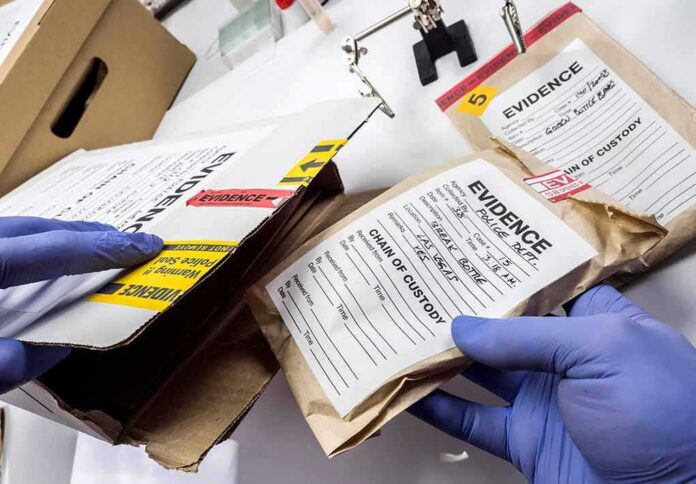
Those limits matter. Without released toxicology, chain‑of‑custody documentation, and product‑level forensics—lot numbers, alkaloid profiles, contaminant screening—no public record ties a specific seized package to a specific death. The affidavit summaries are directionally suggestive for law enforcement purposes, but they are not dispositive medical evidence. In short: the evidence decisively supports the prosecution of illegal kratom sales in Oxford; it does not, in the public domain, establish that kratom caused either fatality.
What credible resolution would require
Closing the evidentiary loop from store to scene to mechanism of death requires a short list of concrete artifacts. First, full toxicology and autopsy findings, including quantitation of mitragynine and 7‑hydroxymitragynine and any co‑ingested substances. Second, forensic comparison between the packaged products recovered at both scenes and items seized at retail—ideally by lot, packaging identifiers, and chemical profile, including contaminants or adulterants common in gray‑market pills. Third, transactional proof—point‑of‑sale logs, bank records, surveillance video—tying specific purchases to specific decedents at relevant times. Finally, officer or informant testimony establishing the nature of the products sold, bolstered by lab confirmation of seized samples. Absent these, the public case can justify local drug charges but not a causal narrative about the deaths.
Health risk, not moral panic: how to think about kratom here
Kratom’s pharmacology explains both its appeal and its risk. At lower doses, it can behave like a stimulant; at higher doses, its alkaloids can produce opioid‑like effects. Clinical literature and surveillance data describe adverse events, dependency potential, and sporadic fatalities—most often with other substances on board—set against the reality that kratom remains unapproved and heterogeneous in potency across brands and batches. That is precisely why local bans and state‑level age or product standards are proliferating, and why experts warn that conclusions about causation demand disciplined toxicology rather than inference by proximity.
There has been another development in the deaths of two Ole Miss students, Aidan Hamilton, 18, and Robert Strang, 20, who were found dead in separate locations in Oxford, Mississippi, on September 21.
On Thursday, the Lafayette County Metro Narcotics Unit searched Puffs Vape,… pic.twitter.com/fZIbp9p9vE
— USMC Lady Vet 🇺🇸 (@Arkypatriot) September 27, 2026
The practical takeaway
Read the Oxford case on two tracks. On the enforcement track, the chain is intact: a standing municipal ban, undercover buys, a raid, large seizures, and arrests. On the causation track, the chain is incomplete in the public record: kratom’s presence at two scenes does not equal proof that it killed two students, and the available affidavit summaries do not claim that it did. Precision about those lanes is not hair‑splitting; it is how investigators, clinicians, and courts prevent an illegal‑sales case from being mistaken for a completed homicide‑by‑product theory. When the toxicology arrives, the causation question can be answered. Until then, the Oxford file is a clear story of unlawful retailing and an open question about why two young people died.
Sources:
americankratom.org, abcnews.com, nbcnews.com, usatoday.com, tippahnews.com, thehill.com, nypost.com, foxnews.com
© headlineupdates.com 2026. All rights reserved.